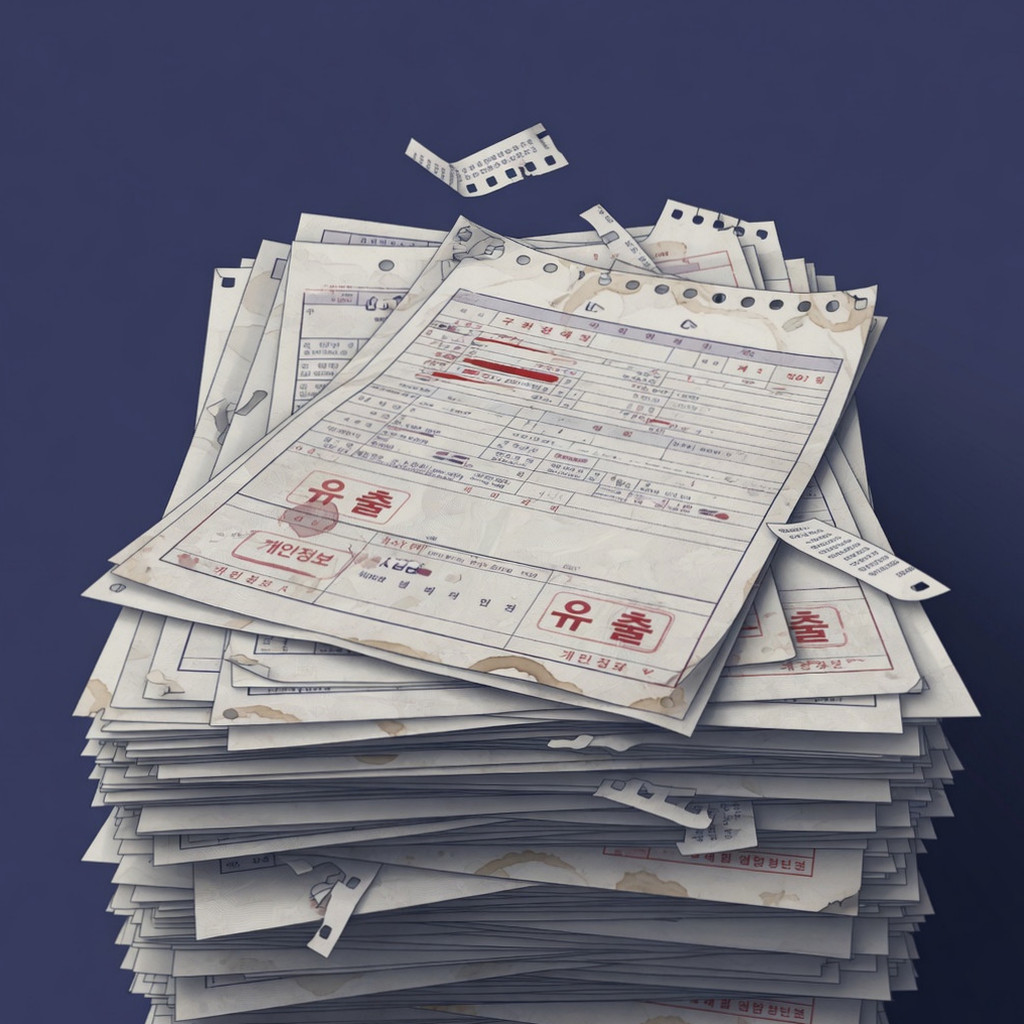
With a series of recent news reports regarding data breaches in the financial sector, many people are now double-checking their information every time they conduct a bank transaction. In particular, following the news of a Shinhan Bank data leak in October 2026, concerns are mounting regarding whether their personal information has been included. This article summarizes the details disclosed to date, covering the circumstances of the incident, the scope of the leak, verification methods, and compensation and response procedures.
As the matter is currently under investigation, specific figures or measures are subject to change based on further announcements from financial authorities and Shinhan Bank. The information below is based on facts known as of October 2, 2026.
When and how was the Shinhan Bank data leak announced?

Shinhan Bank officially announced the data leak on its website on October 1, 2026. Given the gap of several days between the announcement and the estimated time of the incident, it appears that detection and internal checks took a certain amount of time.
The actual time of the leak is estimated to be between the early morning of September 29 and 30, 2026. Following the official announcement, the Financial Supervisory Service (FSS) also took immediate action. The FSS deployed personnel from the Banking Inspection Division 2 and the IT Inspection Division to conduct an emergency on-site inspection.
How was the leak handled? It is different from a standard banking login.

It has been reported that this incident occurred not in the banking login service used by general customers, but in a dedicated mobile web service used by loan brokers and the linked simplified inquiry service. In other words, the attack vector was not the screen where an unspecified number of customers directly log in, but rather the system used by brokers to mediate loan business.
There are also points worth noting regarding the attack method. It is known that the attack did not involve a direct intrusion into the database, but rather involved aggregating multiple pieces of information by repeatedly calling legitimate APIs. Some sources mention credential stuffing, a technique where account information leaked from other sites is reused to attempt logins. However, financial authorities have not yet officially confirmed the specific attack method and are currently prioritizing the identification of the attack path. It is appropriate not to draw definitive conclusions regarding this matter until the investigation results are released.
What are the leaked information items and the extent of the damage?

Approximately 25,000 affected customers have been confirmed so far. The leaked information reportedly includes customer names, phone numbers, annual income, and loan limits.
Among these, highly sensitive items need to be examined separately. It has been confirmed that there were 66 cases of Resident Registration Number (RIN) leakage. Additionally, the number of cases involving the leakage of linked information, or so-called CI values, was tallied at 97. Although the number of leaks involving unique identification information, such as RIN or CI, is relatively small compared to the overall scale of damage, customers affected by these incidents should pay closer attention to the possibility of secondary damage, such as identity theft.
What measures did the financial authorities and Shinhan Bank take?

Immediately after the incident was reported, the Financial Supervisory Service deployed personnel from the Banking Inspection Division 2 and the IT Inspection Division to conduct an on-site inspection. The purpose of the investigation is to clearly identify the leakage route and to determine if there is any additional damage caused by similar means.
The full details of Shinhan Bank's response measures have not yet been disclosed. However, when such incidents occur, measures such as temporarily restricting access to the relevant service or blocking suspicious IPs are typically implemented in parallel. Specific compensation policies, including whether full compensation will be provided, must be confirmed through an official announcement by Shinhan Bank.
How to check if my information has been leaked
You must verify whether your personal information has been included in this leak only through the identity verification inquiry menu on the official Shinhan Bank website or the SuperSOL app. You should avoid verifying via links sent via text messages or messengers from unknown sources.
Recently, phishing attempts disguised as such data leaks have been occurring frequently. Text messages that induce you to click a specific link while asking you to “check for a leak” can be a tactic that leads to secondary damage. It is safest to verify the information by accessing official channels directly.
What needs to be changed to prevent secondary damage?
The first thing to check is whether passwords are being reused. Since credential stuffing is an attack that takes leaked account information from other sites and reuses it, the risk of secondary damage increases if you have a habit of using the same password across multiple services.
It is safer to set a different password for banking and financial services than for other websites. Additionally, if you are concerned about identity theft, you may consider subscribing to identity theft prevention services provided by credit information companies such as NICE Information Service or KCB. These services offer features that help you receive notifications when a new loan or contract is made in your name.
How should I report suspected damages?
If you confirm financial damage to your account or discover signs of identity theft, it is important to report it promptly. You should immediately contact the Shinhan Bank Customer Center to inform them of the situation, and if necessary, also report it to the National Police Agency at 112.
It is recommended to request a payment suspension simultaneously with reporting the financial damage. Since a payment suspension is a measure that prevents additional withdrawals or transfers, taking action immediately upon realizing the damage can help minimize further losses.
Frequently Asked Questions
Q1. When did the Shinhan Bank data leak occur?
A1. The estimated time of the leak is between the early morning of September 29 and 30, 2026. Shinhan Bank officially announced this fact on its website on October 1, 2026.
Q2. Did this leak also occur during regular banking logins?
A2. According to reports, the incident occurred not in the general customer banking login service, but in the mobile web service exclusively for loan solicitors and the linked simple inquiry service.
Q3. What items are included in the leaked information?
A3. Customer names, phone numbers, annual income, and loan calculation limits were reported as leaked items. Among these, 66 cases of Resident Registration Number leakage and 97 cases of Linked Information (CI) leakage were confirmed.
Q4. Where can I check if my information has been leaked?
A4. You can verify your identity through the official Shinhan Bank website or the SuperSOL app's identity verification inquiry menu. Verifying via links received via text message or messenger is not recommended due to the risk of phishing.
Q5. How should I respond if damage is confirmed?
A5. You must immediately report the incident to the Shinhan Bank Customer Center and the National Police Agency (112) and request a payment suspension. Additionally, you can reset your password to be different from other services and consider subscribing to an identity theft prevention service.