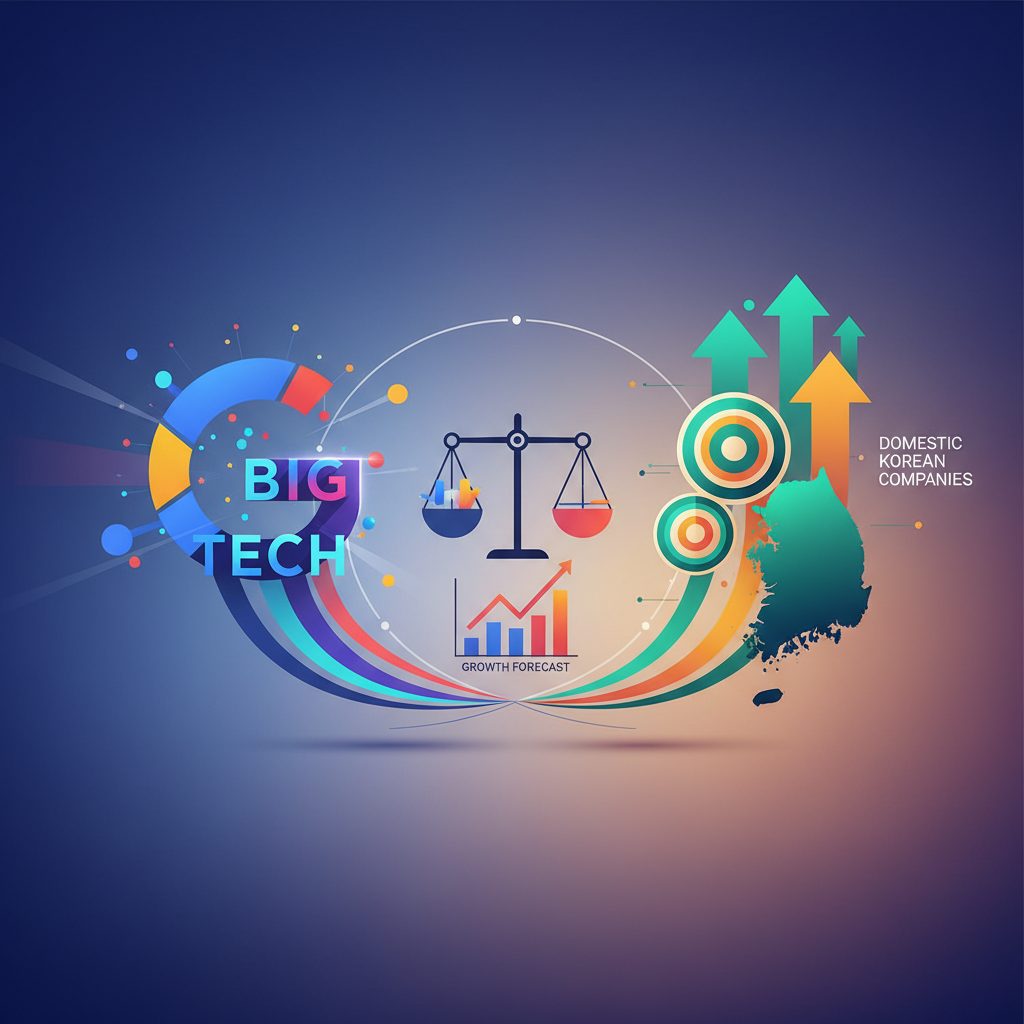
In the rapidly changing global technology market, understanding the prospects of American Big Tech has become essential for corporate survival. The pace of change is accelerating, especially as leaders like Google move beyond chatbots and usher in an era of physical AI that integrates with the real world. This article analyzes the technological strategies of major companies and delves into the current state of competitiveness of domestic companies, offering practical insights.
Technological innovation and market dominance of American big tech companies
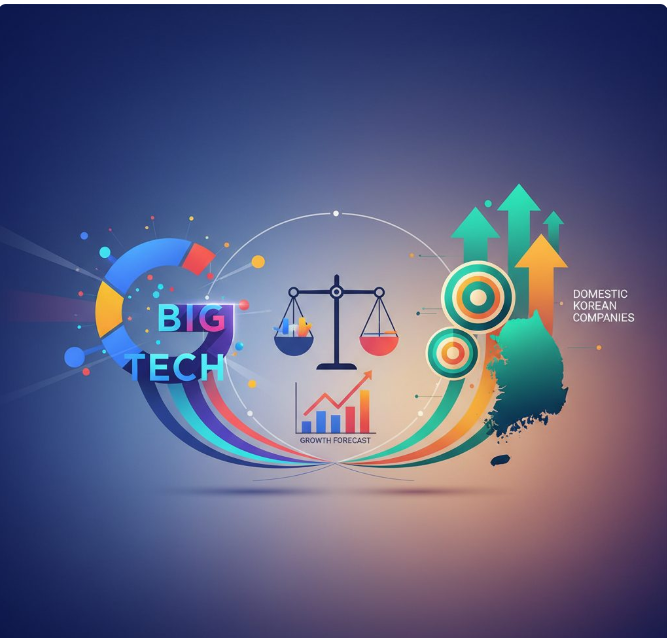
American tech giants are now expanding AI beyond simple software competition into the physical realm. Google, in particular, is developing models that understand the real world, enhancing spatial intelligence through its Gemini series. The large-scale computing infrastructure built in collaboration with NVIDIA poses a formidable barrier to entry for other companies. Outlook for US Big TechThis vertical integration of hardware and software is expected to further solidify the company. Experts analyze this trend as an attempt to dominate operating systems across industries. Microsoft is also striving to maintain its market leadership by securing ultra-large-scale computing power through Project Stargate. Competition for technological supremacyIt has now expanded beyond capital power to a battle over the scale of infrastructure.
The Future of Google and US Big Tech: Essential Information
Google's Spatial Intelligence Model and Physical AI Strategy
Google recently unveiled a technology that helps robots perform advanced reasoning in an update. This means AI can move beyond screens and into real-world environments like logistics centers and homes. Physical implementation Technology will be a key driving force in accelerating the era of autonomous agents. I, too, have recently been utilizing related tools to improve work productivity and am experiencing the technological gap firsthand. Physical AI is not a mere fad; it is a revolutionary change that will fundamentally transform industries. The spatial intelligence technology that underpins this, combined with Google's data assets, is expected to generate tremendous synergy.
| division | US Big Tech Strategy | Domestic corporate strategy |
|---|---|---|
| Key Strengths | General-purpose infrastructure and script models | Specialized services and localization |
| Key tasks | Ethical AI and Antitrust Regulation | Securing data sovereignty and fostering talent |
The Future of Google and US Big Tech… View Information
Strategic responses and service differentiation plans for domestic companies
The competitiveness of domestic companies stems from the unique linguistic characteristics of the Korean language and service experiences optimized for the local market. Naver is building a business ecosystem specialized for the Korean market through HyperClova X, and Kakao is expanding its user reach by leveraging the powerful platform of KakaoTalk. Although there may be differences in the scale of these large-scale models, specialized dataVertical services utilizing this technology have a significant chance of success. These efforts to protect data sovereignty are crucial even at the national level. It's time to develop advanced services that reflect the Korean context and sentiment, which are difficult for foreign companies to replicate. I believe that domestic companies will be able to exert even greater influence if they collaborate to build a common infrastructure.
Strengthening Naver and Kakao's Vertical AI Competitiveness
Both companies are currently focusing on business solutions that can generate real profits rather than general-purpose models. Naver is pursuing commerce optimization that combines shopping and search data, while Kakao is focusing on AI assistant services that maximize convenience in everyday life. differentiation strategyThis is a clever move that reaps the benefits while avoiding an all-out war with global big tech companies. The flexibility to read market trends and quickly adapt is key to the competitiveness of domestic companies.
The future AI market will be divided into two: foundational companies with massive models and application companies that leverage them to create value.
The Importance of Public-Private Cooperation to Secure Future Market Leadership
Closing the technology gap requires not only corporate efforts but also government policy support. Only through deregulation and infrastructure support for research and development can we survive in the global market. Public-private cooperationCreating an ecosystem through this will lay the foundation for South Korea's leap forward as a technological powerhouse. Preemptive investments are essential to prepare for the era of autonomous agents.
Frequently Asked Questions
What will Google's future search market share be?
Google is expected to maintain its dominant market share of over 90 percent in the future through the integration of AI technology. In particular, it is preventing user churn through strong integration with mobile devices.
What impact will physical AI have on industry?
AI that has learned the laws of physics in the real world will revolutionize manufacturing, logistics, and domestic work. This will lead to a dramatic increase in productivity.
What strategies can Korean companies use to compete with Big Tech?
Rather than relying on general-purpose infrastructure, it's advantageous to develop Korean-specific models or vertical AI services tailored to specific industries. Differentiation based on a deep understanding of the local market is key.
How should we interpret the AI bubble theory?
While some expectations may be excessive, the technological reality is clearly developing. As the return model for infrastructure investment becomes more concrete, concerns about a bubble will gradually dissipate.
What technological changes should regular users pay attention to?
We must pay attention to the trend of AI evolving beyond simply providing answers to becoming agents who make reservations or perform physical tasks on behalf of users.
A comprehensive outlook for the US Big Tech sector suggests that companies like Google will continue to dominate the physical world and grow. To secure competitiveness against this trend, domestic companies must maximize their strengths in specialized services and local data. Close public-private cooperation is more crucial than ever to protect technological sovereignty and advance on the global stage. I hope this article provides practical assistance to those preparing for the future.