Lee Jung-hoo detained at LAX: 3 checkpoints for MLB players entering the US. Watching this incident felt like my own. Being stranded at an airport is a scary moment for anyone. This article summarizes the incident and provides tips for avoiding mistakes. Based on the case of Lee Jung-hoo detained at LAX, I've also outlined three checkpoints for MLB players preparing for US entry and document checkpoints.
Events at a glance
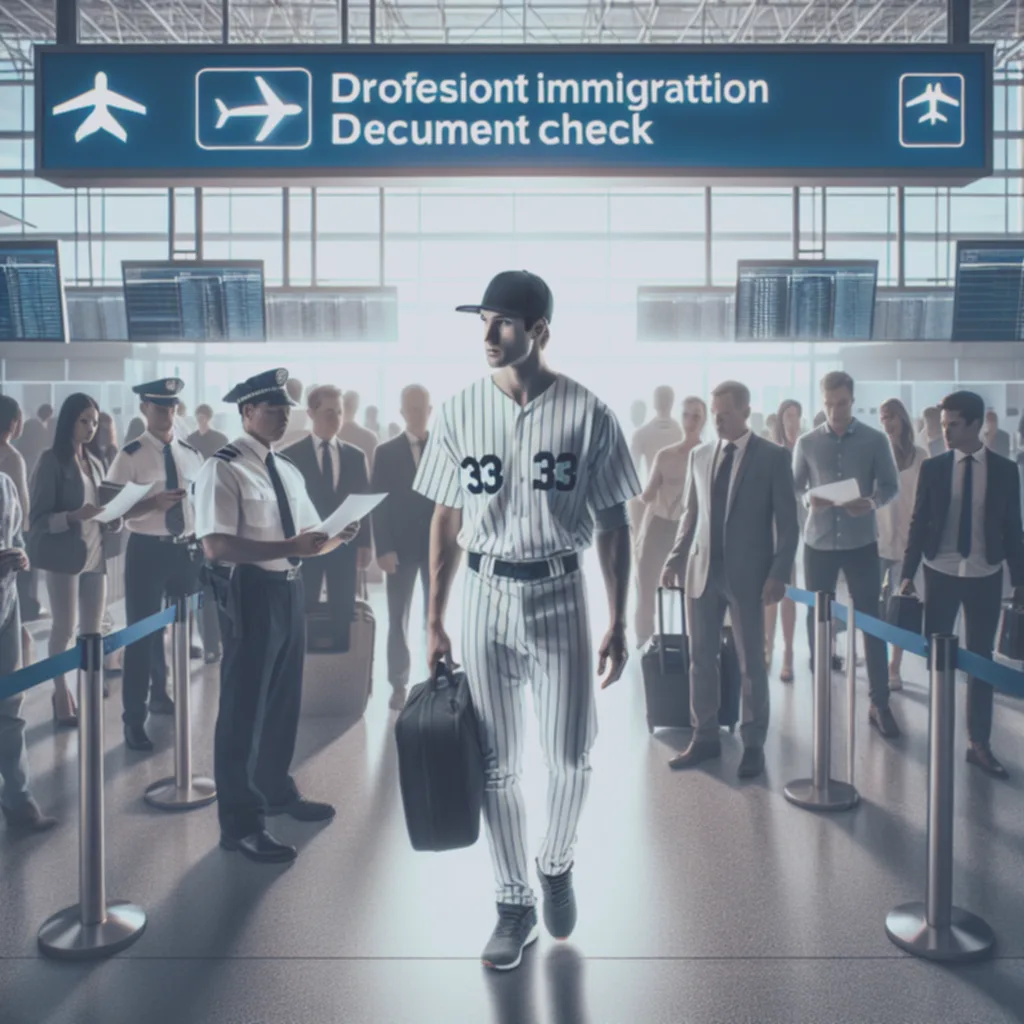
Lee Jung-hoo headed to the United States on the 21st. He underwent additional screening at Los Angeles International Airport during his entry process.
According to local reports, he was released after about an hour of detention. The reason was reportedly missing documentation.
Agent Scott Boras stated that it was not a political issue, as one of the documents was blank.
Congresswoman Pelosi's team also cooperated with the club to help achieve an early release. Her constituency is San Francisco.
Lee Jung-hoo has since returned to his regular schedule. Preparations for the Giants Fan Fest, spring training in February, and the World Baseball Classic in March are ongoing.
Lee Jung-hoo detained at LAX airport, MLB… Read more
Lee Jung-hoo detained at LAX Airport: 3 key checkpoints for MLB players entering the US
Checkpoint 1: Visa and approval documents match
The P-1A visa is the standard. Present a copy of your I-797 approval form and your passport.
The visa validity period and the approval period may differ. Entry into the country is determined by the approval period.
A passport valid for at least six months is recommended. Also, bring your current U.S. visa.
Specific examples of required documents
- I-797 Original or high-resolution copy of the approval letter
- P-1A visaPassport with attached
- Employment contractFinal version including salary clause
- Source of incomeA letter with the club address specified
Checkpoint 2: Proof of purpose of entry
The purpose of your entry must be clear. Organize your schedule, including fan fests, camps, and the World Baseball Classic.
Bring your club invitation and schedule. You'll also need the contact information for the person in charge.
It will be helpful for the screening process if you print out the training location address and date.
Checkpoint 3: Identity Information and Pre-screening
Name mismatches are frequently encountered during airline pre-screening. Let's standardize the Romanized spelling.
Make sure the names on your boarding pass, luggage tag, and contract match. Hyphens are also important.
When re-entering the U.S., check your I-94 record. You can check this on the CBP website.
Key Document Checklist
- P-1A visa와 I-797 Approval letter
- passport Valid for 6 months or more
- Employment contract Final version
- Club invitationand contact information for the person in charge
- Detailed Schedule Includes fan fest and camp
- Round trip or subsequent segment Airline tickets
Understanding CBP Secondary Inspection
Secondary verification is an additional verification process. Remember, it's not illegal.
The waiting time usually ranges from 30 minutes to 2 hours, but can be longer if there are many people waiting.
The questions focus on purpose, residence, and proof of income. Let's answer with documentation.
Paper speaks louder than words. Provide relevant documents immediately for each question.
Requests for electronic device passwords are rare. Refusing may result in an extended timeout.
If you need an interpreter, ask for one. It's your right.
Comparison of player and staff documents
- player P-1A classification. Requires personal performance data and a club contract.
- Key staff P-1S classification. Role description and employment verification required.
- coachis classified as P-1S or another classification depending on club policy.
- ESTAis not suitable for sports activities. Avoid it for business purposes.
- Summary of differences For players, it is important to prove their performance, and for staff, it is important to prove their indispensability.
Season Schedule and Visa Timeline Strategy
Fanfest, spring training, and the World Baseball Classic are all packed into one schedule. Let's calculate our re-entry schedule.
Print out a copy of your travel authorization before leaving Japan. This will protect you in case you lose it.
Check whether your visa validity and approval period overlap. This directly affects your ability to re-enter the country.
Have a pre-match briefing with the club's legal team. Share the airport contact information.
What to do when stuck at the airport
- Contact us immediately Notification in the order of club representative, agent, and lawyer
- Requested materials Receive a list of required documents and submit them via message
- Maintain your attitude Short answer, clear documentation
- Request for interpretation If you don't understand, ask immediately
- Securing evidence Record the results of the review and the name of the person in charge
- Emergency Contact List Club office, MLBPA, embassy, airline manager
Frequently Asked Questions
If I go into secondary, will there be a record?
Additional review records remain. Re-entry is rarely significantly restricted after resolution.
Can I travel without ESTA if I have a P-1A visa?
It is possible. However, for sports-related activities, you must enter the country using a visa.
Is the original I-797 required?
A copy is often acceptable. The original or a high-resolution copy is recommended.
Will I be able to re-enter the US after attending the WBC in Japan?
If your visa and approval period are valid, you can apply. Bring your schedule and club letter.
What if I get rejected at the airport?
Verbal refusals or formal refusals can be detrimental. Seek legal advice immediately.
summation Lee Jung-hoo's detention at LAX was due to missing documentation. The P-1A and I-797 forms, along with proof of itinerary, are crucial. Matching names and establishing contact information can reduce risk.
Let's use this case as a lesson. Just by familiarizing yourself with pre-departure checks and airport procedures, your chances of being detained will be significantly reduced.
Let's revisit the principles. Principles are the best insurance.