The Complete Guide to Air Conditioner Cleaning Tips – Latest Expert Tips
Air conditioners keep us cool during the hot summer months! But have you ever noticed a musty smell or a lack of cooling efficiency from your air conditioner? This can often be due to improper air conditioner cleaning. Today, we'll share some great air conditioner cleaning tips. Pay attention! With the latest information and expert expertise for 2025, we'll cover everything from home air conditioner cleaning methods to specialized maintenance tips for each brand and when to call a professional. With this guide, you can maintain a comfortable and healthy indoor environment this summer, all year round. From air conditioner filter cleaning to cooling fin cleaning and even the standards for deep air conditioner disassembly and cleaning, let's learn together!
- Why Air Conditioner Cleaning Is Essential – Health and Efficiency
Many people think of air conditioner cleaning as simply keeping it "clean," but it's a crucial maintenance activity directly related to our family's health. Inside the air conditioner, moisture generated during the cooling process easily mixes with dust in the indoor air, creating an ideal breeding ground for mold and various bacteria. When the air conditioner is running, these mold spores and bacteria spread into the indoor air, potentially causing various health problems, including respiratory illnesses, allergies, and atopic dermatitis. This can be especially fatal for children and the elderly with weakened immune systems. Regular cleaning is essential, even to eliminate musty air conditioner odors.
Beyond health concerns, air conditioner cleaning is directly related to its efficiency. Dust buildup on the filter impedes air circulation, causing the air conditioner to consume more power to maintain the desired temperature. This can quickly lead to a surge in electricity bills. Studies show that simply cleaning the filter can result in energy savings of up to 5 to 151 TP3T. Furthermore, debris buildup on the cooling fins reduces heat exchange efficiency, reducing cooling performance and ultimately shortening the lifespan of the air conditioner. Therefore, maintaining your air conditioner regularly is an essential investment, both financially and health-wise. Remember, it goes beyond simple cleanliness and is the first step toward healthy air and efficient energy use.
- Essential safety rules and preparations before cleaning your air conditioner
Before you begin cleaning your air conditioner yourself, the most important thing to remember is safety. No matter how many great tips there are for cleaning your air conditioner, failing to follow safety precautions can lead to electric shock or damage. First, always unplug the air conditioner or turn off the circuit breaker to completely cut off power. This is the most basic rule to prevent electric shock. This applies to all air conditioners, whether standing or wall-mounted. Second, wear protective gear. A mask and rubber gloves are essential to prevent mold spores and dust inside the air conditioner from entering your respiratory system. Third, ensure adequate ventilation when cleaning. When using cleaning sprays, it's especially recommended to keep a window open to prevent the chemicals from lingering in the room.
Preparing the necessary cleaning supplies in advance will make the job much easier. Here's a list of the necessary supplies:
Mask and rubber gloves: Protect your respiratory system and skin from dust and mold Screwdriver: Required when removing the cover (may not be necessary depending on the model) Vacuum cleaner: Remove filter and external dust Soft brush or toothbrush: Remove dust between cooling fins Microfiber cloth or soft cloth: Wipe the exterior and interior Neutral detergent or air conditioner-specific detergent: Remove mold and contamination (do not use strong detergents such as bleach) Sprayer: Spray water or detergent Drip tray or basin: Prevent contaminants from falling during cleaning Vinyl cover or protective vinyl: Prevent water from splashing on walls, appliances, and floorWith these safety rules and the proper preparation, you can begin cleaning your air conditioner yourself, just as safely and effectively as a professional. It's also important to familiarize yourself with the disassembly method for your air conditioner model. When cleaning the air conditioner cooling fins, be especially careful to avoid injury from sharp edges.
- The Complete Guide to Self-Cleaning Your Wall-Mounted Air Conditioner
Cleaning the wall-mounted air conditioner, the most common household appliance, isn't as difficult as you might think. By following the step-by-step guide below, anyone can easily create a comfortable air conditioner.
Step 1: Disconnect power and maintain surroundings.
First, completely cut off the power by unplugging the power cord or turning off the circuit breaker. To prevent water from splashing or contaminants from falling during cleaning, lay plastic or newspaper on the floor beneath the air conditioner. Cover the walls and surrounding furniture with protective plastic. This not only prevents contamination, but also helps clean up any contaminants that may arise during the air conditioner mold removal process.Step 2: Clean the filter
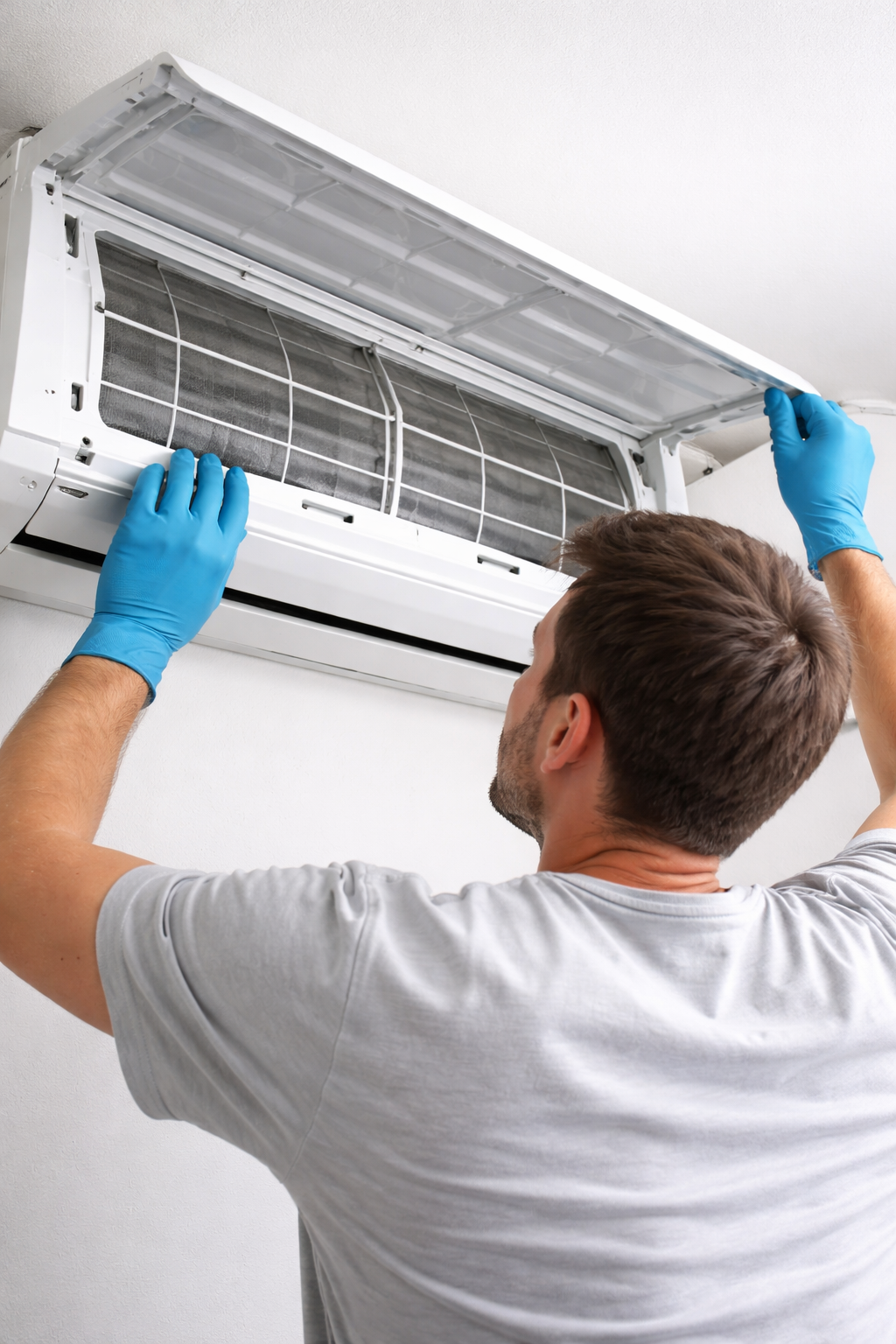
Carefully open the front cover of the air conditioner and remove the air conditioner filter. The filter is where most dust accumulates, and cleaning the air conditioner filter is essential for self-cleaning. First, vacuum up any large dust particles from the removed filter. Rinse thoroughly under running water, using a shower or similar device, in the opposite direction of the dust. Briefly soaking in water with a neutral detergent will help remove stubborn stains. After cleaning, dry the filter completely in a cool, dark place. Complete drying is crucial, as a wet filter can easily cause mold to grow.Step 3: Cleaning the Cooling Fins (Eva Fins Cleaning)
When you remove the filter, you will see the cooling fins, which are made up of thin silver or black plates arranged closely together. These cooling fins are one of the most prone to mold growth, as moisture and dust accumulate there. Spray a commercially available air conditioner cleaner evenly on the cooling fins. Keep a distance of 20-30cm to avoid damaging the fins by spraying too close. Wait 10-15 minutes while the cleaner dissolves the contaminants, then gently scrub the fins with a soft brush (such as an old toothbrush). Be careful not to bend the fins. Finally, fill a spray bottle with clean water and spray it to rinse away any detergent residue. The contaminated water will naturally drain through the plastic bag placed underneath to the drain hose or collect in the basin you have placed in advance.Step 4: Blower fan and internal drying
The blower fan, located deep inside the cooling fins, is difficult to clean directly, but can be managed indirectly by cleaning it with water and then running the fan. Experts emphasize that cleaning the air conditioner blower fan is the most important step in removing mold and odor. After cleaning, close the cover and run the air conditioner in blower mode for at least 2-3 hours to completely dry the interior. This is a crucial step in removing air conditioner odor and preventing mold from recurring.This process will remove most mold and dust from your air conditioner, significantly improving cooling efficiency. If the mold inside is severe or the odor persists, consider hiring a professional.
- Brand-Specific Cleaning Methods – Samsung, LG, and Carrier
Recent air conditioners offer a variety of self-cleaning and maintenance features for user convenience. The latest 2025 models, in particular, feature even smarter features, such as AI-based automatic drying and filter maintenance alerts. Utilizing these features effectively is a key tip for air conditioner cleaning. Let's examine the specialized cleaning methods and maintenance features of each major brand.
How to clean a Samsung air conditioner
Wind-Free Air Conditioner: Samsung's Wind-Free air conditioners have many tiny air holes, making them prone to dust accumulation. We recommend periodically wiping the holes in the Wind-Free panel with a dry microfiber cloth. Easy Care Feature: Some Samsung air conditioner models feature the Easy Care feature, which makes filter removal extremely easy. To clean the air conditioner filter, simply remove it, rinse it under running water, and let it dry completely before reinstalling. Auto-Dry Feature: When the air conditioner is turned off after use, it automatically dries the moisture inside. Activating this feature can greatly help eliminate air conditioner odors and prevent mold growth. It's important to always utilize this feature.How to clean an LG air conditioner
Detachable Air Conditioner (Dual Inverter): Many LG air conditioners feature an "Easy Detach" feature that allows you to open the bottom of the air conditioner and easily clean the blower fan. Being able to wash not only the cover but also the blower fan with water allows for a deep self-cleaning comparable to disassembling the air conditioner. ThinQ App Integration: You can receive filter replacement/cleaning notifications via the LG ThinQ app. Regularly checking the air conditioner's status through the app and managing it according to cleaning notifications is a great way to ensure you don't miss a cleaning cycle. UV Nano Function: Some models are equipped with a UV Nano function that uses UV LEDs to sterilize 99.99% of bacteria on the blower fan. Regular use of this function can be very effective in removing mold and inhibiting bacterial growth in the air conditioner.How to clean a Carrier air conditioner
Self-cleaning function: Carrier air conditioners also feature a self-cleaning function that automatically dries internal moisture. When used in conjunction with the fan mode, this function effectively prevents odor and mold. Filter replacement reminder: Some models include a filter replacement reminder. It is important to refer to the manual and follow the appropriate replacement cycle for your filter type (e.g., air purifier). Detailed removal: Depending on the model, many Carrier air conditioners feature easy filter and front panel removal. Refer to the manual for the correct removal method and proceed with cleaning the air conditioner filter and cooling fins.While air conditioner cleaning methods vary slightly by brand, the key elements are proactive use of the automatic drying function and regular filter cleaning. It's important to understand your air conditioner's unique features through the manual, and for the latest 2025 models, actively utilize AI and app-linked features for smarter management. Furthermore, be sure to carefully review the user manual for any precautions, such as avoiding certain detergents, when cleaning.
- Self-Cleaning vs. Professional Cleaning: When to Choose Which
Air conditioner cleaning can be broadly divided into two types: self-cleaning and outsourcing. Each has distinct advantages and disadvantages, so it's important to make a wise choice based on your specific situation and the condition of your air conditioner. So, when and how should you clean most effectively?
Pros and Cons of Self-Cleaning Your Air Conditioner
Pros: Air conditioner cleaning is free or very inexpensive, and you can clean it immediately whenever you want. It can easily handle light contamination, such as basic air conditioner filter cleaning and external dust removal. Cons: Deep cleaning of air conditioner cooling fins or air conditioner blower fans is difficult for the average person. Removing mold deep inside the air conditioner is limited, and if done incorrectly, there's a risk of damaging air conditioner components. Furthermore, complete disassembly and cleaning of the air conditioner is impossible.Pros and Cons of Professional Cleaning
Pros: Completely disassembles the air conditioner and thoroughly cleans all internal components, including the cooling fins and blower fan, using high-pressure washing. This service removes mold and sterilizes bacteria in hard-to-reach areas, and is highly effective at eliminating air conditioner odors. Furthermore, a comprehensive inspection, including condition checks and refrigerant refills, is provided, helping to extend the life of your air conditioner. Cons: Air conditioner cleaning costs apply, and reservations can be difficult and time-consuming during peak season.When should I choose which cleaning method?
Every month or every two weeks: You must clean your air conditioner filter yourself. This is the most basic air conditioner maintenance method and is essential for maintaining cooling efficiency. Once or twice a year (before/after using the air conditioner): Clean the visible parts of the air conditioner, such as the inner cover and cooling fins. It is recommended to use a special cleaner to remove mold and dust. Once a year or once every two years (required): If the air conditioner smells musty, has a noticeably reduced cooling efficiency, has visible mold, or has been used for more than two years, it is recommended to have an air conditioner cleaning company disassemble and clean the air conditioner. Mold removal is especially important.The ideal approach is to consistently clean your air conditioner yourself and then have it deep cleaned by a professional once every one to two years. This is a smart air conditioner cleaning cycle strategy that protects your health, prolongs its lifespan, and even improves energy efficiency.
- Air conditioner cleaning and maintenance tips and precautions
To keep your air conditioner in good working order for a long time, post-cleaning maintenance and preventative measures are crucial. Consistent maintenance is key to eliminating air conditioner odor and mold. Incorporate the following air conditioner maintenance tips into your daily routine to maintain healthy and efficient air conditioner operation.
- Use the "Fan" or "Auto-Dry" function after use. Immediately after turning off the air conditioner, the interior remains humid. This moisture is a major source of mold growth. When you're finished using the air conditioner, it's important to run it in fan mode for 10 to 20 minutes to ensure the interior is fully dry.
Newer air conditioner models feature an "auto-dry" or "self-clean" function. Keeping this feature enabled to automatically remove moisture from the air conditioner can be extremely effective in eliminating odors. - Regular filter cleaning is a fundamental part of air conditioner maintenance. Depending on usage frequency, the filter should typically be removed and vacuumed or washed with water, then thoroughly dried and replaced every two weeks to a month. A clean filter maintains cooling efficiency and improves air quality.
- Outdoor unit maintenance is also important. Many people focus solely on cleaning the indoor unit, but outdoor unit cleaning also significantly impacts cooling efficiency. Dust, leaves, and other debris accumulated around the outdoor unit can impede the refrigerant's ability to release heat, reducing cooling performance and increasing power consumption.
Disassembling and cleaning is dangerous, so it is sufficient to simply clean the area around the outdoor unit and remove any dust accumulated on the outside with a soft brush or vacuum cleaner. - During periods of high humidity, such as the rainy season, the interior of the air conditioner can easily become even more humid. It's recommended to utilize the dehumidifying function or thoroughly dry the air conditioner after use.
During seasonal transitions when the air conditioner is not in use for extended periods, it's recommended to completely remove any internal moisture and then store it with a cover. This will help eliminate air conditioner odors when used the following season. - Some air conditioners are equipped with an air purification function. Regularly using the air purification function, even when the air conditioner is not in operation, can improve indoor air quality and reduce the amount of fine dust entering the air conditioner, helping to extend the frequency of air cleaning.
These consistent air conditioner maintenance tips will ensure your air conditioner remains clean and efficient, providing a pleasant indoor environment. For the latest 2025 models, actively utilizing the app's maintenance notification feature will make maintenance even more convenient.
- Frequently Asked Questions and Troubleshooting Tips
We've compiled a list of frequently asked questions about air conditioner cleaning. We'll share expert cleaning tips and troubleshooting tips.
Q1: I cleaned my air conditioner, but it still smells. Why is that?
A: Removing air conditioner odor is one of the most common concerns. If the odor persists even after thoroughly cleaning the filter, there's a high possibility that mold remains deep within the cooling fins or blower fan. Because cleaning the air conditioner blower fan is particularly difficult to do yourself, mold may have grown in places not visible to the naked eye. If the interior isn't sufficiently dried using the "Blow" mode after cleaning, mold can re-grow due to moisture. In this case, consider having your air conditioner disassembled and cleaned by a professional. Professional equipment can disinfect and clean deep within the unit.Q2: How often should I clean my air conditioner?
A: The air conditioner cleaning cycle varies depending on the usage environment and frequency, but the general recommended cycles are as follows: Filter cleaning: Once every 2 weeks to 1 month (vacuum cleaning or water washing) Self-interior cleaning (cooling fins, cover): Before/after using the air conditioner, once or twice a year Professional disassembly cleaning: Once every 1 to 2 years (especially when there is an odor or when cooling performance decreases) It is recommended to clean more frequently in households with children or pets, or people with weak respiratory systems.Q3: My air conditioner isn't cooling well. Is this related to cleaning?
A: Yes, poor cooling performance is closely related to air conditioner cleaning. A thick buildup of dust on the filter or cooling fins impedes proper air circulation, weakening the cooling system and causing the air conditioner to consume more power. Simply cleaning the cooling fins can often significantly improve cooling efficiency. Additionally, debris accumulated around the outdoor unit, hindering heat exchange, can also reduce cooling performance, so be sure to also clean the outdoor unit (remove external dust).Q4: What should I be most careful about when cleaning myself?
A: The most important thing is to completely disconnect the power. This completely eliminates the risk of electric shock. Next, the cooling fins are very thin and fragile, so they can easily bend or be damaged if touched directly with your hands or scrubbed with a strong brush. Use a dedicated cleaner and handle with care, using a soft brush. Furthermore, spraying too much water inside the air conditioner can cause problems with the electronic components, so spray an appropriate amount with a sprayer and be sure to catch any water that flows down.Q5: What are the newest air conditioner features that will be useful for cleaning in 2025?
A: The latest 2025 models feature enhanced automatic drying functions, effectively removing moisture inside the air conditioner and helping eliminate mold and odor. Furthermore, AI-based filter cleaning notifications and app-linked diagnostics are becoming more common, alerting users to appropriate cleaning times and checking the condition of the air conditioner. By actively utilizing these smart features, you can make air conditioner maintenance even more convenient.We hope this FAQ has answered your questions about air conditioner cleaning. Now, with these air conditioner cleaning tips in hand, you can start preparing for a healthy and comfortable summer!
Air conditioner cleaning isn't optional, it's essential! Regular maintenance ensures both health and efficiency.So far, we've covered the latest air conditioner maintenance know-how for 2025, ensuring your health and efficiency through this complete guide to air conditioner cleaning. From air conditioner cleaning methods to detailed guides on filter cleaning, self-cleaning, and wall-mounted air conditioner cleaning, we've included expert advice on removing odors and mold. Now, you can maintain your air conditioner like a pro and enjoy clean, cool air all year round, not just this summer. Based on the tips you've learned today, check the condition of your air conditioner and start cleaning right away!