Why do calluses form on the soles of the feet?
From causes by type to removal methods according to dermatologists.
If your heels turn white and crack at some point,
Most people say this.
“It’ll be okay if you just exfoliate a bit.”
But strangely, the more you cut it, the thicker it gets.,
After a few days, it will return to normal.
If this happens repeatedly, the calluses on the soles of your feet you are experiencing now are not just a cosmetic problem.
Dead skin cells on the soles of your feet are a structural signal from your skin.
According to clinical data from the Korean Dermatological Association
Dead skin cells on the soles of the feet Hyperkeratosis is classified as.
This happens when the skin is exposed to repeated pressure and damage.
It is a reaction that causes excessive proliferation of keratinocytes to protect oneself.
In other words, dead skin cells are not dirty skin.
A protective barrier for already tired skinam.
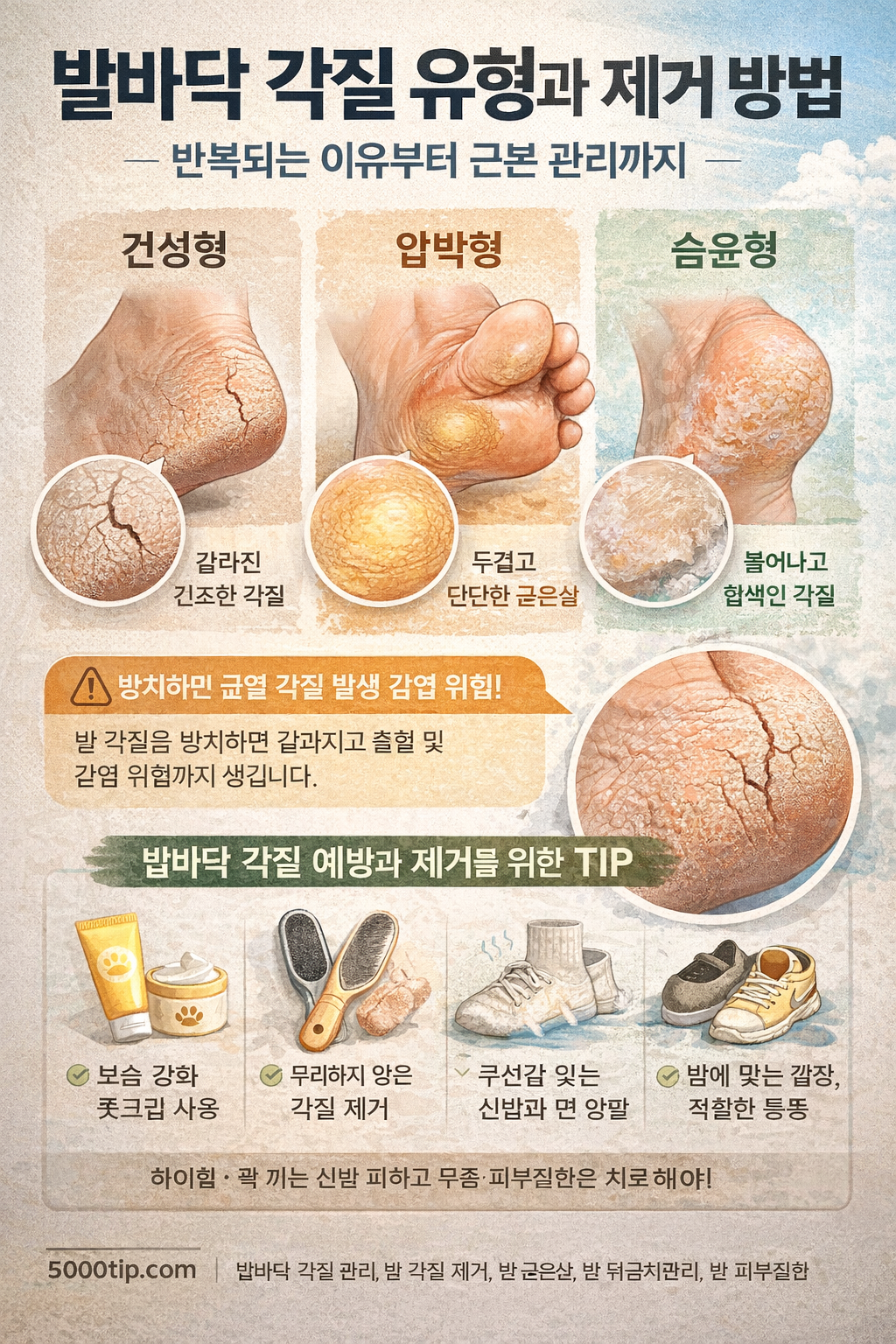
There are four main types of calluses on the soles of the feet.
1. Dry calluses on the soles of the feet
- White and rising
- Fine cracks and tingling sensation
- Worsened in winter, in heated environments
This type has a broken skin barrier
It is in a state where it cannot retain moisture.
Before exfoliating, it is essential to moisturize and restore the skin.
2. Pressure/Friction Type Calluses on the Soles of the Feet
- Thickening of specific areas of the forefoot and heel
- Frequent wearing of high heels and hard shoes
In a location where loads are repeatedly applied
Local calluses develop.
Than exfoliation First, change the force applied to the feetall.
3. Wet type of callus on the soles of the feet
- White rising
- Slippery and smelly
- Often mistaken for athlete's foot
If you sweat a lot and have poor ventilation
The dead skin cells absorb moisture and swell.
This type is better than cutting Complete drying + ventilation managementis the key.
4. Cracked calluses on the soles of the feet
- Deeply splitting and causing pain
- In severe cases, bleeding may occur.
- High risk of infection
At this stage, rather than self-care,
Dermatological treatment is a priorityam.
Why do calluses on the soles of my feet get worse the more I shave them?
According to a paper by the British Society of Dermatologists,
If you repeatedly mechanically remove dead skin cells,
The skin has this traumaRecognize as
It causes more proliferation of keratinocytes.
So, the phenomenon of “I clearly cut it, but it got thicker” occurs.
This is not a management failure
It is a normal physiological reaction of the skin.
How to Remove Dead Skin Cells from the Soles of Your Feet: Change Your Way
| category | Things you should never do | Recommended Management |
|---|---|---|
| Dry molding | Razor/electric file | Urea and Ceramide Moisturizing |
| pressure type | Forced removal | Cushion insoles, shoe replacement |
| Wet type | Overuse of moisturizers | Completely dry + ventilated |
| Crack type | Self-removal | dermatological treatment |
Essential Foot Callus Care Routine
In dermatology, this is
Barrier Repair ProtocolIt is called.
1️⃣ Dry completely after washing
2️⃣ Apply plenty of urea and ceramide foot cream
3️⃣ Wear cotton socks
4️⃣ Wear shoes that fit your feet
Just keep these four things in mind
The frequency of keratosis recurrence is noticeably reduced.
Signs that you need to go to the hospital
- Itching + Pus
- stink
- persistent bleeding
- Pain when walking
This case is not a simple callus.
There is a high possibility of athlete's foot, contact dermatitis, and psoriasis.
conclusion
Dead skin cells on the soles of your feet are not a problem that needs to be shaved.
The skin's structural request for a change of environmentam.
Let's change just one thing starting today.
“Instead of ”How much more should I cut?”
The moment you ask yourself, “Why is this skin telling me this?”,
The feet begin to change.