
If you have a sore throat and a fever, it is easy to confuse it with a simple cold or tonsillitis. In particular, if the pain suddenly worsens when swallowing saliva or food, you should also check the condition of your tonsils.
While tonsillitis shares many symptoms with the common cold, it is often distinguished by a high fever, severe difficulty swallowing, and swollen tonsils covered in white discharge. From now on, I will summarize the key signs, how to manage it at home, and the criteria for visiting a doctor all in one go.
The key symptoms of tonsillitis are severe swallowing pain and changes in the tonsils.

If you have a fever of 38 degrees or higher, almost no cough, and a severe sore throat when swallowing, it is a sign that you should suspect tonsillitis.The tonsils become red and swollen, and white or yellow discharge may be visible on the surface.
Fever, chills, headache, body aches, and general weakness may occur together, and the lymph nodes around the neck may swell and be painful when pressed. If the throat is merely slightly scratchy, it is closer to the symptoms of a common cold, but if the pain is severe enough to make it difficult to drink water, the difference becomes significant.
If a high fever, severe pain in swallowing, and swelling and secretions of the tonsils precede a runny nose and cough, check for signs of tonsillitis first.
Tonsillitis and the common cold differ in the severity of runny nose and coughing.

It is common for the common cold to be accompanied by a runny nose, sneezing, coughing, and mild throat irritation. Generally, symptoms tend to naturally subside after about 3 to 5 days.
On the other hand, tonsillitis often centers on sore throat and fever. The tonsils may swell noticeably or produce exudate, and swallowing food itself can become difficult.
However, the presence of white discharge on the tonsils does not mean that it is viral or bacterial based solely on appearance. The symptoms of sore throat, cough, runny nose, and fever must be assessed together, and if necessary, a bacterial test should be conducted at a medical institution.
| division | common cold | tonsillitis |
|---|---|---|
| Main symptoms | Runny nose, cough, sneezing | Severe sore throat and difficulty swallowing |
| 열 | None or relatively light | Fever of 38 degrees or higher and chills may occur |
| condition of the throat | Mild redness and irritation | tonsil swelling, redness, white or yellow discharge |
| lapse | It usually subsides within 3 to 5 days. | If there are no complications, it usually improves after 4 to 6 days. |
You also need to look into the causes of tonsillitis and the possibility of transmission.
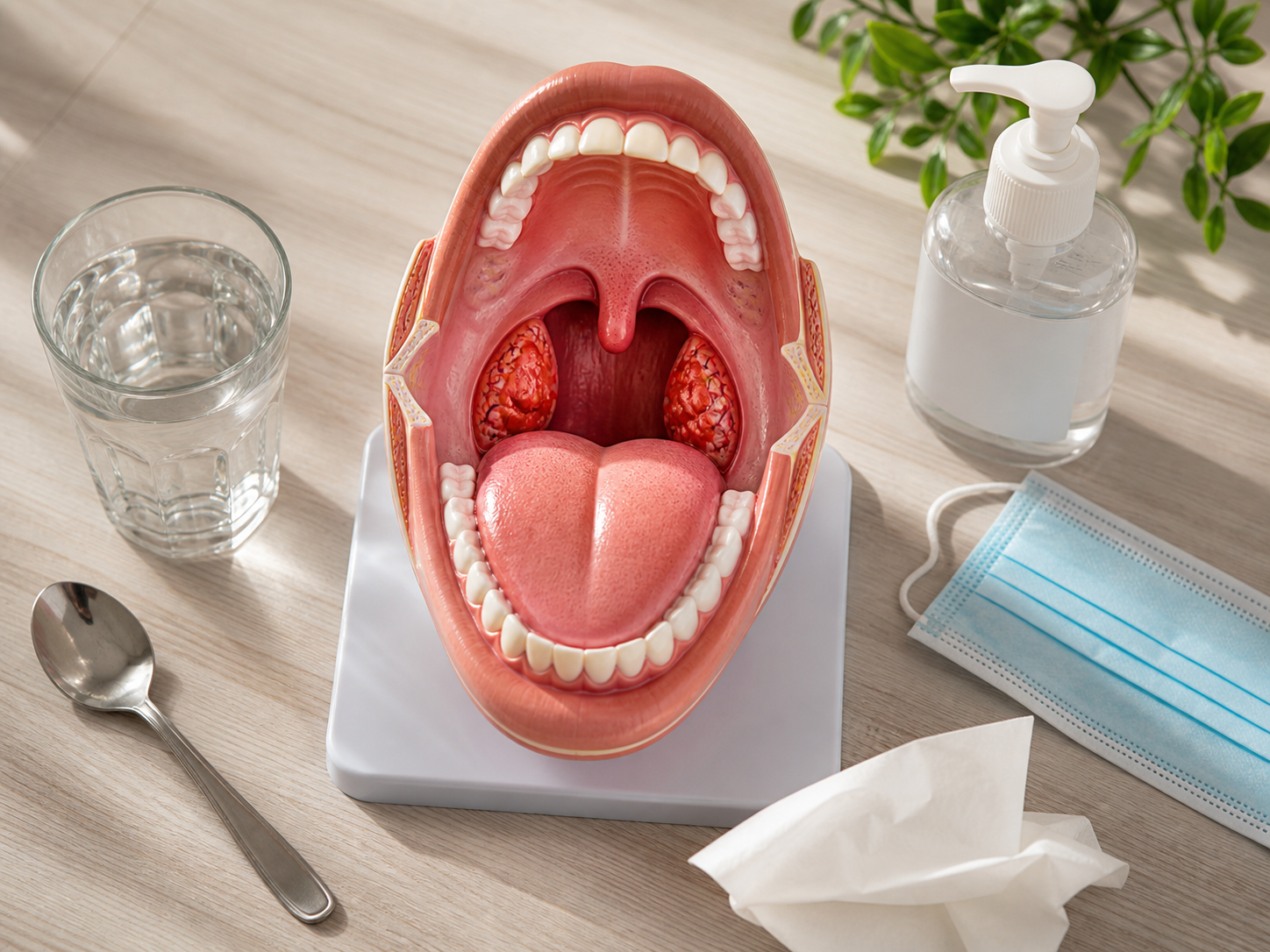
Tonsillitis is caused by viral or bacterial infections. Rhinovirus, adenovirus, and influenza virus can be causes, while Group A Streptococcus is the most commonly cited cause of bacterial tonsillitis.
Fatigue, lack of sleep, dry air, large temperature fluctuations, smoking, fine dust, and the habit of breathing through the mouth can irritate the throat and weaken its defenses. However, these environmental factors themselves are not infectious pathogens; rather, causative viruses or bacteria spread through droplets, secretions, conversation, and shared utensils.
Therefore, while you have symptoms, you should use separate cups and cutlery and wash your hands frequently. Since the infectious period varies depending on the cause and treatment status, it is safer to follow the guidance of the medical staff who treated you when returning to school or work.
Tonsillitis in children can manifest as refusal to eat and lethargy.

Young children often cannot clearly say that their throat hurts. Instead, they may express their discomfort by refusing foods they usually enjoy, not drinking water, suddenly fussing, or becoming lethargic.
If a child has a fever, avoids swallowing saliva, has severe bad breath, or their voice changes, the inside of the throat should be examined. Viral causes tend to be common in preschool children, and while bacterial causes may increase in older age groups, age alone is not the sole cause.
You should avoid giving children adult cold medicine or leftover antibiotics without consulting a doctor. Since the selection and dosage of fever reducers and pain relievers vary depending on age, weight, and existing medications, they should be used based on product descriptions and medical advice.
Hydration and rest are the priority for relieving tonsillitis.
Drinking lukewarm water in small amounts frequently rather than drinking a large amount at once helps reduce dryness in the throat. It is also better to get enough rest and avoid factors that irritate the mucous membranes, such as alcohol, tobacco, and spicy foods.
Adults can dissolve 1/2 teaspoon of salt in lukewarm water and gargle 3 to 4 times a day. Maintaining indoor humidity at around 40 to 60% helps reduce throat irritation caused by dry air.
Viral tonsillitis is managed primarily through rest, hydration, and symptomatic anti-inflammatory painkillers. Antibiotics may be used if a bacterial infection is confirmed or complications are suspected; if prescribed, the duration of use should not be reduced arbitrarily, even if symptoms improve.
If you experience these symptoms of tonsillitis, do not delay in seeking medical attention.
If you have difficulty breathing, cannot swallow saliva and drool, or if only one side of your neck is severely swollen, it is a sign that you need to see a doctor immediately.It is difficult to endure staying at home alone as complications such as peritonsillar abscesses may occur.
You should visit a medical institution if you experience reduced urine output and dizziness due to being unable to drink much water, or if high fever and pain continue to worsen. It is advisable not to delay seeking medical attention if a sore throat persists for more than four days or if a fever exceeding 38.5 degrees Celsius continues.
If tonsillitis recurs three to four or more times a year, an ENT specialist evaluates the cause of the recurrence and the condition of the tonsils. Tonsillectomy may be considered when recurrences continue to the point of interfering with daily life, but the frequency, severity of symptoms, and presence of complications are assessed together.
Tonsillitis is often characterized by more severe swallowing pain than a common cold, high fever, and prominent swelling and discharge of the tonsils. When checking the condition of your throat today, rather than just the runny nose and cough, please also check your body temperature, whether you can swallow water, and whether only one side of your tonsils is swollen.