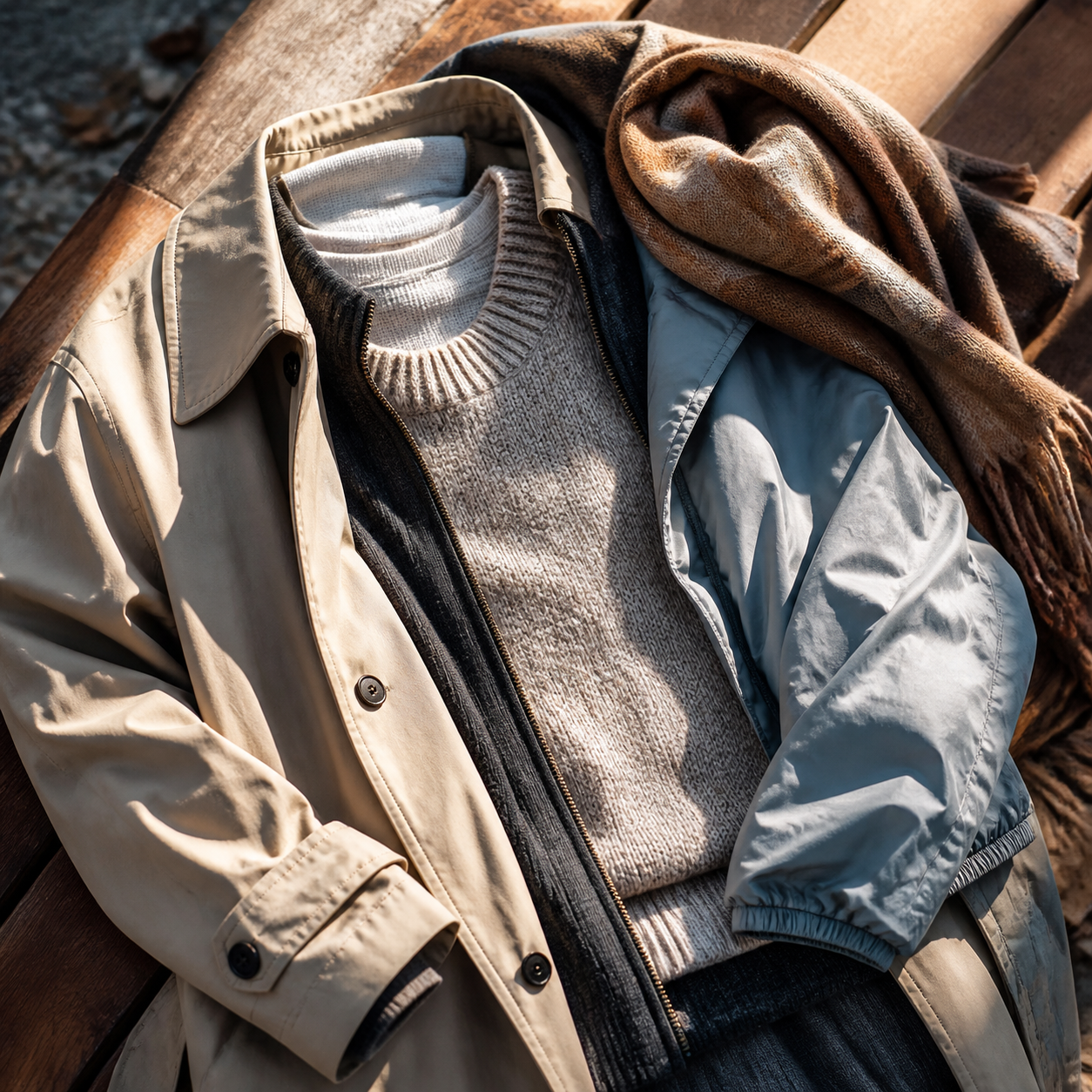
What if it is 28 degrees during the day but 17 degrees in the morning? Wearing just a short-sleeved shirt is absolutely not enough. From mid-to-late August, there are many days with a daily temperature range exceeding 10 degrees; if you ignore this when dressing, you will end up in a vicious cycle of being cold in the morning and hot in the afternoon. This is precisely why you can never judge the situation based solely on the temperature display.
In this article, we have specifically summarized which clothing combinations are suitable for different temperature ranges, what to pack for the time of day, and how environmental factors like wind and sunlight affect the perceived temperature. Whether traveling or going about your daily life, choosing your clothes based on these guidelines will allow you to stay comfortable from morning to evening.
The reason why daytime temperature alone cannot determine
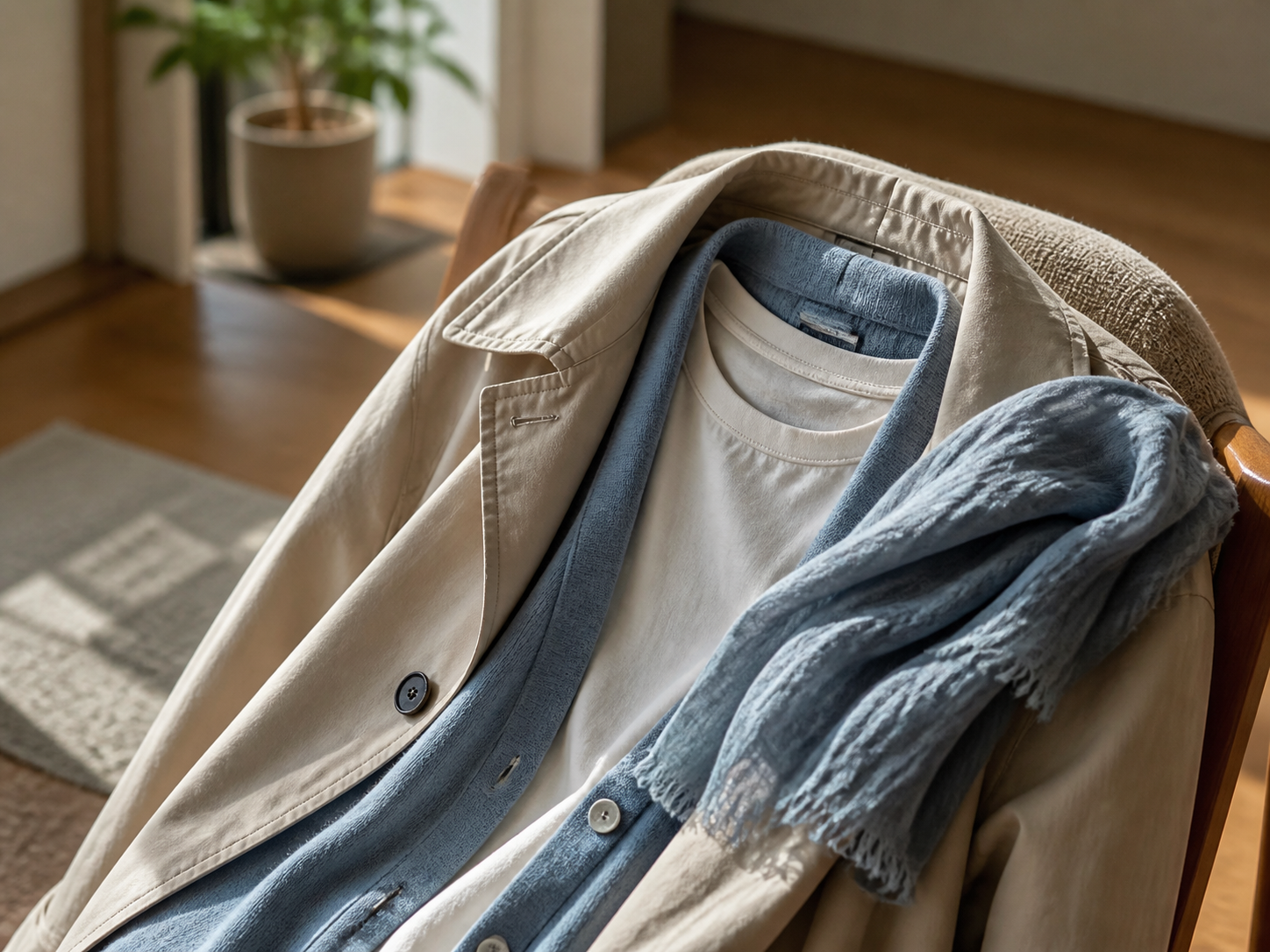
The most common mistake is checking only the maximum temperature on the weather app. You might prepare only short sleeves because the high is 26 degrees, only to find it cold when you try to leave at 5 a.m., or conversely, wear long clothes because the morning temperature is 14 degrees, only to regret it at noon—this happens repeatedly.
You need to consider the actual time you will be outside. You need completely different outfits for days when you go out only during the day compared to days when you leave early in the morning or return late in the evening. Even within the same temperature range, whether to layer or bring an outer layer depends on your outing schedule.
If there is a large daily temperature range, preparing layered clothing is essential.The strategy is to adjust the temperature range that cannot be covered by a single layer by wearing multiple layers.
Clothing combinations by temperature range
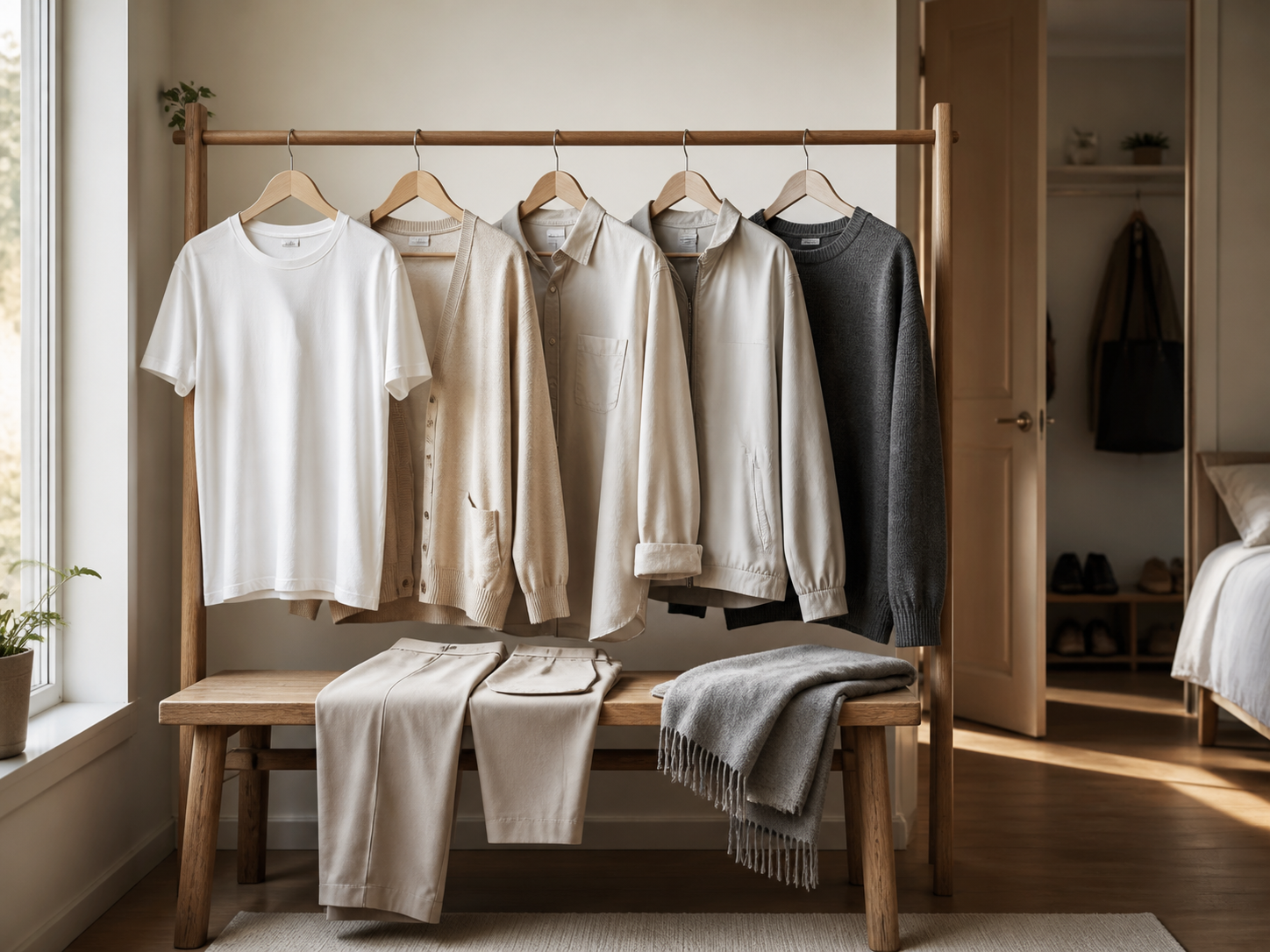
The following table shows basic clothing guidelines based on temperature. Please note that recommended clothing differs for daytime and morning/evening within each temperature range.
| Temperature zone | Breakfast/Dinner Basic | Day basic | Further consideration |
|---|---|---|---|
| 28℃ or higher | Light, thin clothes | Short sleeves, sleeveless tops, shorts | Thin cardigan compared to indoor air conditioning |
| 26~27℃ | cardigan or thin shirt | Short sleeves + shorts or thin pants | The perceived temperature drops significantly when the wind blows or the sun sets. |
| 20~22℃ | cardigan, thin jacket | long-sleeved T-shirt or thin knit | An outer layer is essential if you are going out for a long time. |
| 15~19℃ | Cardigan, thin outerwear | Knits, sweatshirts, shirts | Add a scarf if you are sensitive to the wind. |
| 10~14℃ | thin coat, thick knit | Thick knitwear, long-sleeved shirts | Windproof windbreaker recommended |
Although the difference between 28 and 27 degrees is only one degree, the difference is distinctly noticeable. At 28 degrees, a short-sleeved shirt is sufficient, but at 27 degrees, if it is windy or cloudy even during the day, you need the leeway to layer a thin shirt to be comfortable. In particular, while it feels relatively warm when the sun is strong at midday, the perceived temperature drops significantly in the shade or windy areas.
26 degrees is The starting point for dressing for the morning-evening temperature differenceYou can view it this way. It is wise to wear short sleeves but choose long pants, or carry a thin shirt in your bag.
3-Step Layering
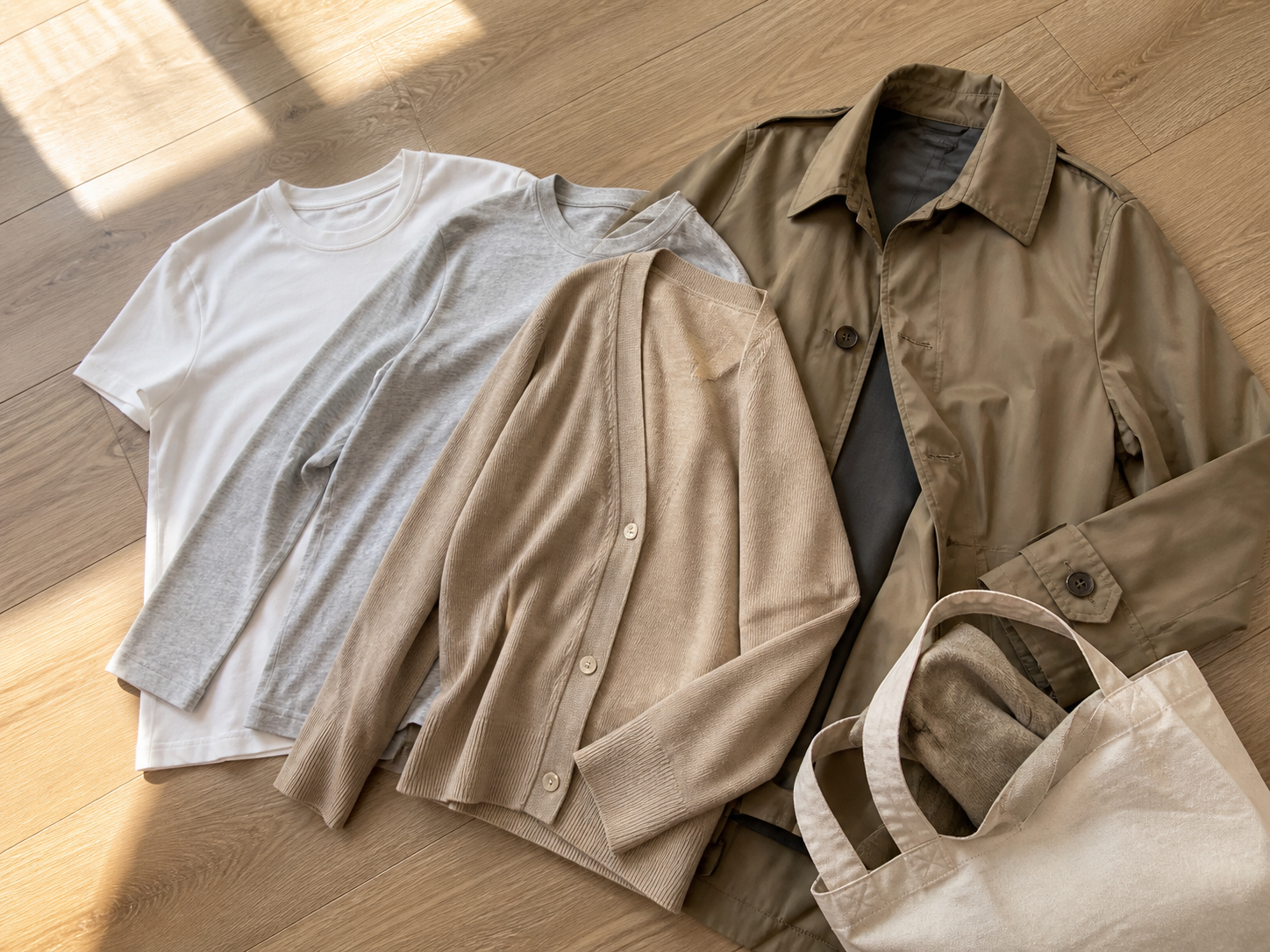
The essence of layering is the freedom to add and remove. When moving between indoors and outdoors, or when responding to temperature changes between morning and afternoon, you regulate your body temperature by taking off or putting on layers of clothing one by one.
inner layerStart with a short-sleeved T-shirt or a thin long-sleeved top. If you choose a material with good sweat-absorbing properties at this stage, it will be comfortable for activities during the day.
middle layerAdding it provides insulation. Choose the item suitable for the temperature and environment from thin knits, cardigans, and shirts. A knit is necessary for temperatures in the low 20s, but a cardigan is sufficient for temperatures above 26 degrees.
outer layerIt is the last line of defense against wind and cold. Choose from thin trench coats, windbreakers, and light jackets for spring and autumn, considering the season and expected temperature. Choosing a lightweight product that is easy to carry in a bag is highly practical.
Wind, sunlight, and humidity change the perceived temperature.
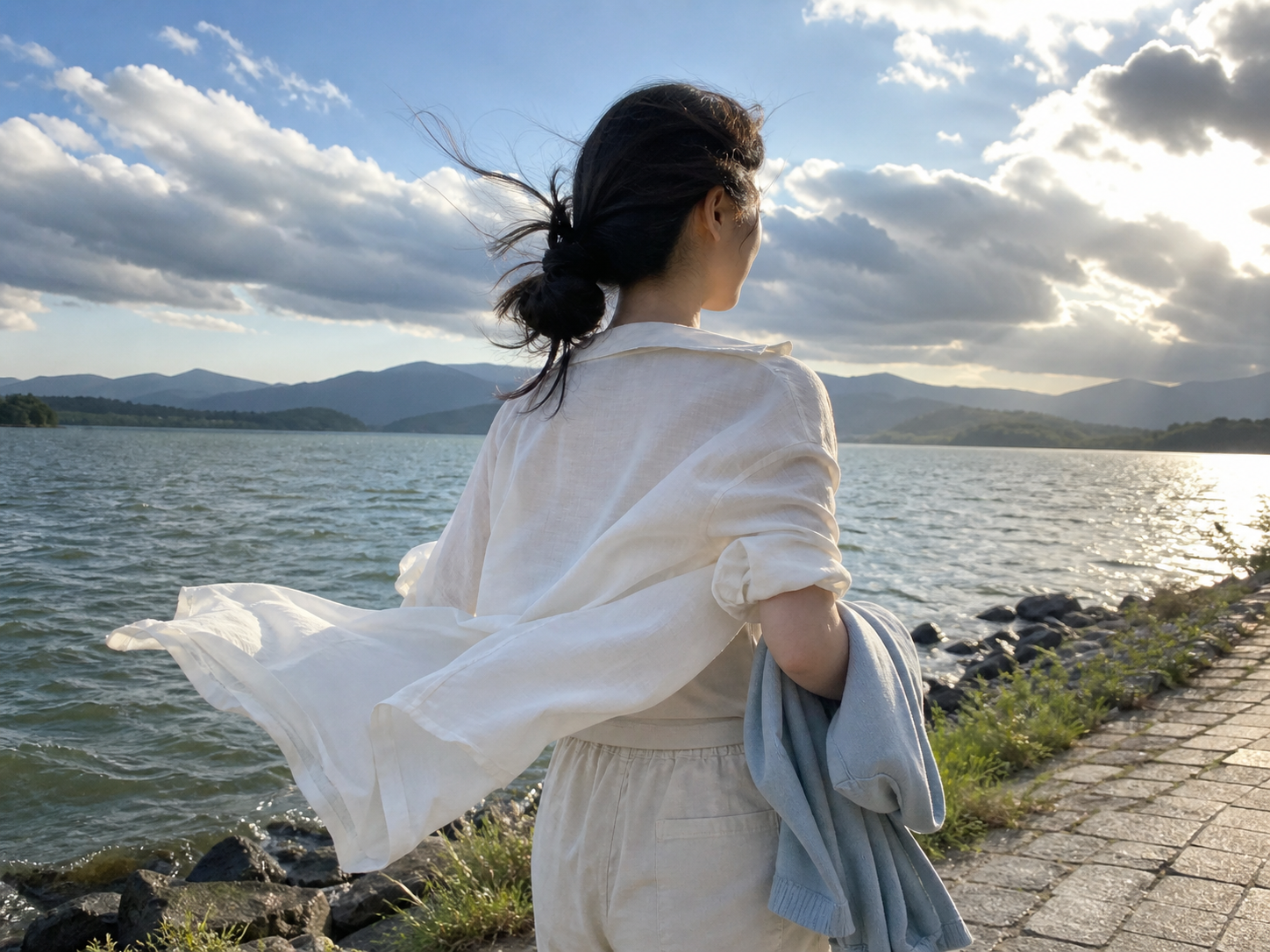
The reason you cannot decide what to wear based solely on the temperature is that environmental factors significantly influence the perceived temperature. Even at the same 27 degrees, it can feel like 24 degrees if the wind is strong, and it feels hotter if the sunlight is intense.
In the case of coastal areas influence of sea breezeThis is quite significant. Coastal cities like Qingdao tend to be cooler than inland areas with the same temperature. It is so cool in such places that wearing only short sleeves can be uncomfortable, so it is a good idea to always carry a cardigan or a light shirt.
The same applies to mountainous regions. Banff, Canada, is much colder than Calgary, and temperatures drop to around 10 degrees Celsius, especially in the mornings. Tourist destinations like Lake Louise or Moraine Lake experience cold and wind levels that cannot be anticipated based solely on city temperatures.
You should also consider cloudy weather where direct sunlight does not reach. Even if the maximum temperature is the same, the perceived temperature drops by a few degrees when it is cloudy, so it is safer to bring an outer layer.
Raincoats are better than umbrellas in rainy weather
When there is a large daily temperature fluctuation, dressing for the rain becomes more complicated. Umbrellas are not very practical. In particular, they flip inside out even with a slight breeze, and it is inconvenient to move around because you have to hold one hand up.
Waterproof windbreaker or raincoatIt is much more efficient. If you choose a lightweight product that fits easily in a bag, you can wear it immediately when the weather changes. For waterproof jackets, if you choose a model that controls internal humidity, you can manage both heat and humidity simultaneously.
When choosing what to wear for your trip, check not only the major cities but also the temperature at your destination.
A common mistake when traveling abroad is checking only the weather in major cities. If you are going to Canada in August and pack based solely on the weather in Calgary, you will face a predicament because you do not have suitable clothes for the 10-degree Celsius morning temperatures in Banff.
You need to check the temperatures of the regions included in your travel itinerary separately. This is especially true if you are visiting special terrains such as mountains, beaches, or high-altitude areas. Since it can get unexpectedly cold starting in late August, Make sure to pack 1 or 2 long-sleeved shirts. It is safe.
Small strategies to prepare for indoor air conditioning
Even if the outdoor temperature is high, the indoors are different. If the air conditioning in a cafe or shopping mall is strong, it can feel cold even at 27 degrees outside. To cope with this temperature difference, it is a good idea to always carry a thin cardigan.
Another tip is keeping your neck warm. In windy weather, keeping just your neck warm can significantly raise your perceived temperature. Putting a muffler or a light scarf in your bag is useful even in the summer.
Ultimately, if the daily temperature range is large, deciding what to wear based solely on the daytime temperature is a gamble. Check the morning low and daytime high together, and prepare for layering by considering the wind, sunlight, and time of day you will be going out.You need to do this to live comfortably. It is something you need to pay particular attention to starting from the end of August, when the seasonal changes become distinct.