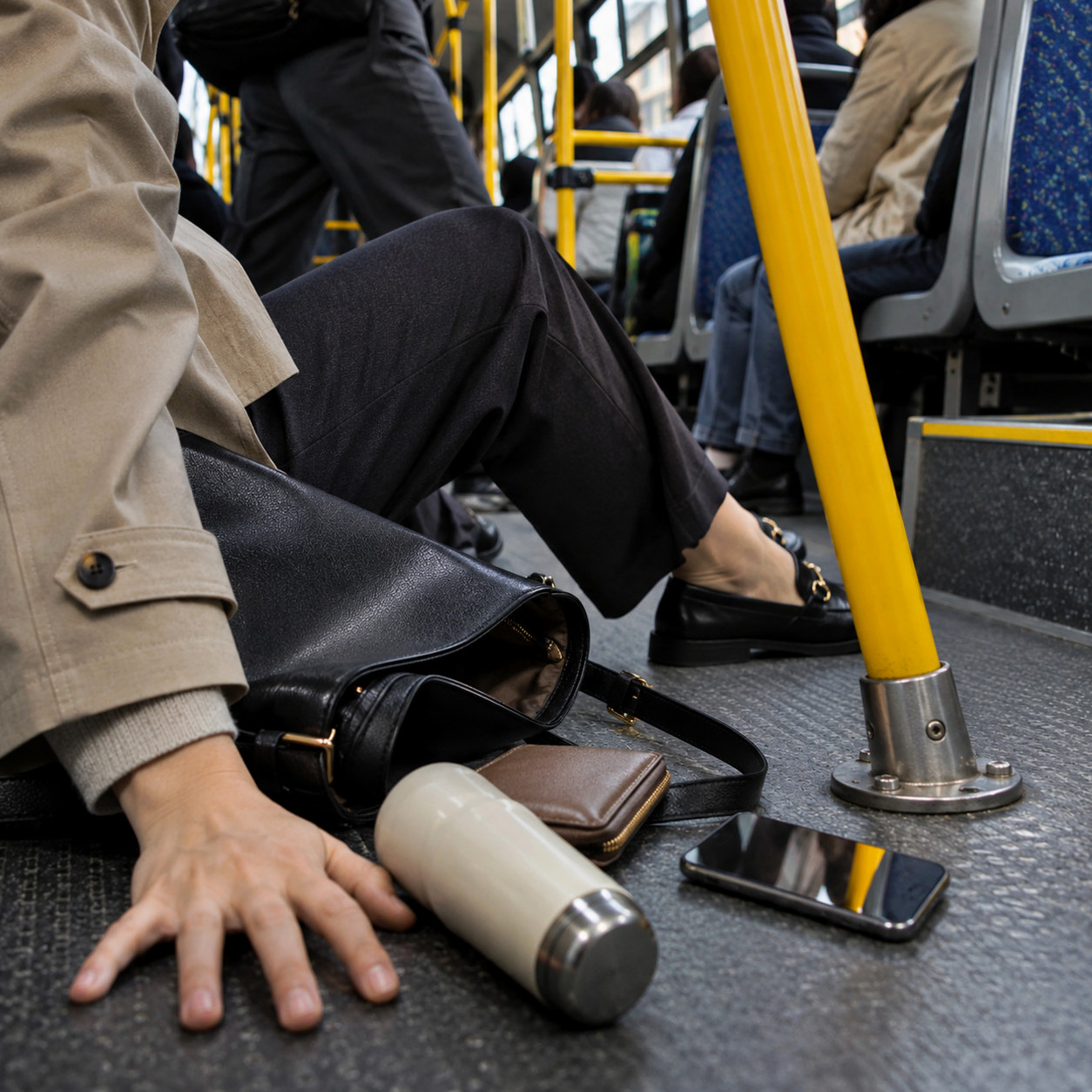
If you have ever fallen due to a sudden jolt while getting on or off a bus, this ruling will not feel like something unrelated to you. A sudden braking accident involving a city bus in Jeonju resulted in the death of a passenger approximately two months after falling, and the driver was sentenced to a suspended prison term in the appellate trial as well. I will summarize the facts, focusing on the circumstances of the accident, the grounds on which the court recognized responsibility, and the reasons why the sentence was finally determined.
How the accident happened: The moment speeding and sudden deceleration coincided

The key to this accident is speeding followed by a sudden stop. Around 9:21 PM on April 18, 2024, near a bus stop in Wansan-gu, Jeonju, Jeonbuk, city bus driver Mr. A (61) was driving at 67 km/h on a road with a speed limit of 50 km/h.
As the bus stop approached, Mr. A suddenly pressed the deceleration pedal. When you suddenly reduce speed while at high speed, a large impact is applied to the vehicle body, and at the very moment of this sudden stop, passenger Mr. B (69), who was preparing to get off, lost his balance and fell over.
Why Was There a Two-Month Time Gap Between the Fall and Death?
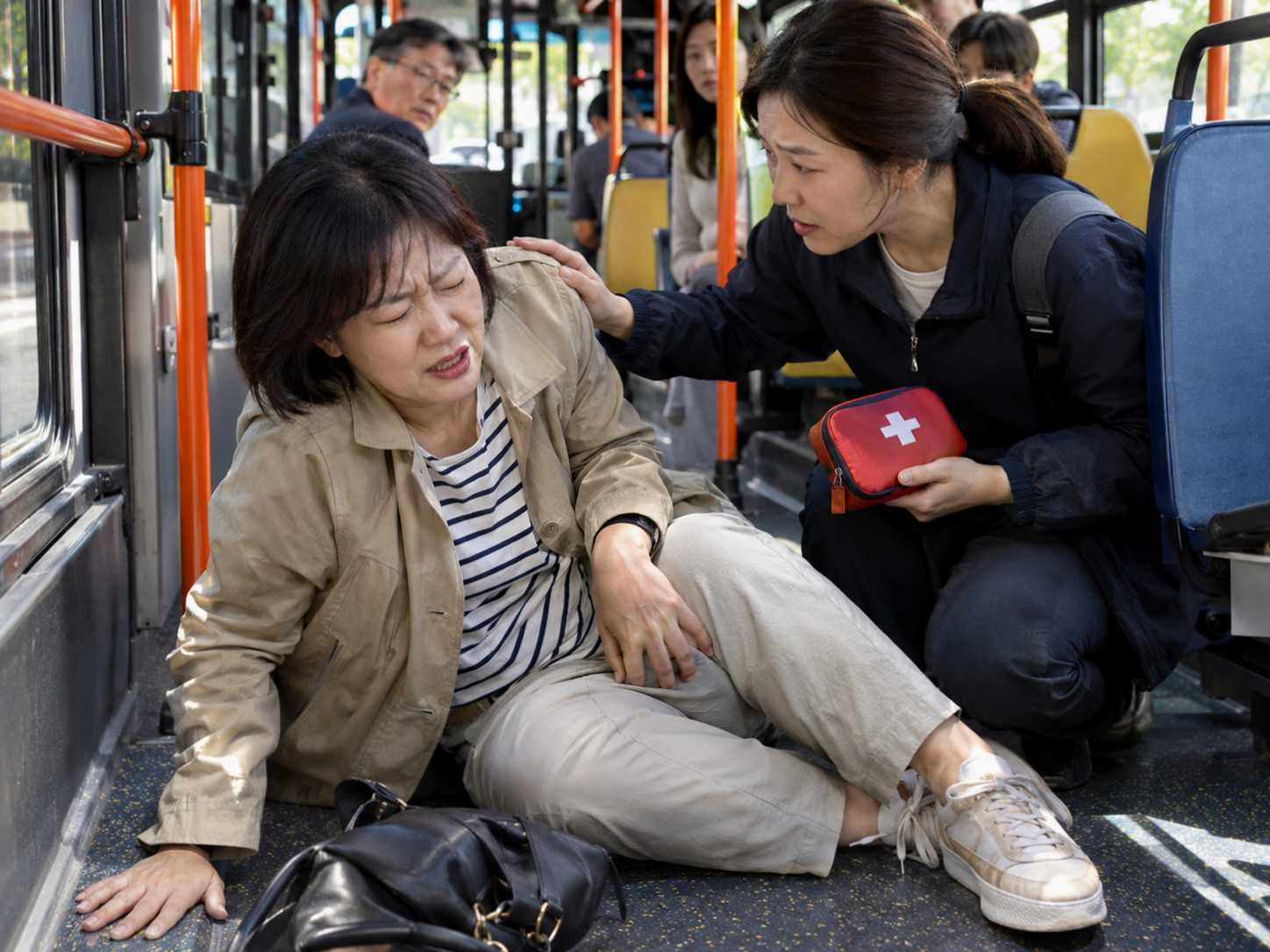
Mr. B did not die immediately after falling on the day of the accident. He was admitted to a hospital and received treatment after the fall, but died of respiratory failure on June 16, 2024, about two months later.
The time lag between the accident and the death is a point that is easy to confuse when understanding this case. Despite this time gap, the court recognized a causal relationship between the sudden braking and the death and charged Mr. A with violating the Act on Special Cases Concerning the Handling of Traffic Accidents (resulting in death).
Comparison of First and Appeal Trials: The Reason the Sentence Was Upheld

The court of first instance sentenced Mr. A to 10 months in prison and a two-year suspended sentence. Mr. A appealed the ruling, but the Criminal Division 3-3 of the Jeonju District Court dismissed the appeal on November 1, 2026, and confirmed the original sentence.
In other words, the results of the first trial and the appeal are identical in terms of the sentencing figures. However, the fact that 'the sentence did not change' is different from the fact that 'a reduction or increase was not discussed,' and the court issued a decision to dismiss the case while reviewing the grounds for sentencing.
Duty of Care Highlighted by the Court: Compliance with Speed Limits and Prevention of Sudden Deceleration

The court ruled that those engaged in city bus driving bear heavier responsibility than ordinary drivers. This means they have a duty of care to observe speed limits and avoid sudden deceleration for the safety of passengers.
The court ruled, “In light of the degree of violation of the duty of care and the resulting consequences, the nature of the defendant’s offense is by no means light.” This can be interpreted to mean that the situation in which speeding and sudden braking occurred simultaneously was not regarded as mere driving negligence.
Background of the Suspended Sentence Upheld: The Conflicting Actions of Criminal Record and the Bereaved Family's Wishes

A notable aspect of this case is that Mr. A had a criminal record. Mr. A had previously received fines for violating the Act on Special Cases Concerning the Handling of Traffic Accidents in 1999 and 2008, and this served as one of the grounds for considering the nature of the offense not light.
On the other hand, the wishes of the bereaved family were a mitigating factor. It was confirmed that the victim's family, who had reached an agreement with the defendant, did not wish for punishment, and the court explained, "It appears that the lower court determined the sentence by taking these circumstances into consideration." Ultimately, it can be seen that the combination of factors regarding the severity of the crime and mitigating factors resulted in a sentence of 10 months imprisonment and 2 years of probation.
Confirmation points left by the verdict
There are two main points to note regarding this ruling. One is that a causal relationship can be recognized even if there is a time lag between the accident and the death, and the other is that the driver's past criminal record is actually reflected in sentencing.
For bus passengers, holding onto a handrail or seat until the bus comes to a complete stop just before alighting is a basic way to reduce safety accidents. For drivers, this serves as a noteworthy example demonstrating that driving habits such as speeding and then rapidly decelerating when approaching a bus stop can lead to legal liability.
Key Points Summarized in Q&A
Q1. There was a time gap between the sudden braking accident and the passenger's death; how was a causal relationship established?
A1. The passenger did not die immediately after falling, but died of respiratory failure about two months later while receiving treatment at a hospital. Even considering this time lag, the court recognized a causal relationship between the sudden braking accident and the death and applied charges of violating the Act on Special Cases Concerning the Handling of Traffic Accidents (resulting in death).
Q2. If the sentence in the first trial and the appellate trial are the same, is the appellate trial meaningless?
A2. Although the sentence figures remain the same at 10 months imprisonment and 2 years of probation, this is the result of the appellate court dismissing the appeal after reviewing the grounds for sentencing in the original trial. The fact that the sentence did not change does not mean that no hearing took place.
Q3. How did the driver's past record affect this ruling?
A3. Mr. A had a history of receiving fines for violating the Act on Special Cases Concerning the Handling of Traffic Accidents in 1999 and 2008, and this was cited as one of the grounds on which the court considered the nature of the offense not to be light.
Q4. What role did the fact that the bereaved family did not want punishment play in the sentencing?
A4. The bereaved family's agreement with the defendant to not want punishment was explained as one of the circumstances considered by the court when determining the sentence. However, the wording of the judgment does not specify exactly how much this reduced the sentence.
Q5. What is the core cause of this accident?
A5. The direct cause was identified as speeding at 67 km/h on a road with a 50 km/h speed limit and then suddenly braking by pressing the deceleration pedal in front of the bus stop. During this process, a passenger preparing to disembark lost their balance and fell.