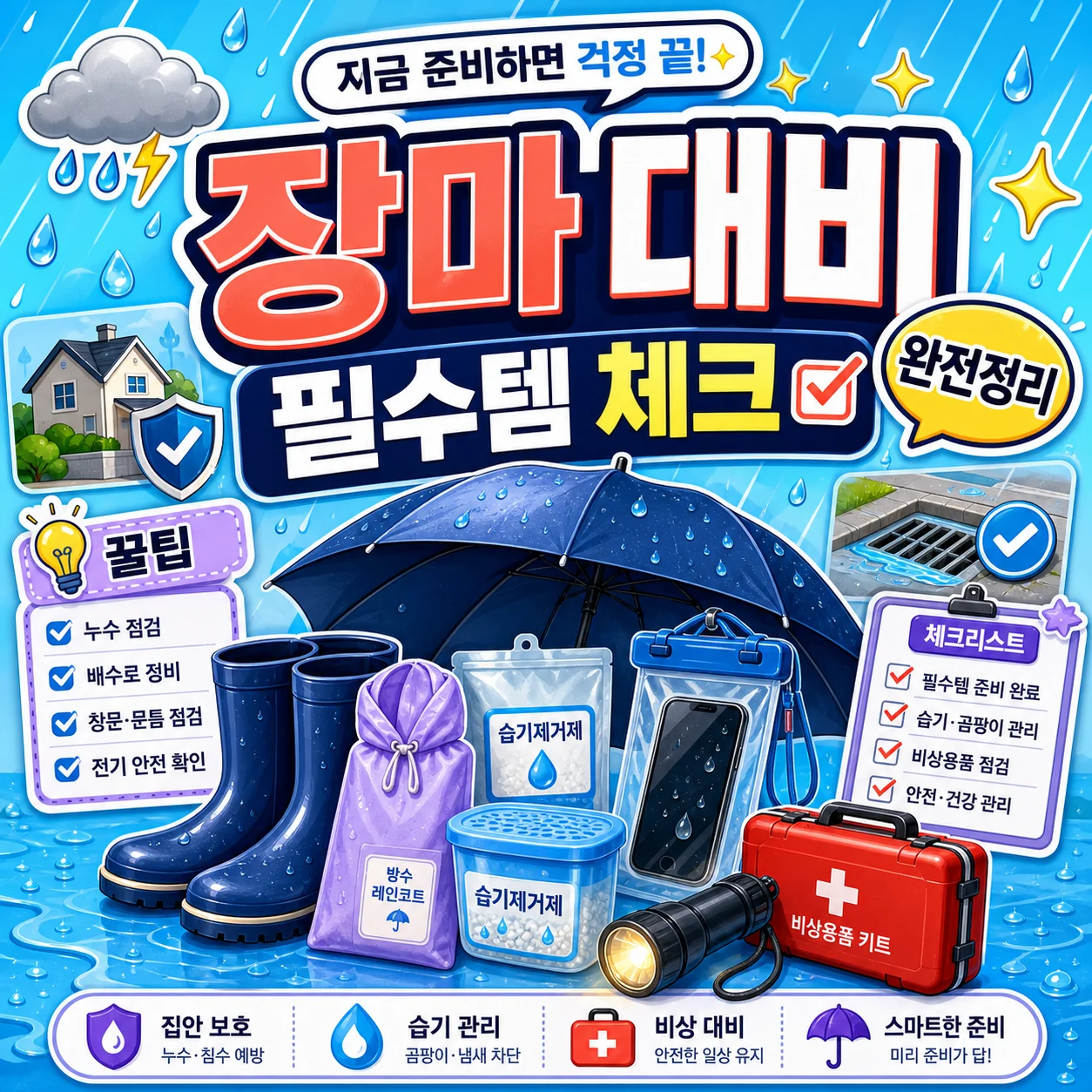
The key to preparing for the rainy season is preventing water ingress and managing indoor humidity.. waterspout와 window gapPlease check first. Waterproof equipment for going outMinimize wetting. Preparing in advance can reduce damage from mold and odors. dehumidifier와 waterproof packThis is an item to prepare first.
You can significantly reduce damage from the rainy season by prioritizing blocking water ingress and managing humidity in your home. For a dehumidifier, a capacity of 10 to 20 liters per day is an effective choice for a typical household. When preparing for an outing, prioritize waterproof performance and portability.
1. Places to check first at home
Checking the condition of the drain and drainage channels is the priority.. Drains clogged with fallen leaves or dust pose a high risk of backflow during the rainy season. Repair gaps in windows and doors in advance with silicone or waterproof tape. Window frame fixed stateChecking the sewer connection can reduce the possibility of water ingress.
2 Inspection items to reduce flood risk
If you prioritize and check, you can prepare quickly.. For basement or semi-basement residences, inspect the electrical cutoff points and drainage pumps first. Since areas like storage rooms and boiler rooms are prone to moisture buildup, check ventilation and drainage.
| Inspection items | Key measures | priority |
|---|---|---|
| waterspout | Removing fallen leaves and cleaning the drain strainer | height |
| gaps in windows and doors | Waterproof tape or silicone repair | middle |
| Basement/Low area | Check drainage pump and verify power cutoff location | height |
The table above is a comparison of items organized by priority for quick processing. It facilitates on-site inspections if you write down the actual action plan for each item in a checklist.
3. Which dehumidifier is suitable?
Select the dehumidifier capacity based on the size of the space and the humidity target.. For general households, products with a daily dehumidification capacity of 10 to 20 liters are commonly recommended. Since the risk of mold increases when indoor relative humidity exceeds 60 percent, a target humidity level of 50 to 55 percent is appropriate. Parallel operation during times when ventilation is possibleIf you do that, efficiency increases.
| Living room area | Recommended dehumidification capacity | Recommended points |
|---|---|---|
| 10 pyeong or less | 10-liter range | A small model is sufficient. |
| 10 to 20 pyeong | 12 to 16 liters | It is convenient to have a continuous drainage function. |
| 20 pyeong or more | 18 liters or more | Check dehumidification performance and energy efficiency |
The criteria in the table are based on a comparative perspective that combines real-world use cases and product specifications. Power consumption and noise when purchasing a dehumidifierChecking this together increases satisfaction.
4. What should you pack when going out?
When going out, prioritize waterproof performance and portability.. Windproof umbrellas are advantageous even against sudden strong winds. Check the waterproof rating and the condition of the seams on raincoats or rain boots. It is recommended to put electronic devices in a waterproof case for extra protection.
| Item | merit | Selection Criteria |
|---|---|---|
| windproof umbrella | Lightness, portability | Check windproof structure and umbrella diameter |
| raincoat | Full body protection | Waterproof PU grade material and breathability |
| waterproof pack | Electronic device protection | Whether complete sealing is possible |
팁 Based on the PU 2,000 to 5,000 millimeter waterproof standard, the material is sufficient for handling daily rainy weather. Storing light items in a waterproof double bag can help reduce damage from getting wet while on the go.
5. Post-Rainy Season Maintenance and Cleanup
After the rainy season passes, ventilate and dry thoroughly.. To prevent mold growth, quickly dry any signs of water damage or damp areas, and disinfect the surfaces if necessary. Manage wardrobes and shoe cabinets with dehumidifiers and ventilation. Regular inspectionYou can reduce damage during the next rainy season by doing this.
Recommended forThis applies to households with spaces at risk of flooding and residents of high-humidity areas. Key checkpoints include cleaning drains, reinforcing window frames, selecting a suitable dehumidifier, and preparing a portable waterproof bag. Prepare in advanceIf you do this, you can significantly reduce inconvenience during the rainy season.
Frequently Asked Questions
What is the most important point in preparing for the rainy season?
The key is to prevent water ingress and manage indoor humidity, so prioritize checking drains and window gaps to achieve this.
Where should you check first at home?
Prioritize removing fallen leaves and dust from drains and channels, and repairing gaps in windows and doors with silicone or waterproof tape. Also, check the condition of the window frames and drain connections.
Which dehumidifier is suitable to choose?
For general households, we recommend a product with a daily dehumidification capacity of 10 to 20 liters. The target relative humidity level is 50 to 551 TP3T, and please also check continuous drainage, power consumption, and noise levels.
What are the essential items you need to take with you when going out?
Prepare waterproof equipment such as windproof umbrellas, raincoats, and rain boots, as well as waterproof bags for electronic devices, but check the waterproof performance, portability, seam stitching, and complete sealing.