
Did you know that even if you drink the same amount of water, the effect on your metabolism varies completely depending on when you drink it? Many people drink water while only chanting the number "2 liters a day," but to see the actual effects... Where and when to drinkThat is really important.
In this article, we will discuss why the timing of water intake affects metabolic rate, and How to drink at different times of the day to increase efficiency Let me explain in detail. You can experience amazing changes simply by slightly altering your habit of drinking without thinking.
Why Water Timing Awakens the Metabolism

The key point is that the act of drinking water itself stimulates metabolism. Especially Drinking 500ml of water 30 minutes before a meal has the effect of increasing the daily metabolic rate by approximately 20–301.It goes beyond simply replenishing fluids to changing the very way the body consumes energy.
If you lack water in your body, your metabolism drops drastically. Even if your body is 1-2% dehydrated, you may already experience decreased concentration, fatigue, and headaches.This appears, and it is not just simple thirst, but a sign that the body as a whole is not functioning efficiently.
Water molecules are essential for the hydrolysis reaction that converts body fat into energy. This is precisely why people on diets emphasize water.
The secret to lukewarm water absorbing faster
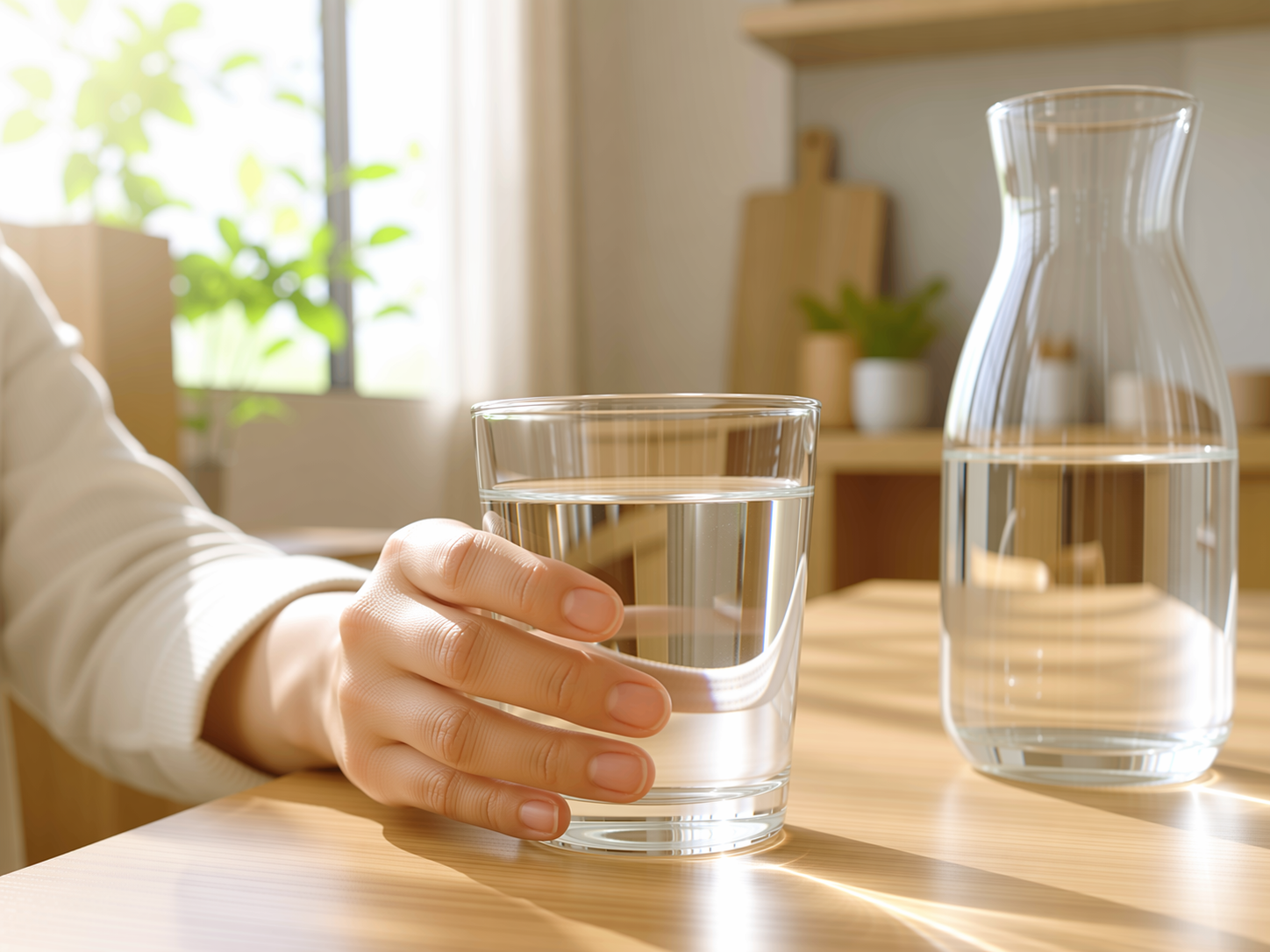
Water temperature also affects metabolism. Lukewarm water (about 20~30℃) stabilizes the autonomic nervous system without stimulation and has the fastest absorption rate into the body. Cold water irritates the stomach, while boiled water is absorbed relatively slowly.
The water you drink as soon as you open your eyes in the morning also has a significant impact. Drinking lukewarm water immediately after waking up awakens the metabolism that was inactive overnight, activating the digestive system, and, Promotes the elimination of waste products accumulated during sleepdo.
| slot | Amount to drink | Purpose and Effect |
|---|---|---|
| Immediately after waking up | About 200ml | Activating metabolism, eliminating waste |
| Around 10 a.m. | About 200ml | Maintaining focus in the middle of the morning |
| 30 minutes before lunch | About 200ml | satiety, increased metabolic rate |
| Around 3 PM | About 200ml | Afternoon energy replenishment, fatigue improvement |
| 30 minutes before dinner | About 200ml | Suppress late-night snack cravings, improve digestion efficiency |
| 2 hours before bed | About 200ml | Prepare for moisture loss overnight |
Before or after a meal, exactly when should I drink it?
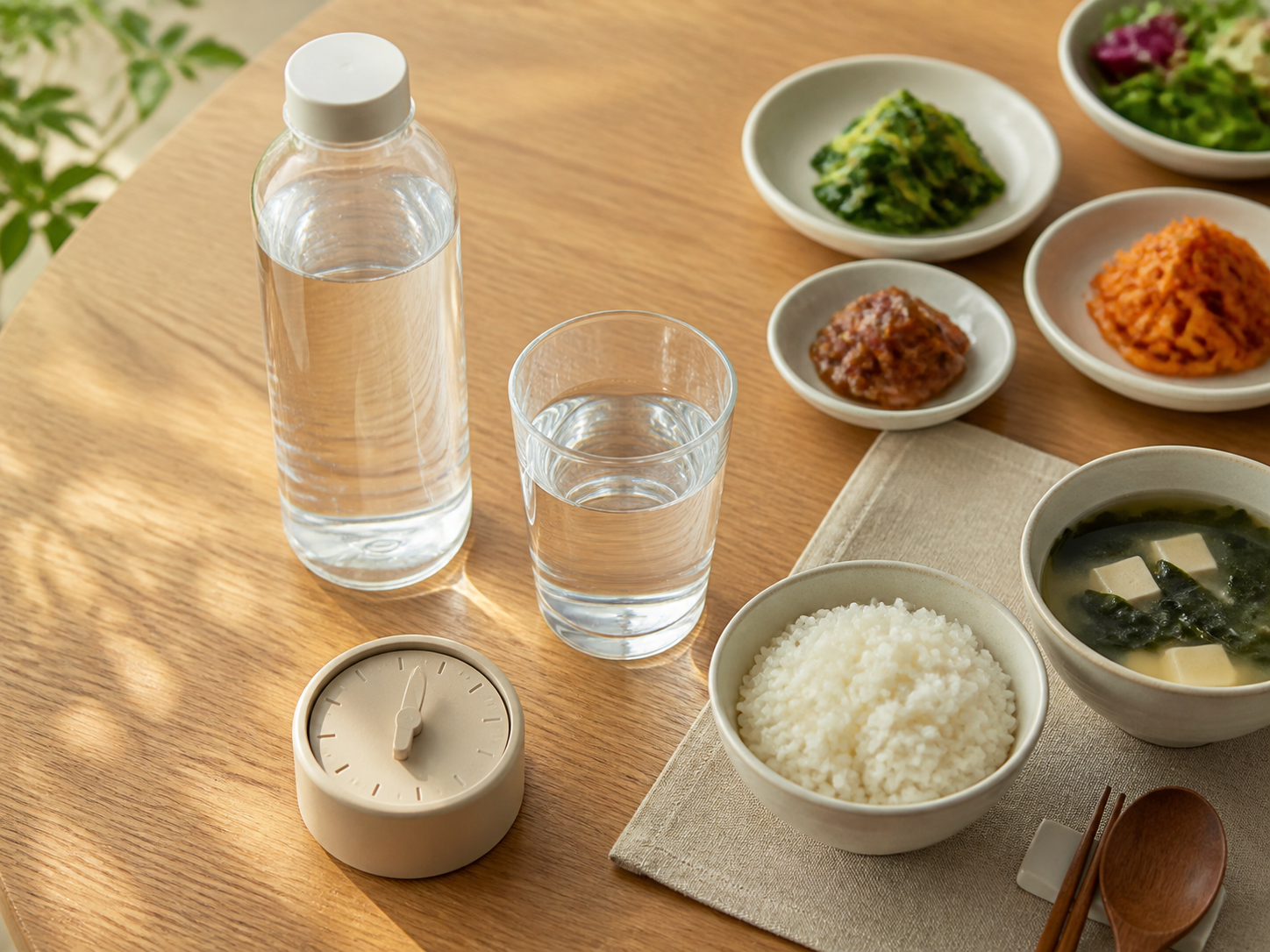
The optimal time to drink water is 30 minutes before a meal or 1 hour after a mealThis timing is important because it allows for the efficient regulation of stomach acid concentration and metabolism during the digestion process.
Drinking excessive water during or immediately after a meal dilutes stomach acid, reducing digestive efficiency. Conversely, drinking water 30 minutes before a meal creates a feeling of fullness, which can help reduce overeating, and activates metabolism in advance, improving the efficiency of digestion and absorption of consumed food.
A water drinking plan divided into 4-hour intervals
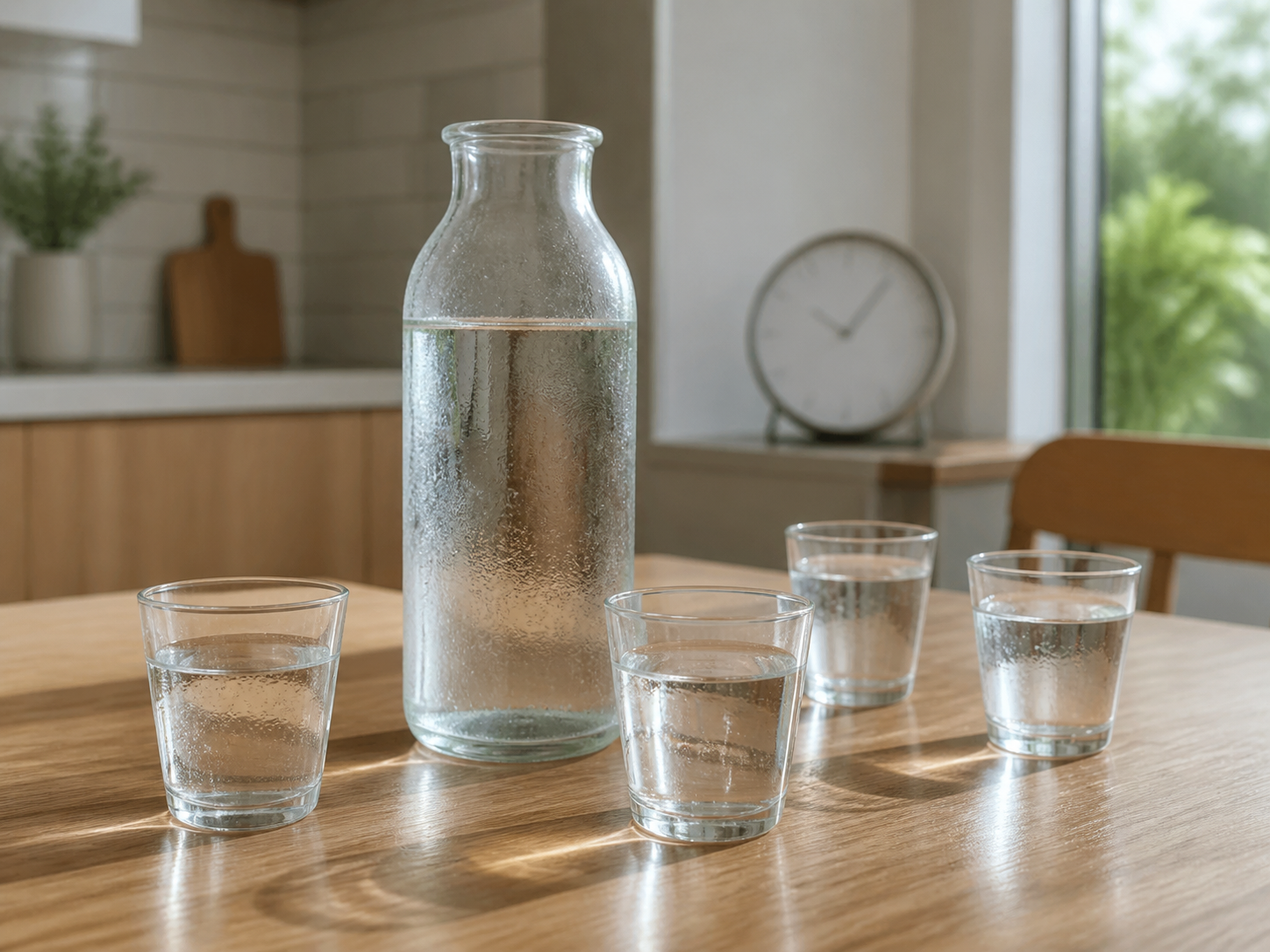
It becomes much easier if you create a specific timetable and execute it. A method of drinking about one paper cup (approx. 200ml) in small portions every hour or over four hours.This maximizes absorption efficiency. If you gulp down more than 500ml at once, it puts a strain on your kidneys, and most of it is simply excreted.
Here is a realistic timetable:
Drinking a large amount right before bed disrupts sleepPlease be careful. It is recommended to finish at least two hours before going to bed.
Common mistakes in water intake
The first mistake is Thinking of coffee or tea as a substitute for waterDue to their diuretic effect, caffeinated beverages cause the body to expel more fluid than the amount consumed. If you drink a cup of coffee, you must drink more water separately to actually replenish fluids.
The second is the habit of trying to drink a large amount at once. There is a limit to the amount of water the body can absorb at one time. Most of the water consumed in excess is excreted as urine, which reduces efficiency.
The third is insisting on only 2 liters while ignoring one's weight and activity level. In reality, individual differences play a significant role, and the season and living environment also have a major impact.
Calculating the amount of water I really need
The basic formula is simple: Body weight (kg) × 30~35ml. For example, if the body weight is 60kg, the standard amount is 1,800~2,100ml, or approximately 1.8~2.1 liters.
However, '2 liters a day' is The total standard including the moisture contained in the foodYou must not forget this point. In reality, the amount of water you need to drink purely as beverages is usually about 1.2 to 1.5 liters. This is because food such as rice, soup, fruits, and vegetables accounts for about one-third of your total water intake.
The season and activity level are also important. If you sweated a lot or exercised in the summer Add 200~500ml to the standard amountPlease do so. Conversely, it is okay to reduce the days slightly during winter or when you spend all your time indoors.
Ultimately, the true value of water lies not in 'how much you drink,' but in 'when and how you drink it.'.
A simple habit of drinking slowly at the right time can awaken your metabolism and bring about unexpected changes, ranging from weight management to fatigue recovery. Starting tomorrow morning, try beginning with a glass of lukewarm water immediately after waking up.