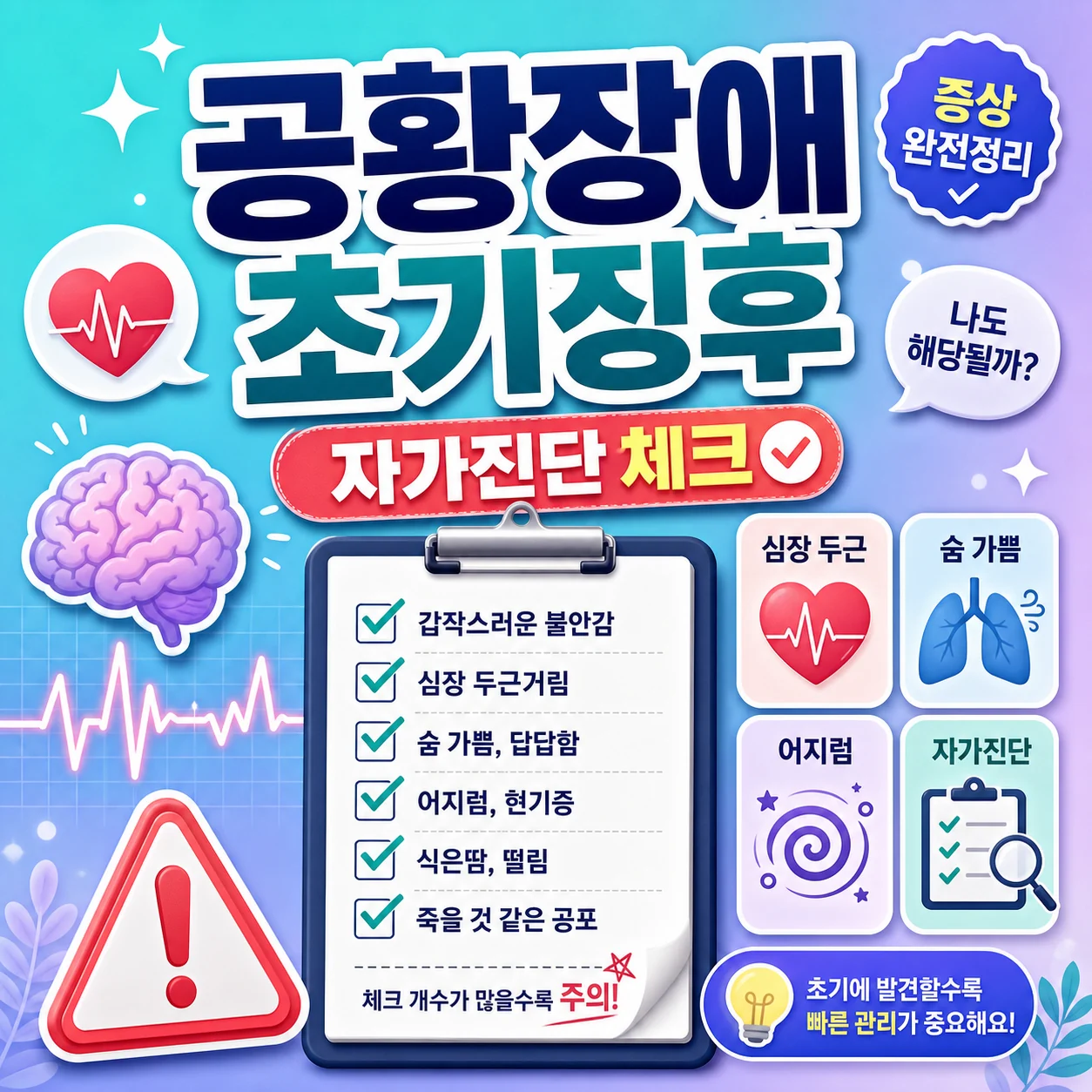

Sudden heart palpitations과 A suffocating feelingThis is repeated and afterwards Anxiety about whether it will happen againIf this follows, you can suspect a panic attack. Quickly recognize early signsIf you do that, it becomes easier to respond. Quick check와 Professional counselingThis helps.
The core of panic disorder is recurrent attacks and the anticipatory anxiety that persists after the attacks.
Check for warning signs with a simple self-assessment and get a professional evaluation if necessary.
1. How do the early signs appear?
In the early stages, sudden physical symptoms and the accompanying intense anxiety are the primary manifestations. Typical symptoms include recurring heart rate, shortness of breath, chest pain, and dizziness. If attacks recur, it can lead to anxiety and avoidance regarding overall daily life. Studies estimate the lifetime prevalence to be approximately 2 to 5 percent, and the age of onset frequently occurs between the 20s and early 30s.
2. 7 Typical Symptoms of a Panic Attack
Panic attacks are characterized by sudden and extreme discomfort reaching a peak within a short period of time. The seven commonly reported symptoms are rapid heartbeat, shortness of breath, sweating, trembling, dizziness, lethargy, and a sense of reality. Symptoms typically peak within minutes and usually improve within 10 minutes. After an attack, anticipatory anxiety about whether it will happen again can persist for days to weeks.
| division | panic attack | General instability |
|---|---|---|
| Seizure begins | Suddenness | Gradual deterioration |
| Time to peak | Usually within 10 minutes | hours to days |
| Key Contents | Severe physical symptoms and fear of death | Center of worry and tension |
| Behavioral change | Attempts to evade or escape are common | Continued excessive worry |
3 Self-Assessment Checklist and Score Interpretation
You can identify warning signs using a simple checklist. The table below consists of seven common items, and the results are calculated by summing up whether each item applies. This test is for screening purposes only; a professional evaluation is required for a confirmed diagnosis. Professional consultation is recommended if four or more items apply.
| item | Example questions |
|---|---|
| Increased heart rate | Did you suddenly feel your heart racing and suffocating? |
| shortness of breath | Have you ever felt short of breath or lacked air? |
| sweating and shivering | Was there any unexplained sweating or trembling? |
| Dizziness/Instability | Have you ever felt dizzy or lightheaded? |
| unreality | Have you ever felt that your surroundings were unreal? |
| Fear of death | Have you ever felt such intense fear that you were going to die? |
| avoidance behavior | Have you ever avoided specific places or situations to avoid seizures? |
4. When should I seek professional help?
If seizures recur or anxiety persists for more than a month after a seizure, professional evaluation is recommended. Additionally, prompt counseling is advised if daily life or work is interfered with. An emergency room visit is necessary if chest pain is very severe or accompanied by decreased consciousness or high fever. Early intervention helps improve the condition, and cognitive behavioral therapy or medication are reported as the primary treatment options.
5 Simple Self-Care Tips and First Aid Methods
When an attack occurs, first try to regulate your breathing slowly. Gentle breathing, such as inhaling for 4 seconds and exhaling for 6 seconds, is helpful. Next, calming your mind by feeling the sensation of the bottom using the five observation methods can help alleviate symptoms. In case of an emergency, inform those around you of your condition and move to a safe place.do. Regular sleep and caffeine restrictionIt helps lower the risk of recurrence.
To summarize Quickly recognize early signs and check for danger signals with a simple self-diagnosis. If symptoms recur or interfere with daily life It is safe to receive a professional evaluation. Rapid interventionIt increases the possibility of recovery.
Frequently Asked Questions
How do the early signs of panic disorder manifest?
In the early stages, sudden physical symptoms and intense anxiety are the primary symptoms, and typical symptoms such as increased heart rate, shortness of breath, chest pain, and dizziness may occur repeatedly. If attacks recur, it can lead to worry and avoidance regarding daily life.
What are the typical symptoms of a panic attack?
Common symptoms include a rapid heartbeat, shortness of breath, sweating, trembling, dizziness, derealization (loss of reality), and fear of death; symptoms peak within a few minutes and generally improve within 10 minutes.
How do you interpret a simple self-assessment checklist?
Check the 7 common items; if 4 or more apply, professional consultation is recommended. This test is for screening purposes, and a confirmed diagnosis requires expert evaluation.
When should I seek professional help?
If seizures recur, anxiety persists for more than a month after a seizure, or interferes with daily life and work, you should receive a professional evaluation. If chest pain is very severe or accompanied by decreased consciousness or high fever, you should consider visiting the emergency room. Cognitive behavioral therapy and medication are reported as the main treatment options.