
If the fever is not high and the cough has only been a little prolonged, it is easy to mistake it for a simple cold, but pediatric Mycoplasma pneumonia can start with seemingly mild symptoms.
When distinguishing it from a common cold, you must examine the duration of the cough, the child's activity and dietary intake, and respiratory status together, rather than just the fever level. In this article, I will summarize the characteristics of Mycoplasma pneumonia in children, the criteria for requiring hospital treatment, and precautions to take at home, in order.
A dry cough that lasts longer than a cold is the key clue.

While symptoms of the common cold generally subside within a week, Mycoplasma pneumonia A dry cough that lasts for 2 to 3 weeks or moreIt can happen. It starts with a runny nose and sore throat, followed by a gradually worsening cough that can disrupt sleep at night.
Mycoplasma pneumonia is Mycoplasma pneumoniaeIt is a respiratory infection caused by bacteria. It is transmitted through droplets from coughing or sneezing, and spreads easily in spaces where children spend time together, such as daycare centers, kindergartens, and schools.
Not all prolonged coughs are pneumonia, but if a cough persists for more than two weeks accompanied by fever or lethargy, it is necessary to determine that it is not just a common cold.
Comparing Pediatric Mycoplasma Pneumonia with the Common Cold

Mycoplasma pneumonia is also commonly referred to as "walking pneumonia." Even if lung infiltrates are visible on a chest X-ray, the child may not appear severely ill, and conversely, it is difficult to distinguish whether pneumonia is present based on symptoms alone.
| division | common cold | Mycoplasma pneumonia |
|---|---|---|
| cough | Generally improves within one week | A dry cough may persist for 2 to 3 weeks or longer |
| 열 | It often appears briefly and then improves. | High fever or mild fever may recur |
| General condition | Activity levels are relatively maintained | Loss of appetite, lethargy, and fatigue may occur. |
| breathing | Generally no major changes | Breathing may become rapid or wheezing may occur |
The absence of a fever or a low-grade fever does not rule out pneumonia. Even if the cough appears mild, signs of pneumonia can be found on chest X-rays, so you must assess the duration of symptoms and the child's overall condition together, rather than just the severity.
Young children notice changes in their lifestyle before they see a cough.
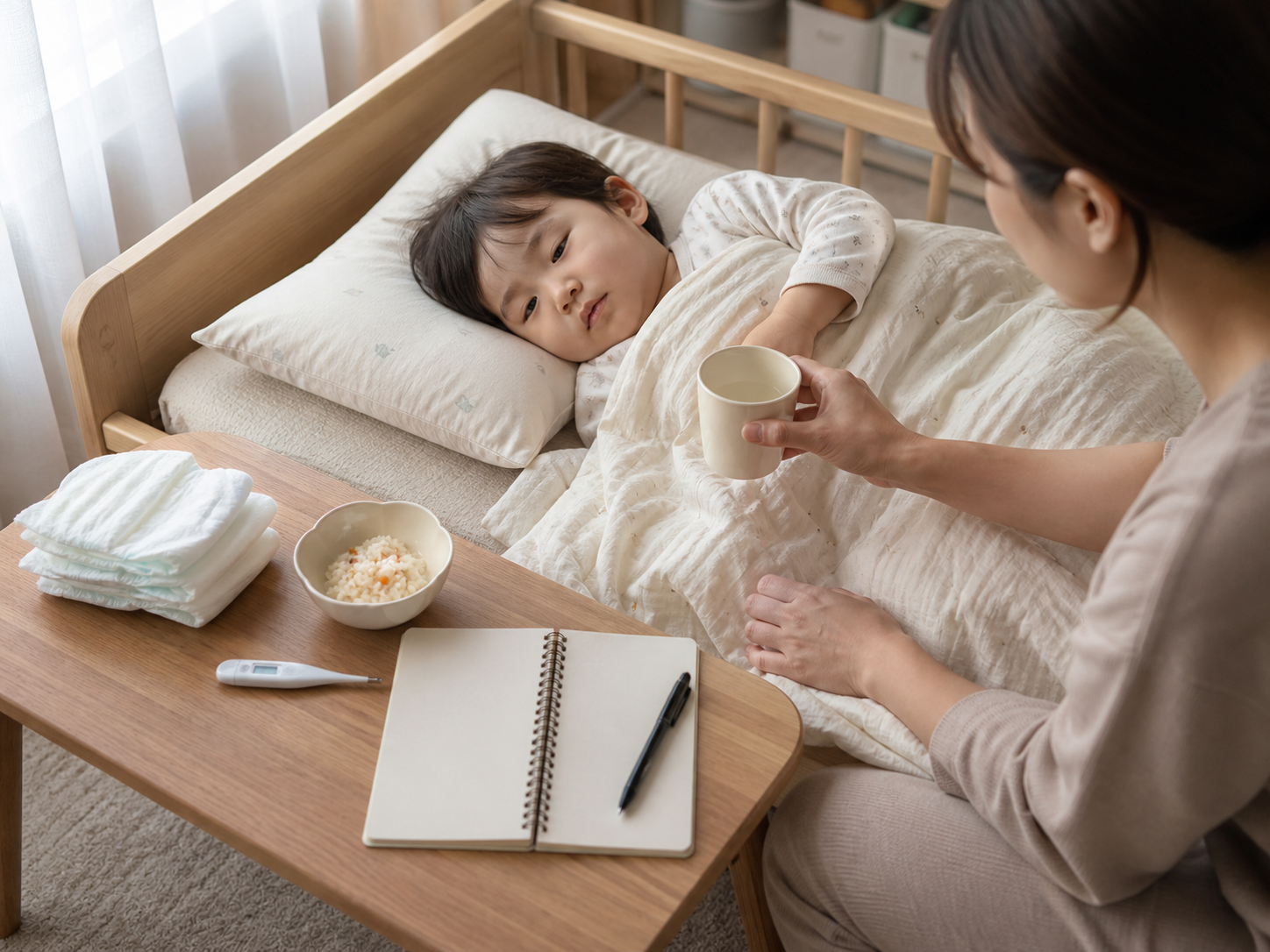
Infants who find it difficult to explain their discomfort verbally, rather than typical coughs or phlegm Decreased feeding and food intake, more fussiness than usual, lethargic appearanceIt can send signals. Difficulty falling asleep or waking up frequently due to coughing are also things to observe.
If your breathing becomes faster than usual, your ribs appear sunken, or you hear a wheezing sound, it could be a sign that your breathing has deteriorated. If your lips or face turn blue, or if you are unable to drink water properly, you should seek medical attention immediately without delay.
Rather than simply waiting while checking your temperature, recording your daily food intake, frequency of urination, time spent sleeping, and when your cough worsens will aid in the medical process. Especially during periods when respiratory infections are prevalent in daycare centers or schools, please also check for any cases in your surroundings.
What tests should be performed if a cough and fever persist?

In pediatrics, the necessary tests are selected after first examining the child's symptoms and auscultation results. Blood tests, antibody tests, rapid antigen tests, chest X-rays, and sputum PCR tests may be used for diagnosis.
Chest X-rays are used to check for pneumonia and the extent of inflammation in the lungs, while PCR testing is a method that identifies the genetic material of Mycoplasma in the specimen. Diagnosis is not made based on a single test result but is taken into account together with the child's symptoms and physical examination findings.
When a cough persists for more than 2 weeks or a fever continues, You should see a pediatrician if your child appears noticeably lethargic and has difficulty breathing. It is also safer not to delay medical attention if high fever recurs or if food and fluid intake decreases.
During treatment, you need to monitor the antibiotic response and the cough separately.
For Mycoplasma pneumonia, macrolide antibiotics such as clarithithromycin or azithromycin can be used as first-line treatments. Some antibiotics commonly used for general bacterial pneumonia, such as penicillin or amoxicillin, are ineffective against Mycoplasma.
A cough may persist for several weeks even after starting medication. If the fever has subsided and the child's activity and appetite are recovering, do not conclude that the treatment has failed simply because the cough remains.
Conversely, after taking the first-line antibiotic If the fever does not subside or the condition worsens after 48 to 72 hours You must revisit the prescribing hospital. Parents should avoid arbitrarily adding antibiotics or switching leftover medication, and the medical team will decide to switch to a different medication based on the child's age and condition.
Attendance and home care are based on the recovery status.
Although Mycoplasma pneumonia is not subject to mandatory legal quarantine, it is advisable to refrain from attending daycare, kindergarten, or school while coughing and fever persist. Do not determine when to return to school based solely on the timing of antibiotic administration; you should also check whether the child has been fever-free for 24 to 48 hours and has recovered their overall condition.
However, since return criteria may vary by institution, you must check the infection control guidelines with the homeroom teacher or the institution. Within the family, you can lower the risk of transmission by using separate towels and utensils, washing hands frequently, and reducing close face-to-face contact with a child who is coughing.
At home, please give the child small amounts of water or electrolyte drinks frequently and ensure they get plenty of rest. Fever reducers must be used according to the prescribed dosage and product suitable for the child's age and weight; if the child shows signs of shortness of breath or severe lethargy, medical attention should take priority over home care.
What is more important than the temperature is whether the child is breathing comfortably, consuming food and water, and reacting as usual. If these three things have changed, do not assume it is a cold.