
It is more important to adjust the humidity within the 40–60°C range according to the indoor temperature and season, rather than raising it too high. In particular, humidity levels in the same space vary significantly during the winter when heating is on and the summer when air conditioning is used.
In this article, I will organize the information step-by-step, covering everything from seasonal guidelines and temperature-based adjustments to the management scope of a newborn's room, types of humidifiers, and cleaning methods. First, the key is to measure the current readings with a hygrometer and humidify only as much as necessary.
Adjust the humidifier's optimal humidity within the range of 40 to 60.
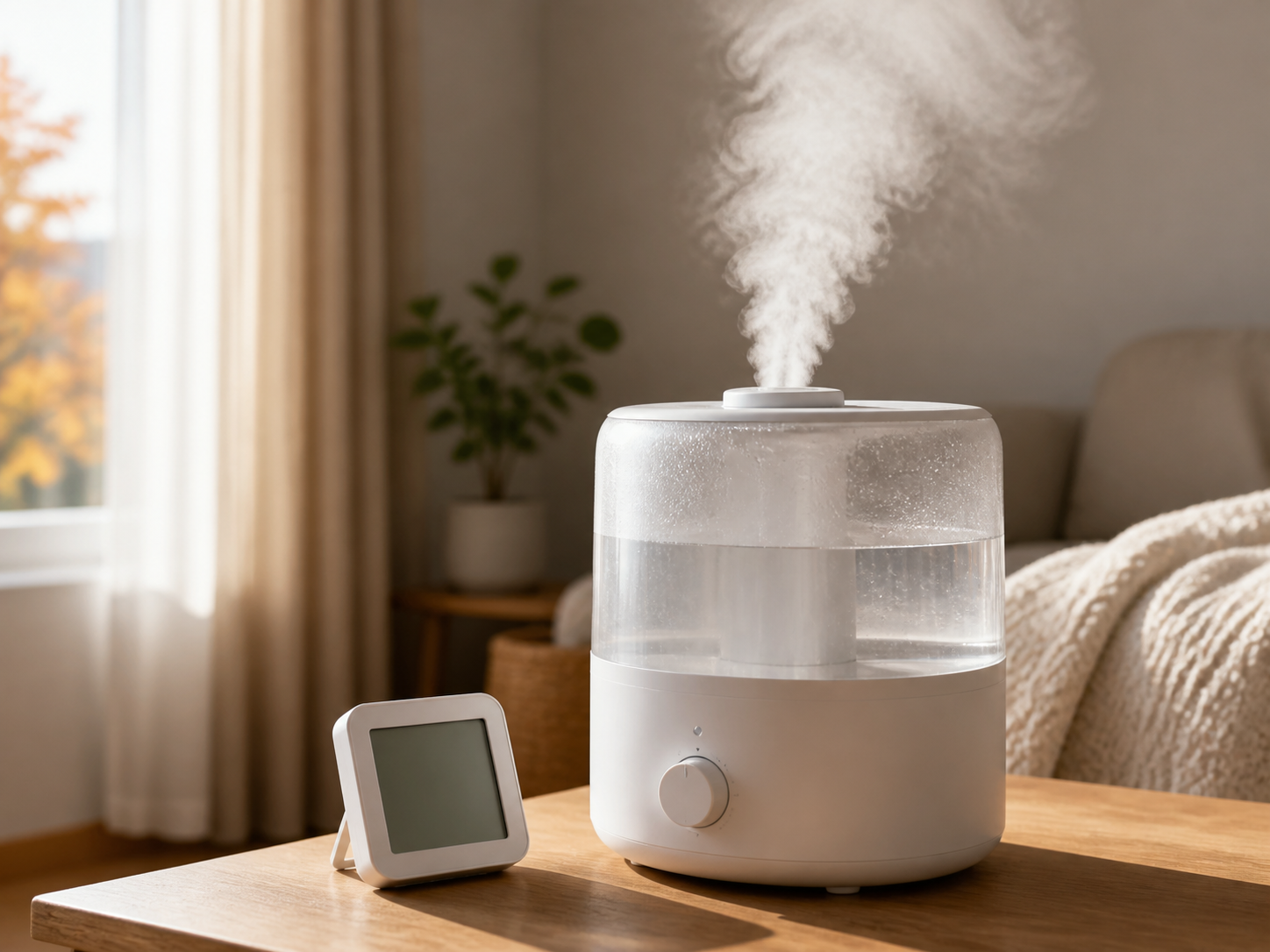
Indoor humidity in autumn and winter is usually 40~60% A range is provided as a standard. In winter heating environments, around 40–501 TP3T is easy to manage, and if the indoor temperature is 18–20 degrees, humidity can be maintained up to around 601 TP3T.
Conversely, if the heating temperature exceeds 23 degrees, the indoor environment tends to become dry, making a humidity level of 40% suitable. Rather than turning on the humidifier immediately just because the numbers are low, you should check the temperature and humidity readings in the living room and bedroom separately to ensure you do not miss the different conditions in each room.
Do not determine the optimal humidity based on the humidifier's operating time; instead, adjust it based on the actual reading displayed on the hygrometer.
Share the optimal humidity standards for humidifiers by season.
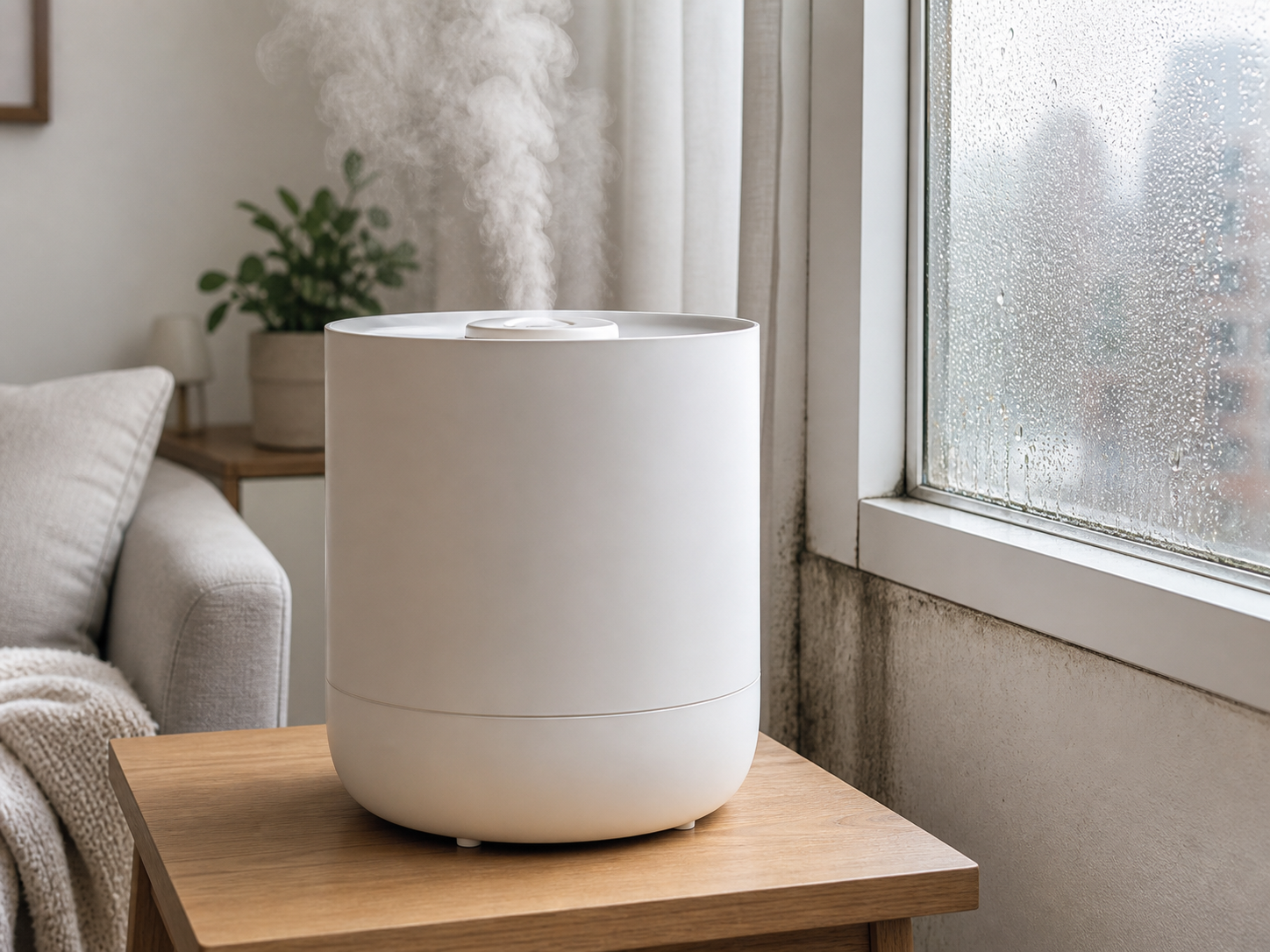
The causes of a drop in indoor humidity vary depending on the season. In autumn, humidity tends to drop below 301 TP3T as the outside air becomes dry, while in winter, the dryness intensifies due to the added effect of heating.
While air conditioners can reduce indoor humidity in the summer, humidifiers are not necessary on days when outdoor humidity is high, such as during the rainy season. If water droplets form on windows and walls or the room feels damp, you should stop humidifying and lower the humidity through ventilation.
Reasons for changing humidity targets based on indoor temperature
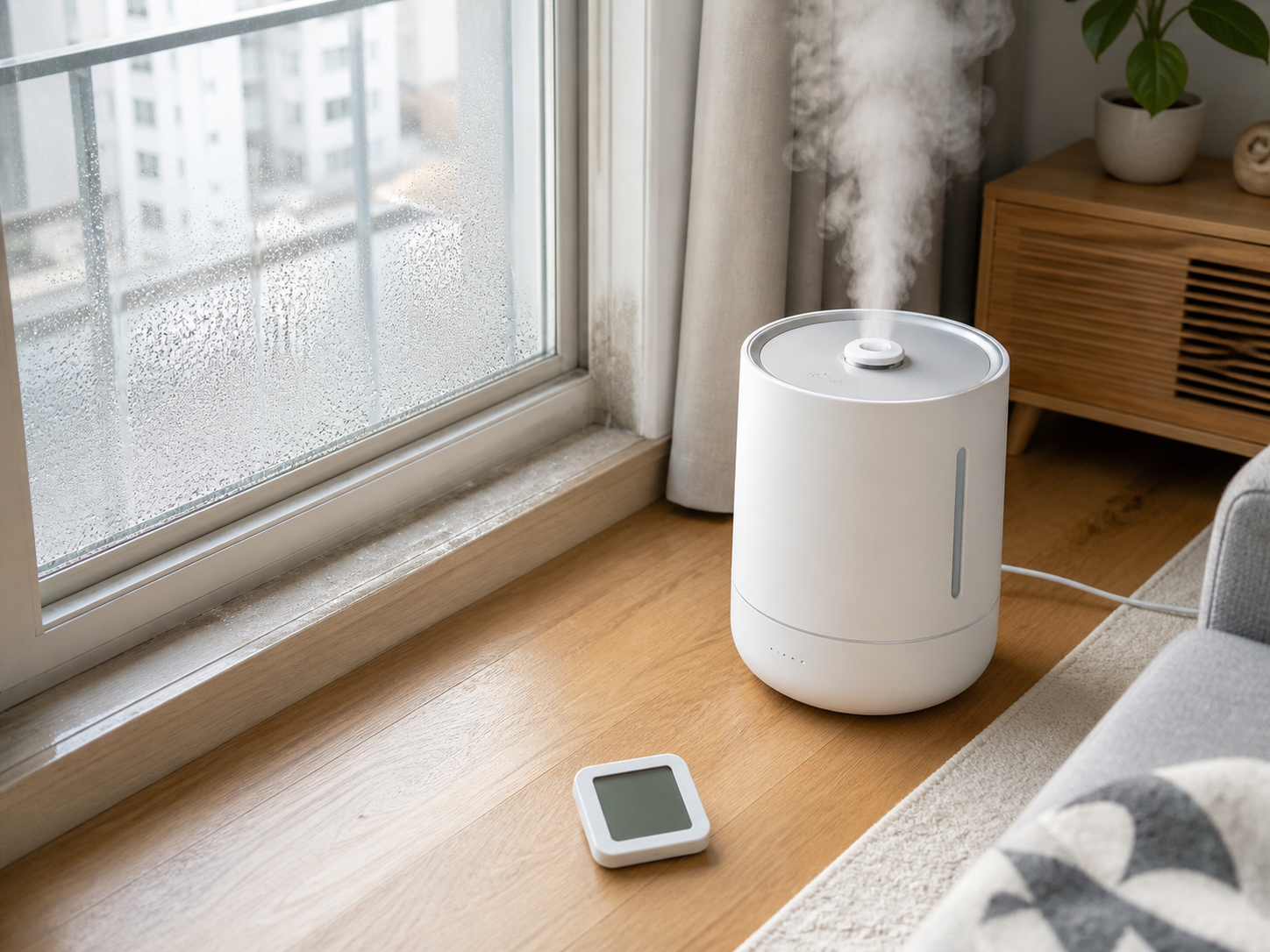
Temperature and humidity must be considered together. Even with the same 50%, if the indoor temperature is high, the amount of moisture in the air increases, raising the likelihood of condensation forming on cold wall or window surfaces.
While a humidity level of around 601 TP3T is recommended for temperatures between 18 and 20 degrees, 401 TP3T is appropriate for heating environments exceeding 23 degrees. Therefore, rather than fixing the humidifier's target value to a single level, you should consider both the heating intensity and the room's surface temperature.
If water droplets form on the windows or the wallpaper becomes damp, lower the humidification level and ventilate. Higher humidity is not necessarily better., Excessive moisture can lead to indoor contamination such as condensation and mold.
Please check the room levels for newborns and children first.
| environment | Management standards | Things to note |
|---|---|---|
| Dry indoors in autumn | 40~60% | If 30% or less, consider humidification |
| Indoor heating during winter | 40~50% | Adjust to prevent condensation |
| 18~20 degrees indoors | Up to about 60% | Check for moisture around walls and windows |
| Heating environment exceeding 23 degrees | Approx. 40% | Lowering the heating also reduces dryness. |
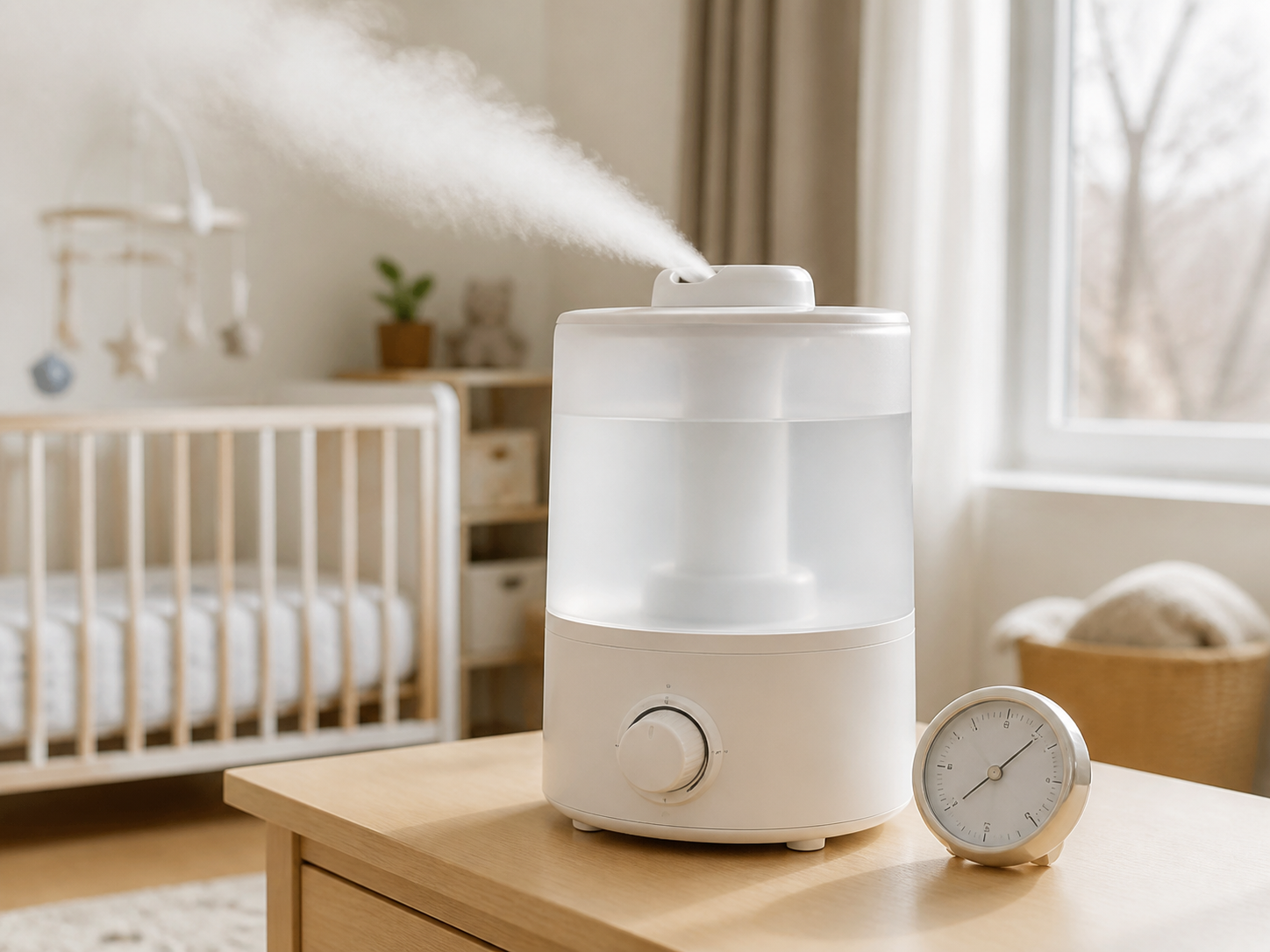
You do not need to keep the humidifier on constantly just because there is a newborn in the room. If the room's humidity is already within the appropriate range, stop the additional humidification and operate it only as much as necessary when it is dry.
Position the spray nozzle so that it is not aimed at the baby's face or bedding. Direct contact of water droplets with the skin or bedding can cause discomfort and moisture issues, and you should also avoid placing it where the spray reaches walls or windows.
You should not attribute a child's cough or nasal congestion solely to humidity. Since humidifiers are not devices that prevent or treat laryngitis, if symptoms persist, you must seek medical attention regardless of humidity control.
| division | Ultrasonic type | Heated type |
|---|---|---|
| How it works | Water droplets sprayed by a vibrating plate | Boiling water to generate steam |
| Power consumption | Approximately 20~40W | Approximately 200~800W |
| merit | Quiet and fast humidification response | Operated by high-temperature steam |
| Precautions | Mineral and bacterial dispersion and efflorescence | Hot water and steam burns |
Choose between ultrasonic and heating types based on your usage environment.
Ultrasonic systems use vibrating ceramic plates to break water into fine droplets and spray them. Power consumption is low at approximately 20–40W and operation is quiet, but water management is important as minerals or bacteria in the water can spread along with the water.
Heating types boil water to nearly 100 degrees Celsius to generate steam, and their power consumption is approximately 200 to 800 W, which is higher than that of ultrasonic types. Due to the risk of burns from hot water and steam, they must be installed out of reach of young children in areas where they are present.
In any case, the product structure and management status affect hygiene. The habit of not skipping water changes and cleaning, rather than the methodThis determines the safety of actual use.
There are also ways to supplement humidity without a humidifier.
If the humidity is slightly insufficient, you can add moisture using a wet towel or laundry drying indoors. It can be used without additional power, but the humidification speed is slow, and the change is limited in large rooms.
Water-retaining objects like hydroponic plants or pine cones can also serve as supplementary measures. However, they require water replacement and dust management, and are less effective than humidifiers in situations where humidity needs to be increased quickly.
First, record the temperature and humidity readings, apply a method, and then observe the changes again. Adding a humidifier to a room that already maintains 40–501 TP3T may actually increase condensation.
Please maintain the humidifier water and clean it daily.
Ultrasonic units require daily maintenance, including changing the water and cleaning. Since contaminants can accumulate inside if water is left in the unit for an extended period, it is safer not to leave leftover water until the next day.
Clean the area around the spray nozzle and the water tank according to the product manual and dry them completely. If you see white powder around the nozzle while using the ultrasonic function, it may be a whitening phenomenon caused by minerals spreading in the water, so you should check both the water management and the cleanliness of the device.
Do not place the humidifier right against the bed or wall; place it in a spot where the air circulates. Lower the humidification level or stop operation the moment water droplets form on windows, walls, or bedding.This is the first thing to do.