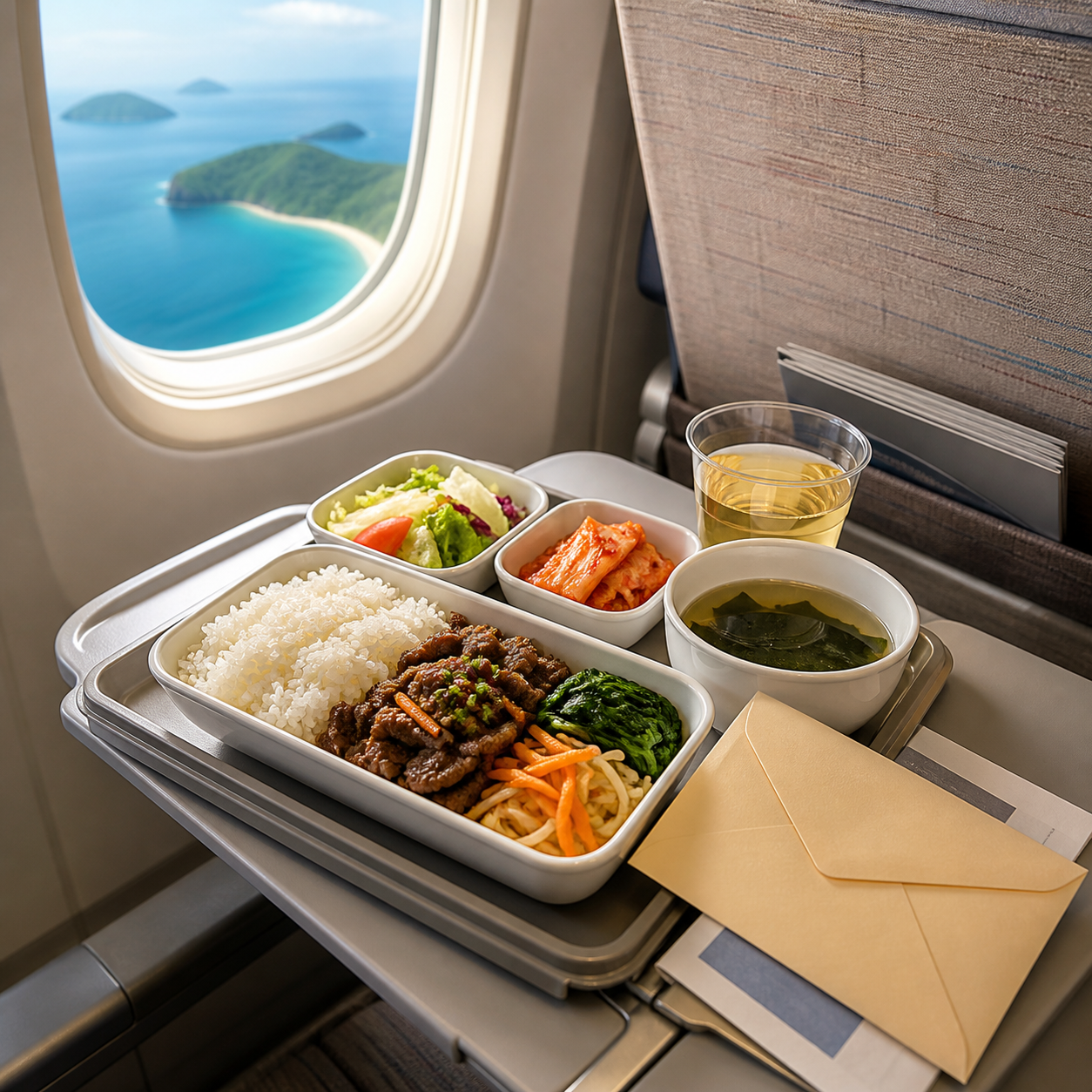
When booking a Korean Air flight to Phu Quoc, you are likely wondering whether you should focus solely on the ticket price, if the seats and in-flight meals are satisfactory, and if you can receive compensation in case of a delay. Based on an actual round-trip trip taken from July 11 to 18, 2026 for 7 nights and 8 days, I will summarize everything at once, including ticket prices, flight status of KE485 and KE486, seat experience, in-flight meals, and delay insurance.
This review is based on an experience from a specific flight date, rather than a guide applicable to all Korean Air flights. In particular, since ticket prices, in-flight meal menus, reasons for delays, and insurance premiums vary depending on the booking time and flight date, I will examine the situation at the time and general points for reference separately.
Seat comfort and delay variables are key factors for the Korean Air round-trip flight results to Phu Quoc.
For a flight in July 2026, the round-trip Korean Air ticket cost a total of 1,027,888 won for two people, or 513,944 won per person. After comparing flights on Skyscanner, Gmarket, and Naver, I made the reservation through Trip.com, which is linked via Skyscanner.
The seats felt relatively spacious with legroom, and water and blankets were provided. On the other hand, the outbound flight KE485 departed about 2 hours and 28 minutes late, and the return flight KE486 was also delayed by about 1 hour, so if you have a tight schedule, you should keep the possibility of delays in mind.
The seats and in-flight service for the Korean Air round trip to Phu Quoc were decent, but you need to check the airline and travel insurance separately regarding delay coverage.
You need to look at Korean Air Phu Quoc flight ticket prices based on bookings made in July 2026.

At the time, I waited a while to make the purchase in anticipation that the fuel surcharge might decrease in July, but as a result, it did not become cheaper and I actually ended up paying a slightly higher amount. The figure of 513,944 KRW per person is an actual payment case from a specific itinerary and vendor, and is not a fixed fare for the Phu Quoc route.
When making a reservation, do not look only at the displayed total price; you should also check whether checked baggage, seat selection, and payment fees are included in the fare. Since the final price can vary depending on the seller and fare type even for the same date, it is efficient to compare multiple search channels side-by-side.
Korean Air direct flights may have different flight numbers depending on the flight date; the outbound flight used for this trip was KE485, and the return flight was KE486. When choosing a flight ticket, it is easier to manage your itinerary if you consider not only the flight number but also whether the departure time fits your accommodation and airport transfer plans for the first and last days of your trip.
I checked the seats and in-flight services for the flight to Phu Quoc based on economy class.
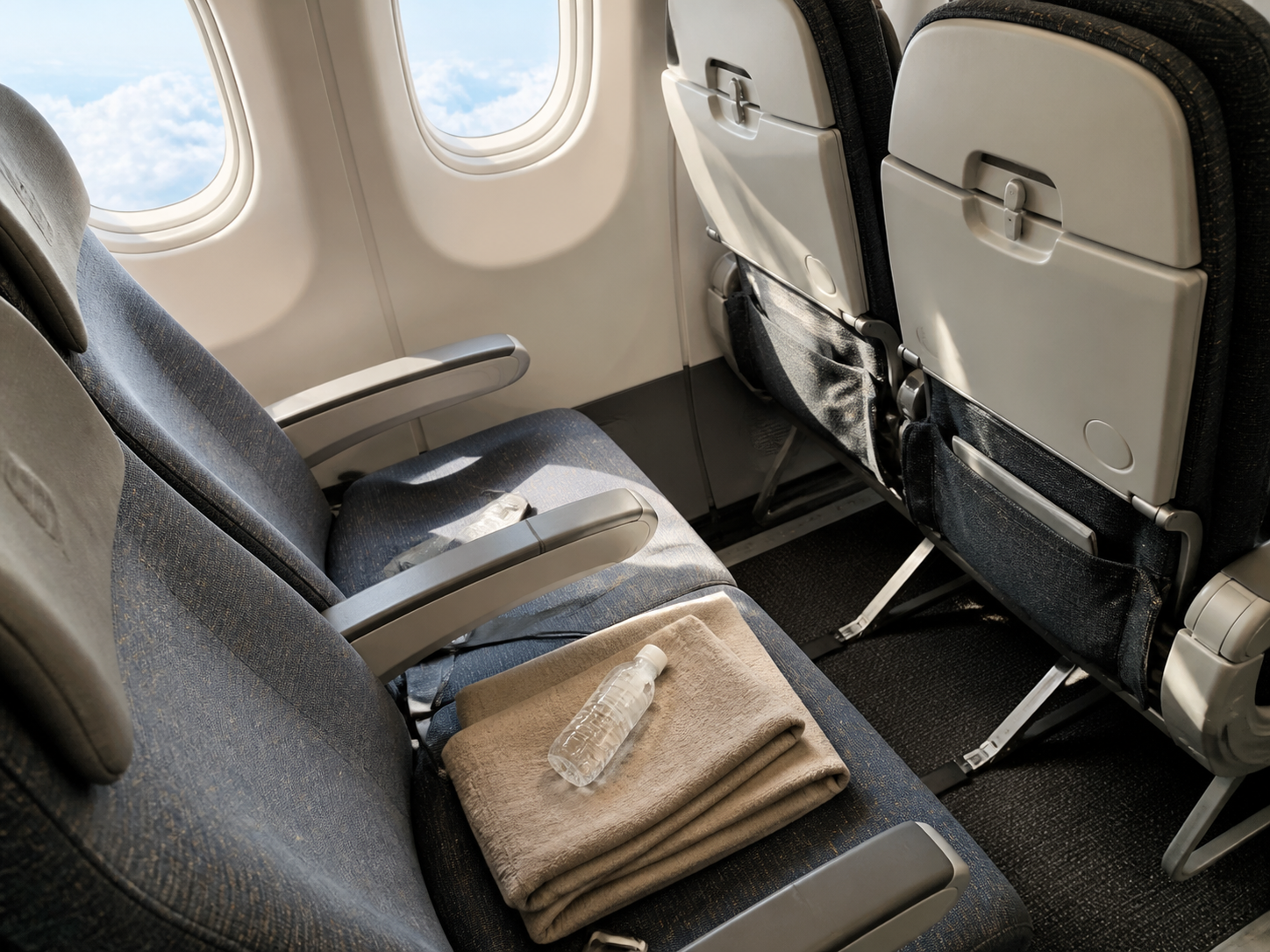
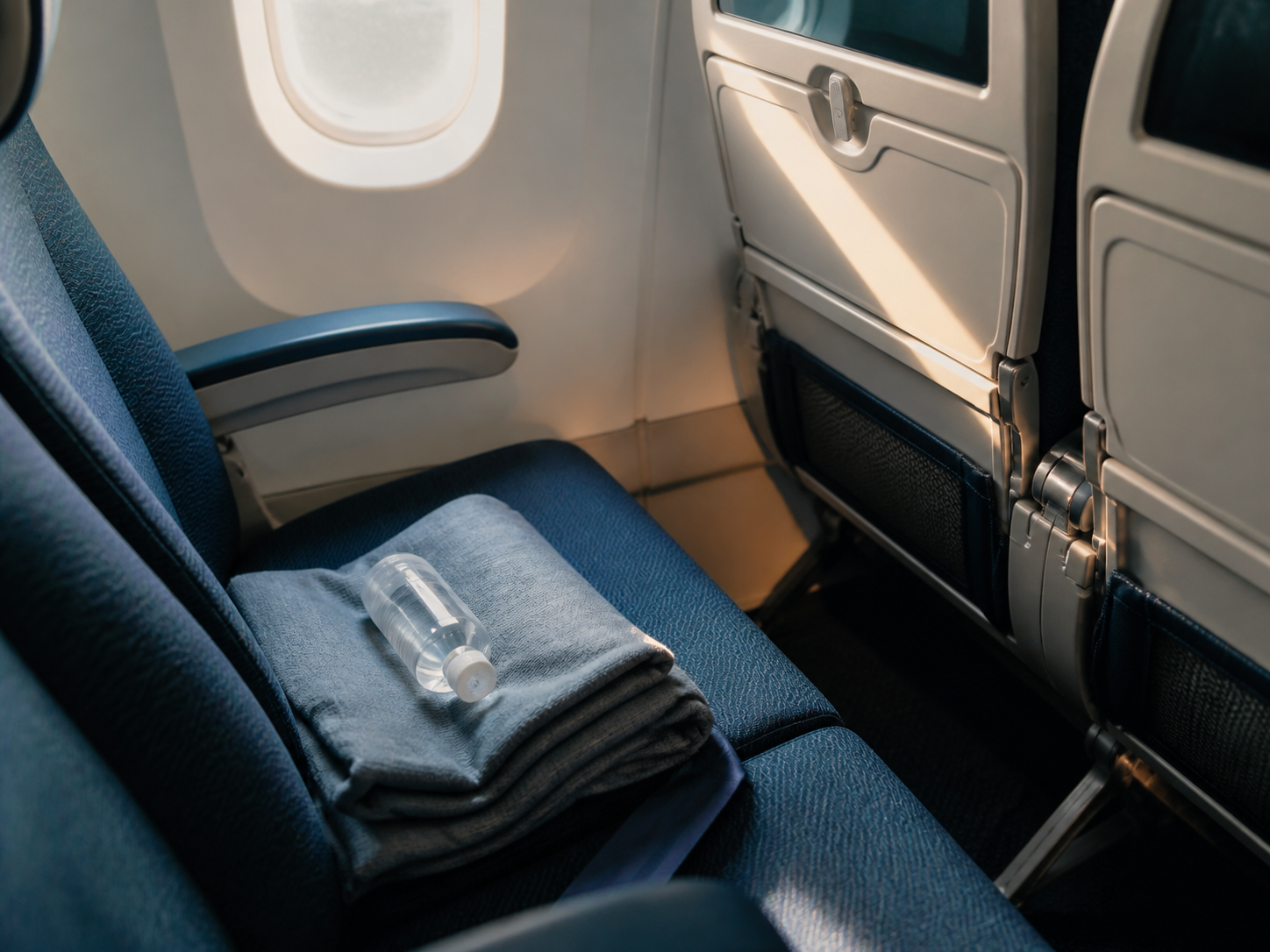
Based on my experience, the knee room in the economy seats on the outbound flight was more generous than expected. Reference materials describe the economy seat configuration as 2-4-2 with legroom of approximately 81–84 cm, but actual experience may vary depending on height and seat location.
Water and a blanket were placed on the seat, and the blanket was useful when it got cold due to the cabin air conditioning. Since this is a route where you sit for a long time, bringing a light jacket makes it easier to regulate your temperature without relying solely on the blanket.
On the return flight, the seat next to me was empty, allowing me to recline a little, which was comfortable, but this was the situation at the time of boarding that particular flight. Since not all passengers enjoy the same amount of legroom, it is safer to judge based on the conditions of the assigned seat itself rather than expecting an empty seat.
The Korean Air in-flight meal menus for the outbound and return flights to Phu Quoc were different.
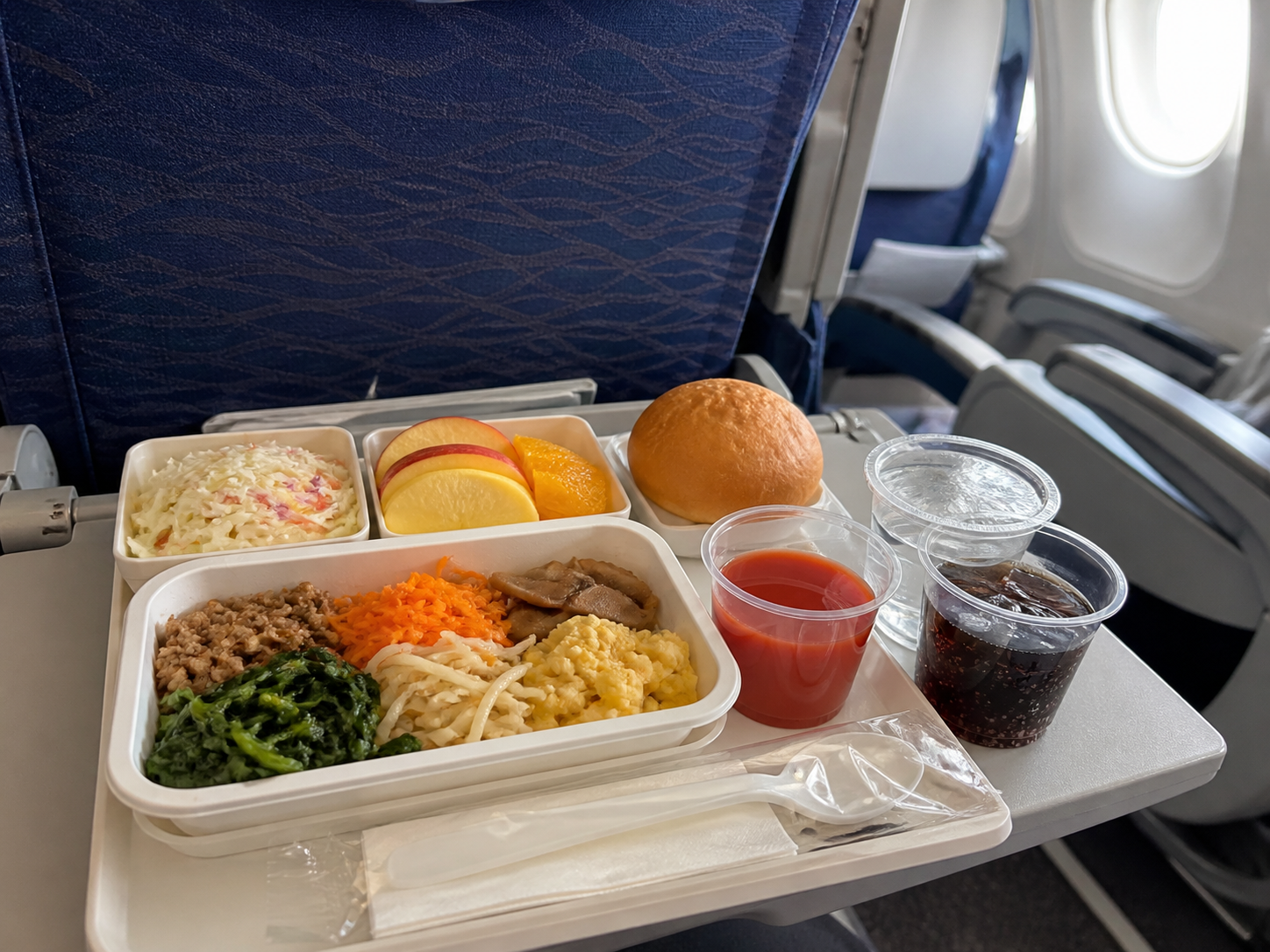
For the outbound flight KE485, the in-flight meal was served around 10 PM after actual departure, and I chose between bibimbap and Chinese-style stir-fried beef. The basic set included coleslaw, fruit such as apples and oranges, bread, and water, and for the beverage time, I chose tomato juice and Zero Coke.
The bibimbap was decent and enjoyable, but personally, I was left wanting more with the Chinese-style stir-fried beef. Since evaluations of the same menu can vary depending on the in-flight environment and personal taste, it is less burdensome to view in-flight meals as a simple snack rather than expecting them to be the main meal of your trip.
On the return flight KE486, porridge and scrambled eggs were served on the menu around 4:45 AM. For my companions sitting in the middle seats, only scrambled eggs were left because the passengers in front had already chosen a lot of porridge; however, when we actually ate it, the taste was better than it looked, and the side dish that looked like meatballs and the blueberry yogurt were also satisfying.
Depending on your seat location, your desired menu item may run out first. Menus prepared separately, such as kids' meals, fruit meals, and low-sodium meals, are available for request via the app or website up to 24 hours before departure, and there have been cases where seat selection or special in-flight meal requests were made for package tickets if a reservation number was available.
Regarding Korean Air delay compensation, you must distinguish between airline payments and travel insurance.
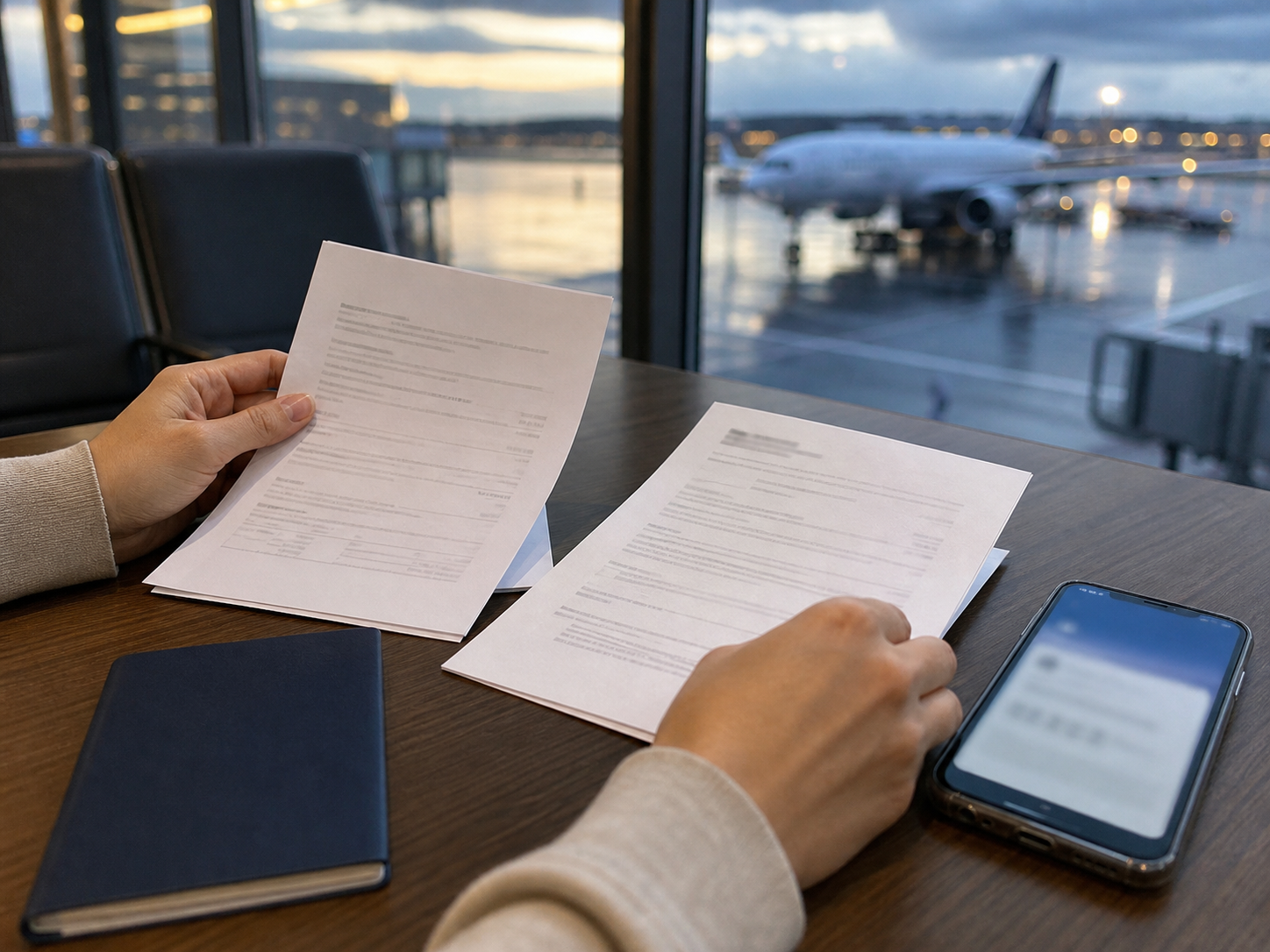
The outbound flight KE485 was scheduled for 7:05 PM, but it actually departed at 9:33 PM. The reason for the delay I was informed was the impact of a typhoon, and although there were moments of tension as the aircraft shook violently during the flight, I eventually fell asleep and completed the journey.
The return flight KE486 was delayed from its scheduled time of 12:10 AM to around 1:00 AM, and the airport announced that this was due to air traffic congestion. As the Eastar Air return flight taken by my friends at the same time was also delayed, this can be seen as a case where the operating environment at the time was affected together rather than being a situation unique to a specific airline.
We paid 14,250 won for travel insurance for two people, and received approximately 40,000 won per person in compensation for the delay after returning home. The payment was made two days after the application, and in this case, the insurance payout was made even though the flight details were not entered into the insurance in advance.
This approximately 40,000 won is not airline compensation paid by Korean Air, but insurance money from the travel insurance you subscribed to. Since airline compensation and insurance payouts differ in terms of the paying entity and conditions, it is advantageous to keep separate records of the airline's instructions and insurance claim procedures when a delay occurs.
- Netflix's "Love Is Possible" Release Date and Plot Summary: The Four-Person Relationship Between Sol Kyung-gu and Jeon Do-yeon, and Interpretation of the Full Moon Symbolism
- The scene where Nam Chang-hee countered Yoo Jae-seok’s joke about self-reflection in Boryeong during Kkangchon-kangkang 2 with a sign for a self-reflection center.
- Chief Justice Woo In-seong: Who is he? ⚖️
These are selection criteria that take into account even flight delays for a trip to Phu Quoc during the rainy season.
During my stay, it rained heavily for five consecutive days, and on the last two days, the weather cleared up and the sun was strong. It is practical to allow ample time for travel to the airport when rain is likely to persist, and to pack sunscreen and soothing products on sunny days, as your skin can easily get sunburned.
When choosing Korean Air, you should evaluate the combination of factors rather than just comparing ticket prices: time spent in your seat, checked baggage conditions, desired departure time, and travel insurance for delays. This is especially true if your itinerary involves hotel check-ins or domestic transfers, as spare time after arrival may be more important than a low fare.
In summary, for the Korean Air round-trip flight to Phu Quoc in July 2026, the economy seats and standard in-flight service were comfortable, while the menus and serving times of the in-flight meals differed between the outbound and return flights. If you refer to airfare prices based on the situation at the time of booking and examine delay compensation separately from airline compensation and travel insurance payouts, your selection criteria will become much clearer.
| division | Details at the time of boarding | Traveler's standards |
|---|---|---|
| seat | The space in front of the knees feels relatively spacious. | Consider physical condition and seat location together |
| Basic supplies | Water and blankets are provided at the seats. | Also prepare outerwear for the air conditioning. |
| return flight seat | The seat next to me is empty, so I can travel comfortably. | Personal experience based on remaining seats on the day |
| Special In-flight Meal | Kids' meals, fruit meals, and low-sodium meals are introduced as separate options. | Check pre-registration status before departure |