
While rumors are spreading that all nine South Koreans are missing due to the massive floods in Nepal, what has been confirmed so far is that contact has been lost with nine personnel from Korea Southern Power and Doosan Enerbility. We must distinguish between situations where death or disappearance is confirmed and situations where contact is lost.
According to a Yonhap News report on August 27, 2026, in Nepal 826 missing, 165 recovered bodiesThe number has been tallied, and search operations are continuing. In this article, I will summarize everything at once, from the reasons for the surge in the scale of damage to the situation of the nine Koreans, the South Korean government's response, and the damage in China's Tibet region.
How large has the scale of damage from the massive floods in Nepal grown?

This disaster occurred on August 26, 2026, in the Bagmati region of northern Nepal. The Himalayan mountainous area near the Chinese border suffered significant damage, and reports of damage were also received around Nuwakot and the capital, Kathmandu.
According to Nepalese police figures, the number of missing persons rose from 484 the previous day to 826 in just one day. The significant increase is attributed to belated reports and the inclusion of isolated areas and lists of foreign tourists and workers.
The number of fatalities increased by eight from the 157 recovered the previous day to 165. A Nepalese police spokesperson stated that more bodies could be found once the search resumes, indicating that the count at the time was an interim result of the rescue operation.
The figures as of August 27 are not the final scale of damage in Nepal, but the casualties tallied during the search and reporting process.
Why is it difficult to view this as a simple torrential rain flood?
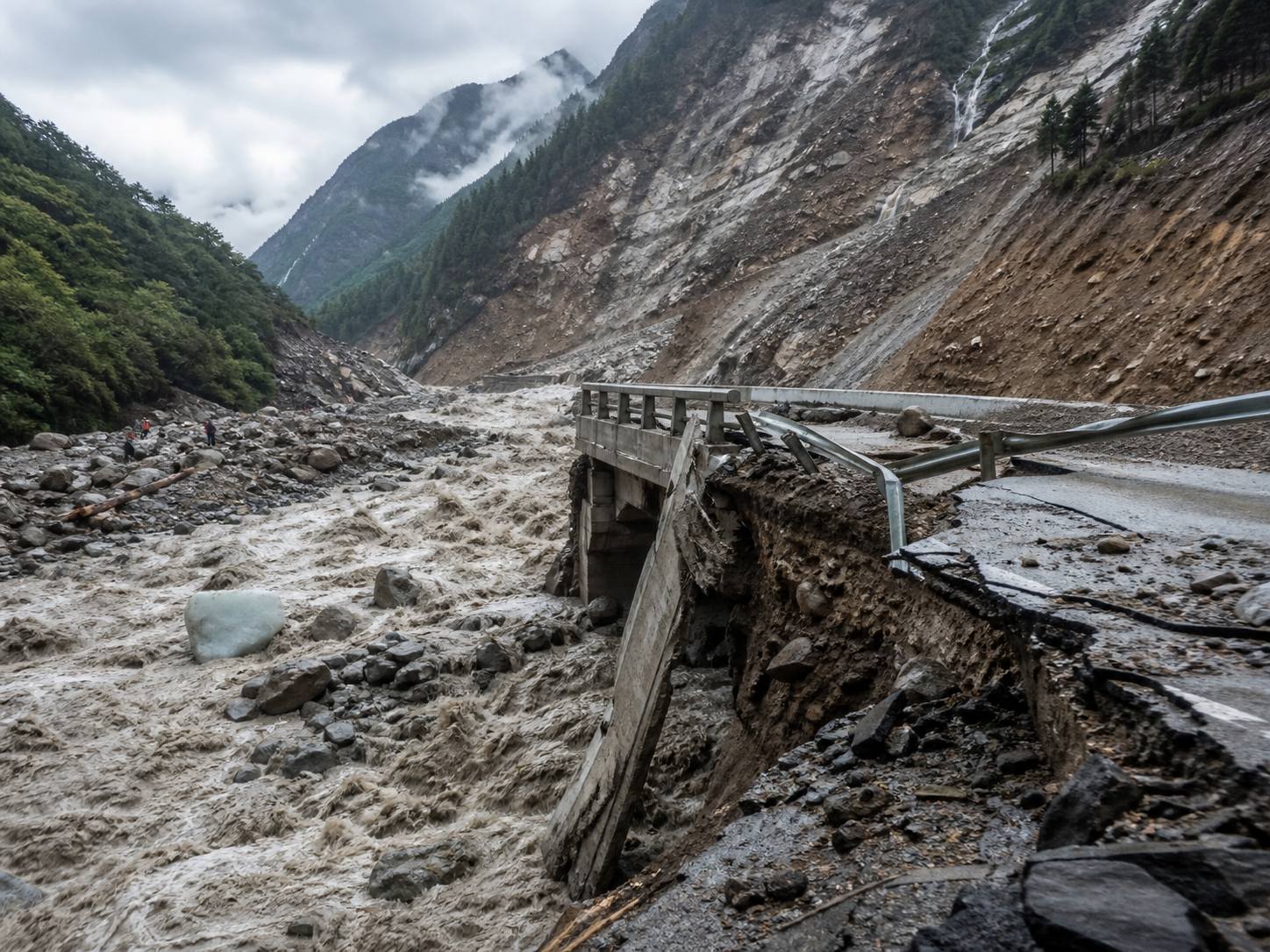
The local damage was not limited to typical rainfall-induced flooding caused by rising water levels. It is explained that the damage was exacerbated by debris flow-type flash floods, in which Himalayan glaciers and rocks collapsed, sending ice, stones, and sediment into valleys and rivers all at once.
If waterways are blocked by a large-scale collapse and then burst all at once, strong currents can rush to downstream areas within a short period of time. In mountainous regions, once roads and bridges are severed, it becomes difficult for rescue teams to access the area, simultaneously delaying damage assessment and the search for survivors.
Climate change in the Himalayas due to global warming and the possibility of glacial and rock collapse have been raised as the background of this disaster. However, the original text did not announce that a specific cause had been definitively confirmed, and at this stage, it is being treated as an analysis explaining the structure of the disaster's occurrence.
9 Koreans Out of Contact: What Is the Situation?

The nine South Koreans who have lost contact are not tourists, but personnel involved in the construction of a local hydroelectric power plant. It is reported that the group includes personnel from Korea South-East Power and Doosan Energy.
The place where they were working is known to be a hydroelectric power plant construction site in the mountainous region of northern Nepal. Given that communications and transportation routes were affected by the disaster, the term "out of contact" should not be immediately interpreted as confirmed death or disappearance.
The South Korean Ministry of Foreign Affairs, the National Police Agency, and the National Fire Agency formed a joint rapid response team and departed from Incheon International Airport for Kathmandu, Nepal, on August 27. The team's mission on the ground focused on sharing search information with Nepalese authorities, confirming the safety of Korean victims, and assisting their families.
Reasons why local search in Nepal is difficult

Nepal's National Disaster Risk Reduction and Management Authority has reported that 80 bridges were damaged and approximately 40 kilometers of roads were affected. When roads are cut off, it becomes difficult for rescue vehicles to enter mountainous areas, and access to isolated villages or construction sites is delayed.
It has been reported that 83 security personnel, including local police and soldiers, are also missing. The fact that the very personnel responsible for rescue and search operations have been harmed makes the disaster response even more challenging.
In mountainous terrain, additional collapses and sudden changes in water flow also pose a risk. Nepalese police mentioned the possibility of finding additional bodies as they resume the search, while rescue teams are simultaneously searching for survivors and securing the site.
| division | Deaths and recovery | missing persons | Major damage |
|---|---|---|---|
| Nepal | 165 bodies recovered | 826 people | 80 bridges and approximately 40 km of roads damaged |
| Keelung County, Tibet, China | 3 dead | 558 people | Landslides and damage in border mountainous areas |
The reason why we must also look at the damage in China's Tibet region

A landslide also occurred in Keelung County, Shigatse City, Tibet Autonomous Region, China, which borders Nepal. In this area, the death toll stands at 3 and the number of missing persons has reached 558, with 260 of the missing reported to be foreigners.
If you simply add the missing persons in Nepal and Tibet, it comes to 1,384, and the scale of the missing persons in the two regions combined is Explanation that it exceeds 1,300 peopleThis appears. However, since the figures for the two regions were compiled separately by different authorities, it is more accurate to separate the 826 missing people in Nepal and the 558 missing people in Tibet.
This incident is not merely a case of flooding in a single region, but a disaster involving a series of floods and landslides in the Himalayan mountainous region bordering the country. The damage assessment also reflects the characteristics of a region with high traffic of tourism, labor, and pilgrimage, with foreign victims identified as coming from approximately 28 countries in Nepal.
- Controversy over Cha Myung-seok's remarks regarding Hong Chang-ki and Park Dong-won's multi-year contracts
- McDonald's Car Fry Holder - Limited Sale at Drive-Thru Stores on August 27
- Immediate implementation of the Special Prosecutor Act on Fabricated Indictments, 12 cases including Daejang-dong, and the procedure for appointing a special prosecutor
Points not to be missed in the current situation
The nine Koreans are out of contact, but they are not confirmed dead. Now that the South Korean government's joint rapid response team has headed to the site, the search results by Nepalese authorities and the announcement confirming safety by diplomatic authorities will become key information.
In addition, the figure of 826 missing persons reflects the results of reports and searches as of August 27. The number may change again once communications are restored and the list of isolated areas is confirmed, and the 165 recovered bodies should also be considered as the result confirmed up to that time.
The massive floods in Nepal have dealt a severe blow not only to human lives but also to living and industrial infrastructure, including bridges, roads, and hydroelectric power plant construction sites. Now is the time to monitor the search for the nine missing Koreans and the rescue efforts in the Nepal-Tibet border region separately, rather than focusing on a single specific number.