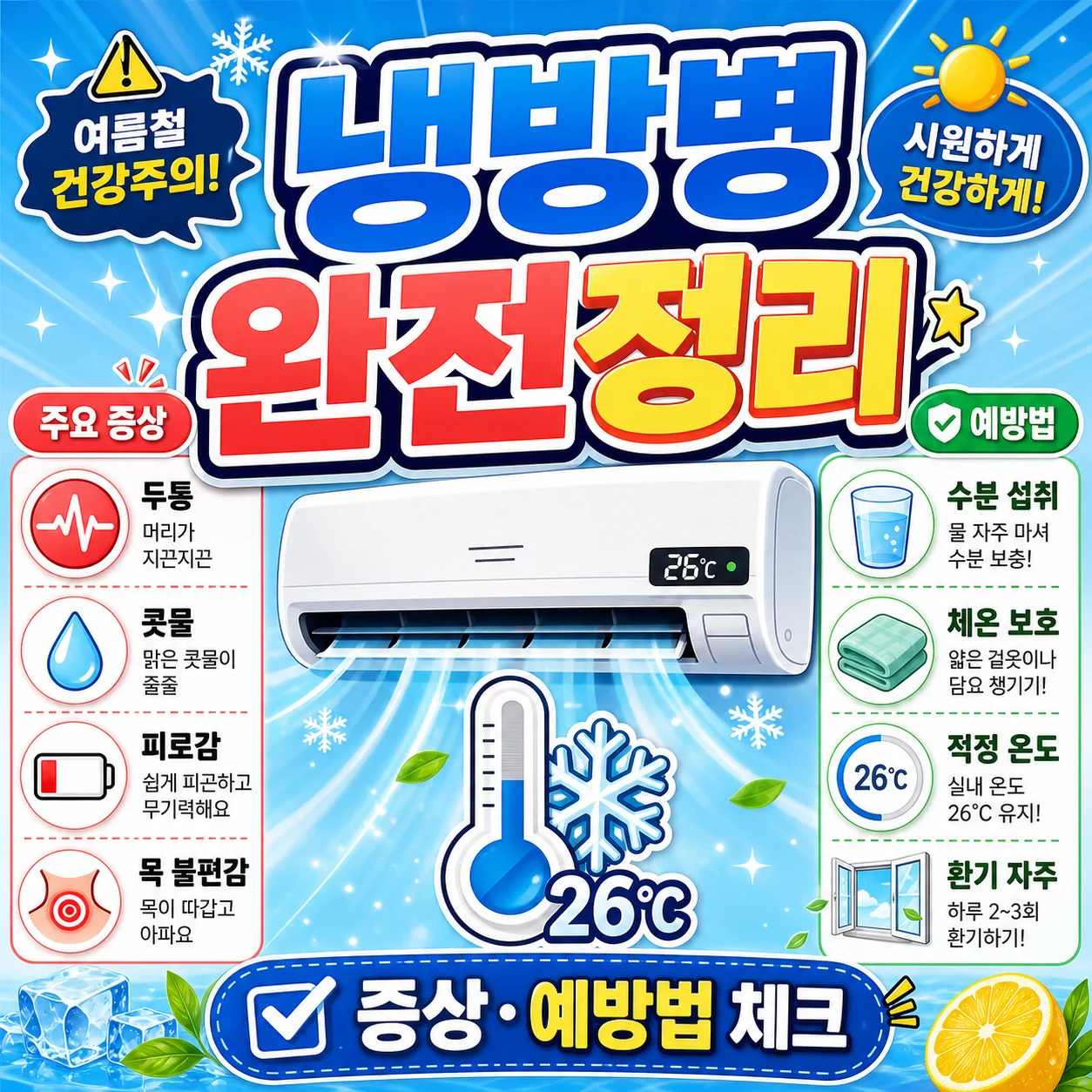
coolnessIf you suddenly develop a headache, lethargy, and indigestion while feeling unwell, you should suspect air conditioning sickness. Main symptoms과 preventiveSummarize at a glance. The indoor temperature is 24~28°C It is recommended. The temperature difference between indoors and outdoors is 5~6°CThat is appropriate. The humidity is 40~60%Please maintain.
Air conditioning sickness is a syndrome caused by large temperature differences, dry indoor air, and contaminated air conditioners. It can mostly be prevented by maintaining an indoor temperature of 24–28°C and humidity between 40–60°C, as well as ensuring proper ventilation and maintenance of the air conditioner.
What are the symptoms of air conditioning sickness?
The core symptoms consist mainly of general malaise along with respiratory symptoms similar to a cold. Typically, headache, runny nose, sneezing, and nasal congestion may appear first, followed by a cough or sore throat. Digestive symptoms may include loss of appetite, abdominal pain, or, in severe cases, diarrhea. There have also been reports of women experiencing irregular periods or worsening menstrual cramps due to hormonal changes.
| symptoms | characteristic | Initial response |
|---|---|---|
| Headache and fatigue | Reacts sensitively to changes in indoor temperature | Relieves temperature differences, rest |
| Runny nose and cough | Associated with dryness of the respiratory mucosa | Humidification and water intake |
| Indigestion and diarrhea | Digestive discomfort due to sympathetic nervous system changes | Light meal and hydration |
Main Causes and Mechanisms of Air Conditioning Sickness
To start with the conclusion, there are three main causes. First is the phenomenon where the autonomic nervous system becomes unstable due to the large temperature difference between the indoors and outdoors. Second is the rapid drop in humidity caused by the condensation of moisture in the air due to the operation of the air conditioner, and within one hour of continuous operation Humidity can drop to 30~40%.. Thirdly, there is bacterial contamination that may be present in air conditioners or water supply facilities. In particular, it should be noted that Legionella bacteria have an incubation period of 2 to 12 days and can be fatal in severe cases.
How can I prevent air conditioning sickness?
The key is proper temperature and humidity management, regular ventilation, and air conditioner hygiene. The indoor temperature is 24~28°C It is recommended that the temperature difference between indoors and outdoors not exceed 5–6°C. Ideal humidity is 40–60°C, and you can supplement this with a humidifier or indoor plants if necessary. Additionally, ventilating for about 10–15 minutes every 2–3 hours to change the airflow is helpful.
| preventive | How to execute | effect |
|---|---|---|
| Temperature management | Maintain indoor temperature between 24 and 28°C | Reduced headaches and lethargy due to autonomic nervous system stabilization |
| Maintain humidity | Maintain 40~60% by using a humidifier or water bowl | Reduces coughing and sneezing by protecting respiratory mucosa |
| ventilation | Open a door or window for 10 to 15 minutes every 2 to 3 hours. | Reduction of indoor pollutants and bacteria concentrations |
Air Conditioner Inspection and Cleaning Checklist
Keeping air conditioners clean lowers the risk of air conditioning sickness. It is recommended to clean or replace filters at least once a month, depending on usage frequency. If large cooling towers or water supply systems are present, inspection by a professional company at least once a year is recommended. Please be careful, as neglecting cleaning and disinfection can allow bacteria like Legionella to multiply..
- Filter cleaning Recommended once a month
- Internal ventilation inspection Quarterly verification recommended
- Professional inspection Large-scale facilities recommended at least once a year
Self-care methods and criteria for visiting a hospital
Mild symptoms often improve with temperature control, humidification, adequate fluid intake, and rest. If symptoms are severe, monitor your condition while taking fever reducers and pain relievers. You must visit a medical institution promptly in the following cases:
Persistent high feverProfessional medical attention is required if symptoms occur, or if shortness of breath, chest pain, or bloody sputum are observed, or if symptoms persist for more than one week. Individuals with underlying medical conditions should consult a medical professional even if their symptoms appear mild.
Recommended for and Checkpoints
- Office worker If you stay indoors for a long time, please check the indoor temperature and ventilation regularly.
- Children and the elderly Since your respiratory defenses are weak, please prioritize maintaining humidity and avoiding direct drafts.
- Large facility manager Establish a cleaning schedule for cooling towers and water supply facilities and conduct regular inspections.
Key pointsIt involves maintaining an indoor temperature of 24–28°C, an indoor-outdoor temperature difference of 5–6°C, and a humidity of 40–60°C. Most cases of air conditioning sickness can be prevented through regular ventilation and cleaning of the air conditioner.
Frequently Asked Questions
What are the typical symptoms of air conditioning sickness?
Headaches and general malaise are the main symptoms, and respiratory symptoms such as runny nose, sneezing, nasal congestion, cough, and sore throat, as well as digestive symptoms such as loss of appetite, abdominal pain, and diarrhea, may occur. There are also reports of women experiencing irregular menstruation or worsening menstrual cramps.
What are the recommended indoor temperature and humidity levels to prevent air conditioning sickness?
It is recommended to maintain an indoor temperature of 24 to 28°C, keep the temperature difference between indoors and outdoors within 5 to 6°C, and maintain humidity at 40 to 60°C.
What are the main causes and mechanisms of air conditioning sickness?
The main causes are instability of the autonomic nervous system due to large temperature differences between indoors and outdoors, a rapid drop in indoor humidity caused by the operation of air conditioners, and bacterial contamination of cooling units or water supply systems (e.g., Legionella).
How should I prevent air conditioning sickness and maintain my air conditioner?
It is recommended to manage indoor temperature and humidity (24~28°C·40~60%), ventilate for 10~15 minutes every 2~3 hours, humidify and drink water, clean and replace filters at least once a month, and for large-scale facilities, perform professional inspections at least once a year and quarterly inspections of ventilation passages.