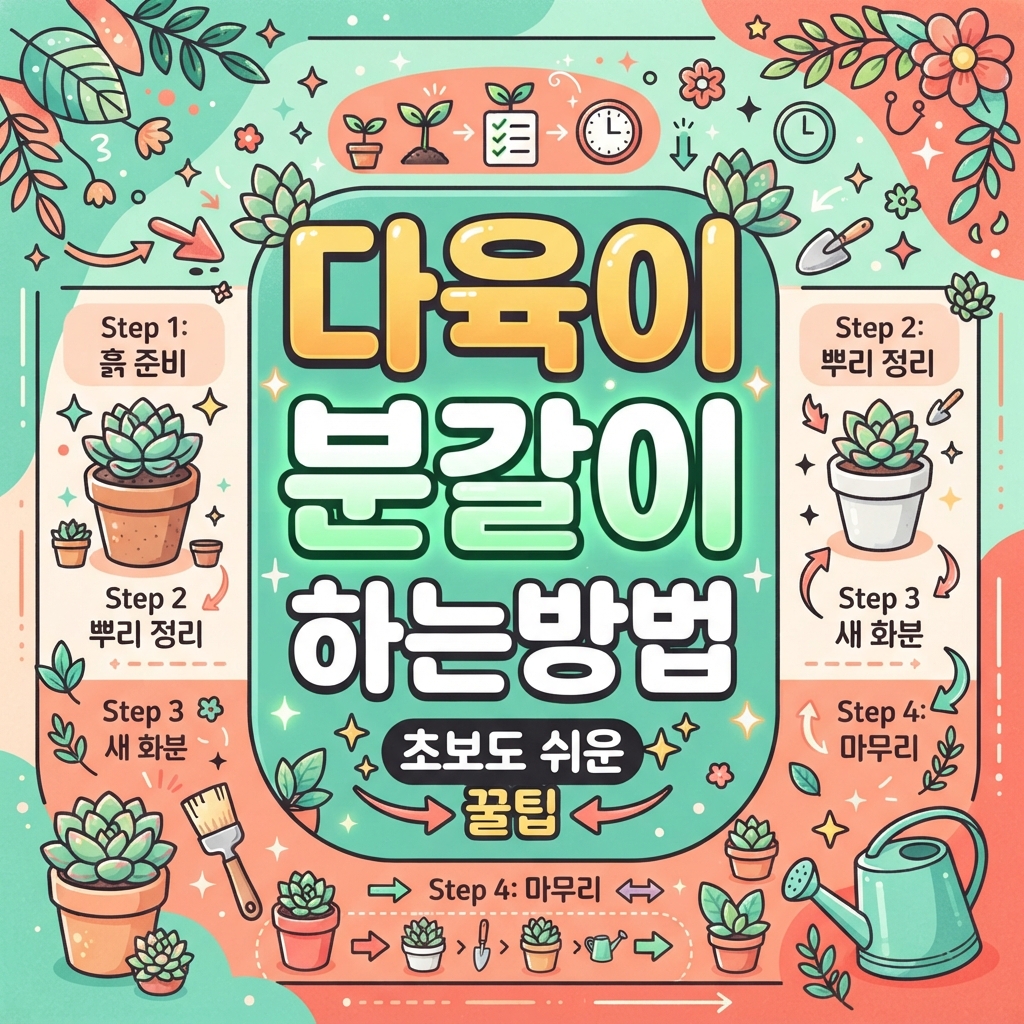
If your succulents look damp even after watering, or if the surface of the soil has hardened, it might be time to consider repotting. However, if you keep putting it off because you are unsure of "when is the right time" or "what kind of soil to use," you may end up only stressing out your succulents.
Fortunately, repotting is simpler than you might think as long as you follow the established rules. You only need to pay attention to a few steps, such as timing the repotting correctly, properly mixing the soil, and trimming the roots. In this article, we will explore step-by-step everything from the timing of repotting and soil selection to foolproof care methods.
The best time to repot is spring and early autumn.
As with all plant work, repotting is also Timing is really important. Spring (March to May) is the most ideal time. Since this is when succulents awaken from their winter dormancy and begin to grow, they adapt to the new environment and establish roots quickly.
Early autumn (September to early October) is also a good option. This is because it is the time when succulents regain their vitality after enduring the summer heat. On the other hand, You must avoid midwinter. New roots do not take root well due to the cold. The same applies to the summer rainy season. A hot and humid environment easily leads to root rot.
It is wise to postpone repotting during the summer rainy season like now and wait for autumn.
Check the 3 Signals Succulents Send
Even if the time is right for repotting, how can you tell if your succulent actually wants a new home? There are some very clear signs.
The first one is Roots coming out of the pot's drainage holesThis is a sign that there is really not enough space. The second sign is that the soil does not absorb water and simply flows down from the surface. This means the soil has hardened because it is too old. The third sign is that if it has been about 1 to 2 years since you purchased it, it is generally time to consider repotting.
Flowerpot or soil, which one should I choose?
If you have decided to repot, it is now time to choose a pot. The first selection point here is It is the material. Terracotta or clay pots are much better than plastic. Clay pots have fine pores, so excess moisture evaporates naturally. Since succulents hate overwatering the most, a well-ventilated pot is really important.
The second one is There must be a drain hole.That is the point. Interior-grade non-draining pots are pretty, but they can be hell for succulents. The third point is size. Choose one that is only about 1 to 2 centimeters larger than your existing pot. If it is too large, moisture remains in the soil for a long time, increasing the risk of root rot.
| Flowerpot material | merit | disadvantage | Succulent recommendations |
|---|---|---|---|
| clay pot (terracotta) | Fast moisture evaporation, excellent breathability | Breaks easily, requires a lot of care | ★★★★★ |
| plastic | Affordable, lightweight, and unbreakable | Prolonged moisture retention, poor breathability | ★★★ |
| Glass (no drainage) | Good interior sense | Poor drainage, high maintenance difficulty, risk of root rot | ★ |
Method of washing weathered granite and mixing soil
Now, one of the most important steps is preparing the soil. It is not simply about mixing the soil; it is no exaggeration to say that the ratio in which you mix it determines the survival of the succulent.
The basic mixture consists of 301 TP 3 T of succulent-specific potting soil, 601 TP 3 T of coarse sand, and 101 TP 3 T of perlite. However, during summer or the rainy season like now, it is recommended to increase the proportion of coarse sand to 70–801 TP 3 T. This is to minimize moisture absorption. A step that absolutely must not be omitted here is washing the sandy soil thoroughly.Unwashed sandy soil contains mud particles, so when watered, it hardens like clay and eventually hinders drainage. Rinsing it a few times under running water while rubbing it with your fingers is not enough. You must wash it very thoroughly until the water becomes clear.
You must never skip the root trimming and drying steps.
Before preparing to remove the succulent from the pot, The key is not to water for 2 to 3 days before repotting.The soil must be sufficiently dry to minimize root damage and reduce the likelihood of subsequent rotting. Wet soil easily severs the roots as it grows downwards.
When removing a succulent from its pot, press the side of the pot to slowly separate it from the soil before pulling it out. If you pull it too hard, the roots will break off in clumps. If you examine the roots of the succulent once it has come out, you will likely see a mixture of white and brown roots., Trim only the brown or rotten rootsAnd please leave the white roots intact.
The most important step after trimming the roots is the drying stage. Before planting in new soil. You must dry it in the shade for 2 to 3 days. If you skip this process, the risk of root rot increases. You can think of it as waiting for the cut wound to heal.
Getting through the most dangerous time immediately after repotting
Planting succulents in new soil is not the end of the process. In fact, this is just the time to start paying attention. A mistake many people make is Watering immediately after repottingYou might feel like you need to moisten the soil, but the wound on the root has not healed yet. If water touches it, there is a high chance the wound will rot.
It is safest not to water for at least a week, or about 10 days if you have the time. During this period, the roots adapt to the new soil and any wounds heal. After repotting, it is also a good idea to gradually expose the plant to light. Too much strong sunlight can be stressful. Keep it in bright shade for about a week, and then gradually acclimate it to sunlight.
Success after repotting depends on patience, that is, the time spent waiting without watering.
Small preparations add up to make a big difference.
Repotting may seem like a complicated task, but anyone can do it if they follow the set order step by step. Just getting the timing right, properly mixing the soil, trimming the roots, and waiting. If you pay attention to these few things, your succulents will grow even healthier in their new soil. Give it a try when autumn arrives.