
They say AI and HBM will continue to grow, so why does account volatility increase even if I hold multiple semiconductor-related stocks? The problem is not the number of stocks. Whether assets are tied up all at once in the same semiconductor market and investment cycleis in.
To assess the risks of the semiconductor sector as a whole as of August 23, 2026, one cannot rely solely on AI demand. A clear investment judgment requires examining the concentration of investment in large-cap stocks, foreign investor supply and demand, interest rates and geopolitical variables, and the actual scope of benefits for back-end processes and materials, parts, and equipment manufacturers.
Will the demand for AI and HBM drive up the entire industry?

To start with the conclusion, AI and HBM boost semiconductor growth while simultaneously increasing volatility. As data center investment and demand for high-bandwidth memory rise, expectations for memory, substrate, equipment, and materials companies grow, but actual revenue and profits are not reflected in all companies at the same pace.
Increased demand for AI does not necessarily mean improved performance for all semiconductor companies. You must first identify who the client is, whether memory or non-memory accounts for a larger share, and what role is played in the front-end or back-end processes.
Since HBM stacks multiple DRAMs vertically, stacking and advanced packaging are of great importance. However, as memory manufacturers directly perform core stacking and some advanced packaging tasks, the structure does not allow all general OSAT companies to benefit equally.
What is more important than the broad topic of AI is which processes and customers the company is handling within the AI supply chain.
Will buying multiple semiconductor stocks reduce sector concentration?

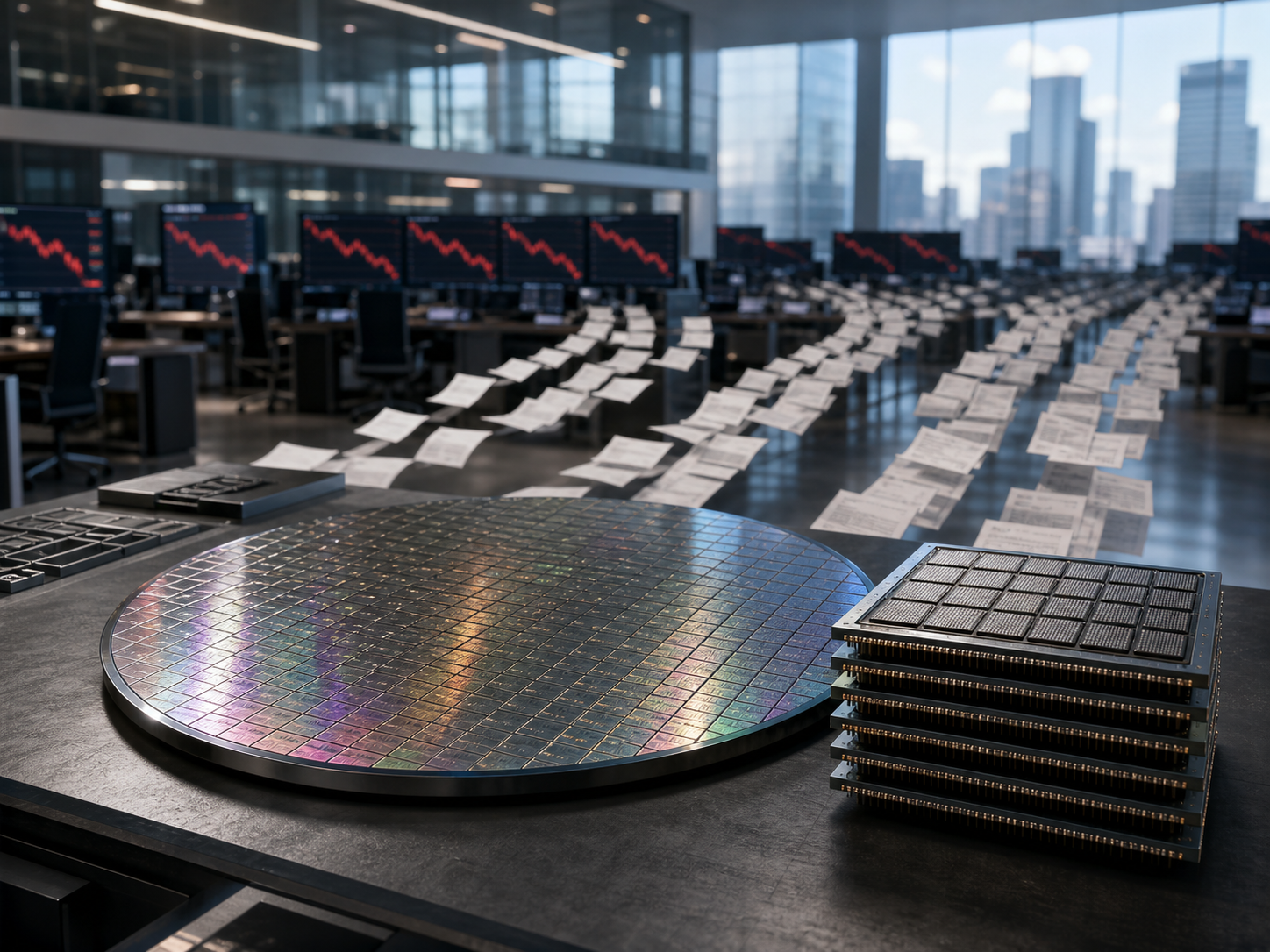
Even if the number of stocks increases, the diversification effect is limited if the businesses share the same roots. Even if you hold memory manufacturers, OSATs, equipment stocks, and materials stocks together, they may move in the same direction during a market downturn if they are simultaneously influenced by memory prices and customer capital investments.
In August 2026, the KOSDAQ fell to the 600 level before rebounding from 644 to 854 within ten days. It was reported that net purchases by individual investors in the KODEX KOSDAQ 150 from August 3 to 7 amounted to 796.2 billion won, and following a rapid rebound, a phase of overheating in expectations and supply and demand may occur.
| division | Key roles | Risk to examine |
|---|---|---|
| memory companies | Memory production including DRAM and HBM | Price fluctuations and customer demand |
| OSAT | Packaging and testing outsourcing | Orders and volume by product |
| Equipment company | Supply of equipment for front-end and back-end processes | Delay in facility investment |
| materials and components companies | Supply of etching components and process materials | Capacity utilization and customer concentration |
When buying pressure surges on specific large-cap stocks, earnings expectations are quickly reflected in the stock price. Subsequently, if earnings announcements fall short of expectations or investment schedules are delayed, a correction in the industry's leading stocks can spread to related stocks across the board.
Why can't OSAT and materials, parts, and equipment be grouped together as the same semiconductor stocks?

The back-end process is the stage where wafers are cut, dies are attached, and packaging and testing are carried out. OSAT is a group of companies responsible for assembly and verification rather than design or wafer manufacturing; Hana Micron and SFA Semiconductor are memory-focused, while Doosan Tesna and LB Semicon are test-focused.
On the other hand, Walldex is not an OSAT. As a company that supplies consumable silicon, quartz, and ceramic materials and components used in etching processes, it is in a position influenced by equipment utilization rates and the process demands of its clients.
Tess handles front-end process equipment, Simtek handles semiconductor substrates, and Walldex handles etching process components. Even though they are grouped within the same industry, the revenue-generating processes and customer structures differ, so the expansion of HBM should not be interpreted as equal benefits for each company.
Walldex's mid-to-long-term investment plan, presented in August 2026, amounts to a total of 260 billion won. The company allocated 190 billion won to strengthening semiconductor material production facilities and competitiveness, 20 billion won to R&D for next-generation process materials, and 50 billion won to new growth sectors, and also announced plans to hire approximately 370 new employees.
A structure where leveraged ETFs and foreign selling amplify the decline
Leveraged products move differently from regular ETFs. Since single-stock leveraged ETFs rebalance daily to meet target leverage ratios, mechanical selling volume may occur during market downturns, potentially leading to increased volatility.
In particular, when stock prices fluctuate repeatedly, the result of simply accumulating daily returns may differ from actual long-term performance. If leading semiconductor stocks are combined with leveraged products, risks moving in the same direction are duplicated.
Foreign selling is also an important variable. In indices with a high weighting of large-cap semiconductor stocks, when foreign capital flows out, both the sector and the index can be suppressed together, regardless of individual companies' earnings.
If concerns over rising interest rates and geopolitical tensions, such as those in the Middle East, occur simultaneously, cash flow and risk aversion sentiment may outweigh expectations for AI growth. In such a scenario, short-term stock prices will fluctuate significantly based on supply and demand, even if the long-term growth story holds true.
Inspection sequence to reduce single-industry risk
The first is the customer structure. You need to examine whether sales are concentrated on one or two customers, and whether sales are skewed toward memory or non-memory.
The second factor is the location of the process. The timing of benefits varies depending on whether the equipment is for the front-end process, back-end testing, or advanced packaging directly connected to HBM. Even if the product is excellent, if the client's investment execution is delayed, the timing of earnings reflection is pushed back.
The third factor is valuation and cash usage. Although Walldex showed a P/E ratio of approximately 11.46 and a P/B ratio of approximately 1.36 based on its most recent financial statements, one cannot conclude that it is undervalued based solely on these low multiples. Since industry averages can include both loss-making and high-growth companies, the comparison criteria must be aligned.
For large-scale expansions or share buybacks and cancellations, one should not look solely at the announced scale, but rather examine the actual execution and contribution to revenue separately. Walldex presented plans for a share buyback and phased cancellation worth approximately 20 billion won in the second half of 2026, as well as plans to utilize 401% of its annual net profit for shareholder returns.
Diversification within the semiconductor industry merely alleviates industry concentration; it does not eliminate the semiconductor market itself.
When assessing risks in the semiconductor sector, look first at customer structure, roles by process, the proportion of memory versus non-memory, foreign investor supply and demand, and the presence of leveraged products, rather than AI or HBM growth rates. By categorizing stocks based on these criteria, you can make decisions tailored to your risk tolerance without being swayed by expectations.