
The conclusion revealed directly by a colorectal surgeon on social media is clear. He disclosed that he personally avoids five items: snacks containing artificial colors, processed meats, sugary sauces, canned soups, and ultra-processed protein bars. The reason is not merely a matter of personal preference, but rather concerns regarding gut health and the risk of colorectal cancer.
Processed meat carries particular weight compared to the other items, as it is classified as a carcinogen by the World Health Organization. The remaining four are linked to general health burdens, such as inflammation, excessive sodium intake, and digestive disorders, rather than a direct causal relationship with colorectal cancer. We will examine these five items one by one to determine the criteria for avoiding them and what can be used as substitutes.
Things to check before adding processed meat to your cart

The specialist's key point is that bacon, sausages, and deli meats belong to a food group classified as Group 1 carcinogens by the World Health Organization and are closely linked to the risk of colorectal cancer. It may seem unfamiliar that even a single slice of bacon, which naturally appears on the breakfast table, falls into this category.
However, this classification does not mean that consuming even small amounts leads to immediate danger. Frequency and quantity are the key factors, and the starting point for practice is to first check whether it is habitually included in your daily diet. Getting protein from fresh eggs, fish, or lean meat instead of processed meat is mentioned as an alternative.
Artificial Colored Snacks, the Link to Intestinal Inflammation

Colorful candies and jellies are identified as foods that have little nutritional value but may potentially cause intestinal inflammation. This is closely related to everyday life, as they are items that people unconsciously reach for as snacks for children or on office desks.
If you notice artificial coloring on the packaging, it is worth considering alternatives. Nutrient-rich natural foods such as nuts, pumpkin seeds, and berries are suggested as alternatives. It is necessary to develop the habit of checking the ingredient list again, especially for brightly colored snacks.
Sugary sauces, hidden added sugar on the table
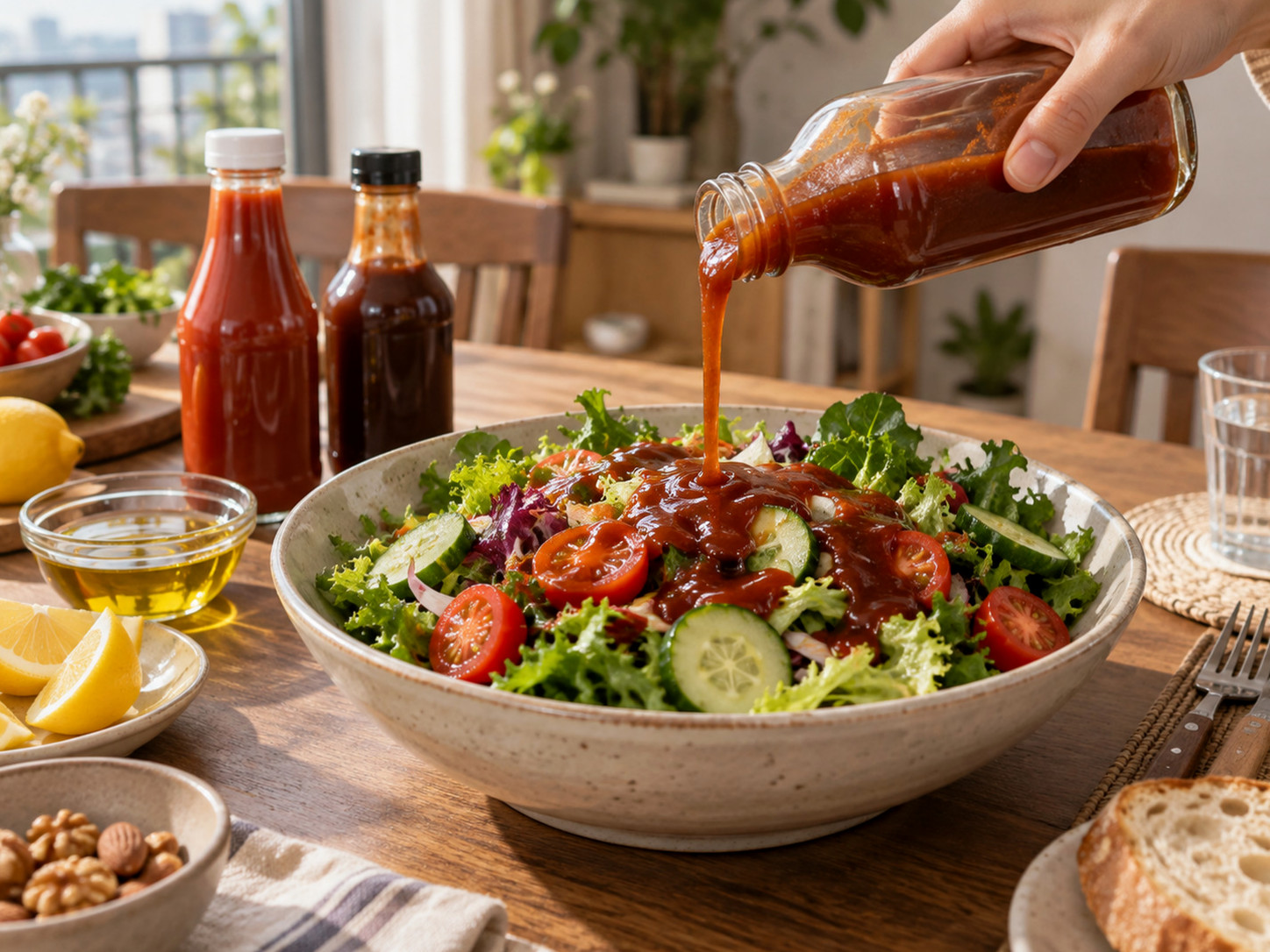
It is pointed out as a problem that sauces sold in bottles, such as ketchup, barbecue sauce, and commercial salad dressings, may contain large amounts of added sugar. A typical example is when people pour a generous amount of dressing on salad, thinking it is a healthy food.
In such cases, a paradox can arise where the dressing itself adds more sugar than the vegetables. Methods that create flavor using simple ingredients, such as a combination of olive oil and lemon juice, are suggested as an alternative. It is helpful to get into the habit of checking the sugar content on the ingredient list when choosing sauces.
Canned Soup, the Trap of Excessive Sodium Intake
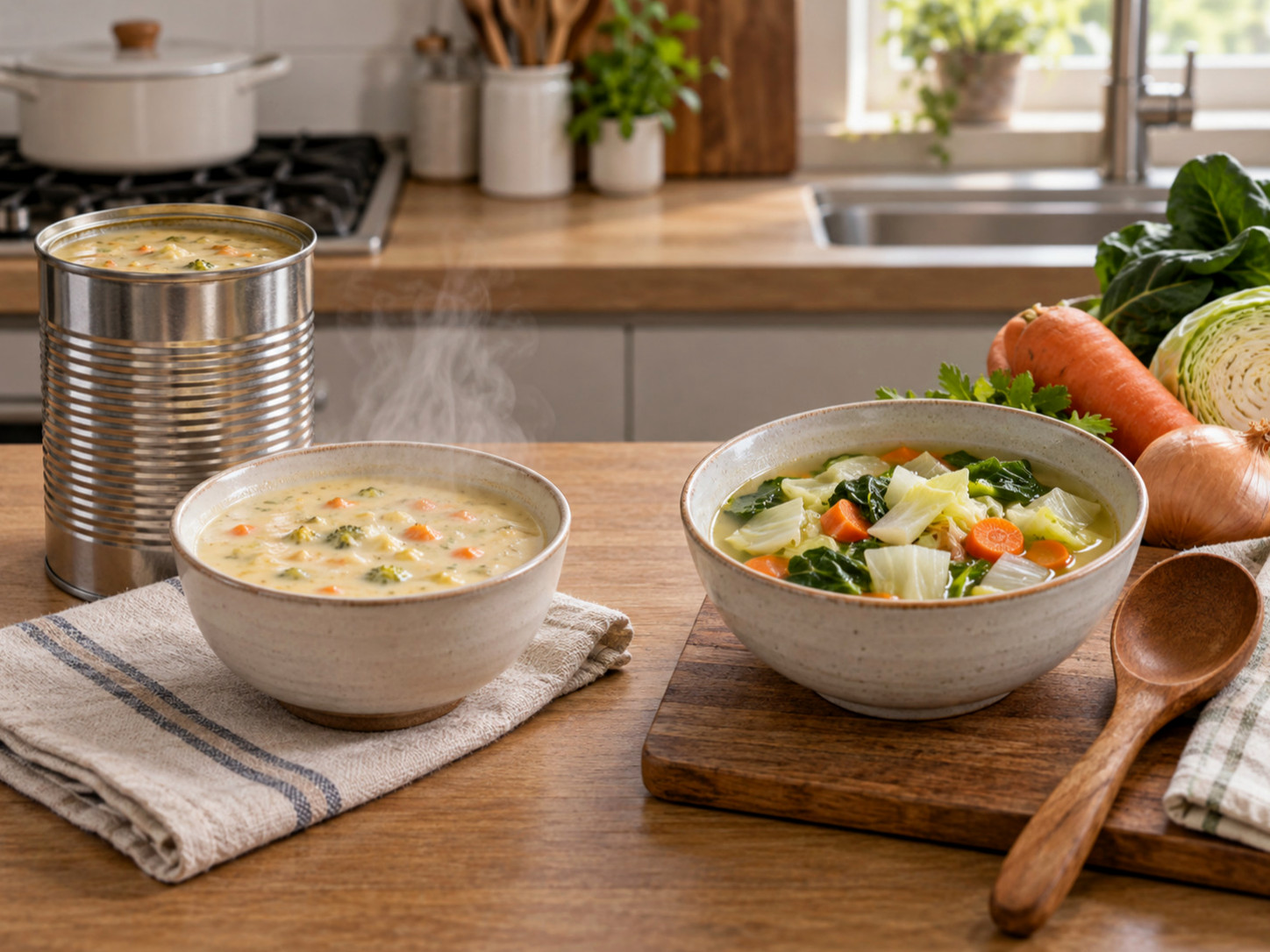
Packaged soups or canned vegetable soups that can be stored at room temperature are cited as foods that lead to excessive sodium intake without one even realizing it. It is pointed out that these foods lack substantial nutrients, place a burden on blood vessels, and can cause fluid retention in the body, or swelling.
A bowl of soup heated up conveniently on busy days may contain more sodium than expected. It is necessary to make a habit of checking the sodium content label when choosing canned or ready-made soups. If possible, you may also consider substituting them with homemade vegetable soup.
Ultra-processed protein bars, additives hidden behind convenience
Protein bars, which are easy to eat after a workout, offer portability and convenience, but concerns are being raised that they are often highly processed and contain large amounts of artificial flavors and additives. Artificial proteins or sugar alcohols can lead to bloating or digestive problems.
If you have experienced bloating immediately after exercising, you need to double-check the ingredient list on your protein bars. Replenishing protein with natural foods such as fresh eggs, fish, and lentils is suggested as an alternative. It is important to consider the ingredient composition rather than choosing based solely on convenience.
Points to note when connecting this information to colorectal cancer prevention
The information released this time is not the result of a large-scale study, but rather the personal dietary principles shared on social media by a colorectal surgeon. With the exception of processed meat, the remaining items are mentioned more in terms of general health concerns such as inflammation, sodium burden, and digestive disorders, rather than a direct causal relationship with colorectal cancer.
Therefore, rather than accepting this list as an absolute rule, it is reasonable to use it as a reference for reviewing your daily dietary habits. Since colorectal cancer is a disease in which various factors such as family history, age, and lifestyle interact, it is necessary to consult a specialist to receive an assessment tailored to your individual situation if specific symptoms persist or risk factors are present.
Key Points Summarized in Q&A
Q1. What is the food that a colorectal surgeon says they absolutely never eat?
There are five items: snacks containing artificial coloring, processed meat, sugary sauces, canned soup, and ultra-processed protein bars.
Q2. Which of these is directly related to the risk of colorectal cancer?
It is processed meat. The World Health Organization has classified it as a Group 1 carcinogen, and it is mentioned that it is closely associated with the risk of colorectal cancer.
Q3. Why should I avoid the remaining foods?
It is pointed out that snacks with artificial colors may cause intestinal inflammation, sugary sauces may cause excessive added sugar, canned soups may cause excessive sodium and swelling, and ultra-processed protein bars may cause digestive disorders and abdominal bloating.
Q4. What are suggested as alternatives to these five foods?
Natural foods such as nuts and berries, olive oil and lemon juice, homemade soup, fresh eggs and fish, and lentils are mentioned as alternatives.
Q5. Is this information an official research result?
No. These are personal dietary principles shared on social media by a colorectal surgeon, and they are not the results of a large-scale study.