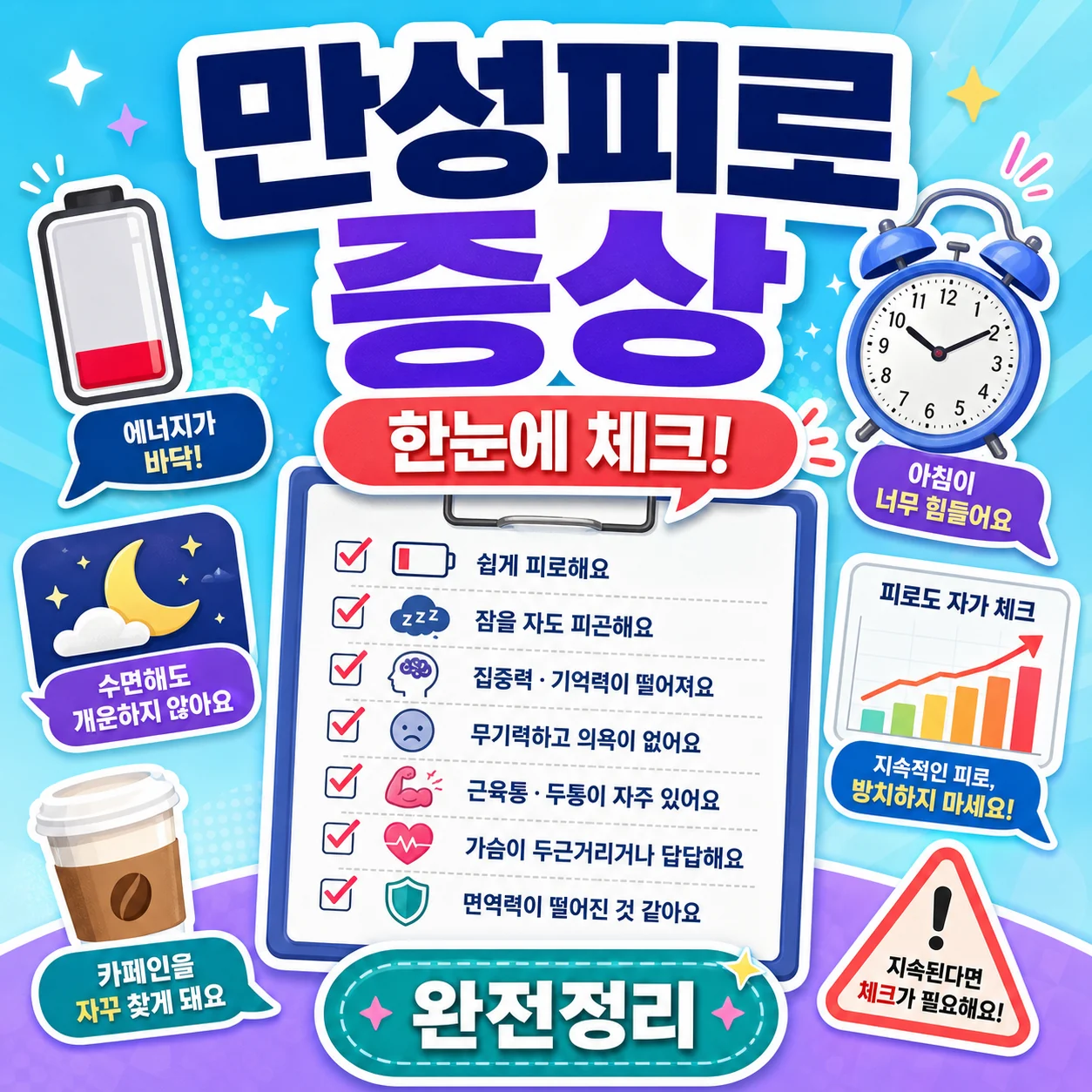

Chronic fatigue symptoms are a long-term sense of weakness that does not subside with rest, and prompt diagnosis and management are crucial. The key is persistent fatigue, Decline in memory and concentration, Dizziness upon changing posture을 First checkdo. Decline in daily function와 abnormal sleepIt is also commonly accompanied.
Chronic fatigue is suspected when prolonged fatigue that is not relieved by rest is accompanied by symptoms such as cognitive decline or orthostatic discomfort. Diagnosis is based on ruling out other causes and determining whether symptoms persist for at least six months. The key to symptom management is to combine symptom-specific relief with energy distribution.
1. Major Symptoms and Characteristics at a Glance
The most common symptom is Persistent and activity-limiting fatigueThis fatigue does not improve with rest and tends to impair the ability to perform daily activities. When accompanied by a decline in cognitive function, working memory and concentration decrease, and mental sluggishness, often described as "brain fog," occurs. Dizziness or orthostatic discomfort due to changes in posture is also frequent, and sleep problems and pain often occur together.
2. When is it necessary to see a doctor?
Signs that you should see a doctor immediately include a sudden worsening of symptoms or a rapid decline in daily functioning. Immediate evaluation is required, particularly if there are symptoms such as fever, weight loss, clear signs of infection, or fainting. If chronic fatigue persists for more than six months and cannot be explained by other causes, consultation with a specialist is recommended. Once other conditions are ruled out through testing, a symptom-based management plan will be initiated.
3 Diagnostic criteria and commonly performed tests
The key to diagnosis lies in the duration of symptoms and the exclusion of other conditions. Generally, chronic fatigue syndrome is considered if fatigue persists for more than six months and is accompanied by cognitive problems or orthostatic discomfort. Basic tests include blood tests, thyroid function tests, and infectious disease tests, with additional cardiac or neurological examinations added if necessary. The WHO has classified this condition as a neurological disorder, and the CDC also recommends ruling out other possibilities.
| Inspection items | purpose | Clinical significance |
|---|---|---|
| blood test | Check for anemia, inflammation, and electrolyte abnormalities | Exclusion of treatable causes |
| Thyroid function test | Check for hypothyroidism | Differentiating the causes of fatigue |
| Orthostatic test | Assessment of the presence or absence of orthostatic discomfort | Diagnostic aids related to dizziness |
4. Management Principles and Practical Lifestyle Therapy
The basis of management is a symptom-centered multidisciplinary approach and gradual activity adjustment. Activities are distributed considering energy limits, and Pacing Strategies are used to avoid excessive exacerbation. Improving sleep hygiene, maintaining regular meals, and managing stress are helpful, and physical therapy or cognitive rehabilitation may be combined depending on symptoms. Medications are used selectively to relieve symptoms and are administered in consultation with a specialist.
| method | Expected effect | In what cases is it advantageous? |
|---|---|---|
| Pacing | Reduction in symptom exacerbation | activity-symptom exacerbation repeaters |
| sleep hygiene | Relieves daytime fatigue | When sleep patterns are disrupted |
| Cognitive rehabilitation | Improved concentration | Brain fog complainant |
5. How is it differentiated from complications?
There are conditions that cause symptoms similar to chronic fatigue, so accurate differentiation is necessary. Representative examples include depression, hypothyroidism, and sleep apnea, each of which differs in the onset and accompanying symptoms. Depression is characterized by a decline in mood and a loss of pleasure, whereas thyroid problems are accompanied by weight changes and sensitivity to cold. Taking a clinical history and performing basic examinations are crucial for accurate differentiation.
| disease | Key Features | Identification points |
|---|---|---|
| Chronic fatigue syndrome | Fatigue not relieved by rest, brain fog, orthostatic discomfort | Persisting for more than 6 months, exclude other causes |
| melancholia | Low mood, loss of interest, changes in sleep | Whether emotional symptoms are present |
| hypothyroidism | Fatigue, weight gain, cold sensitivity | abnormal hormone test |
Final Checkpoints
Chronic fatigue should not be viewed as a standalone symptom; functional decline and associated symptoms must be evaluated together. If symptoms persist for more than six months or interfere with daily life, please consult a specialist. First, exclusion testIdentify treatable causes through, and, Symptom management and energy distributionIt is important to establish a long-term plan centered on [this].
Frequently Asked Questions
What are the symptoms of chronic fatigue?
It is suspected when there is prolonged weakness that does not improve with rest, usually lasting for more than 6 months, and accompanied by symptoms such as cognitive decline (brain fog) or orthostatic discomfort.
What are the key symptoms that need to be checked first?
First, check for persistent fatigue, impaired memory and concentration (brain fog), and dizziness upon changing posture (orthostatic discomfort), and also examine for any decline in daily functioning and sleep abnormalities.
When is it absolutely necessary to see a doctor?
If symptoms suddenly worsen, daily function rapidly deteriorates, or there are clear signs of abnormality such as fever, weight loss, or fainting, get evaluated immediately. If symptoms persist for more than 6 months and cannot be explained by other causes, it is recommended to consult a specialist.
How is it diagnosed and managed?
Diagnosis is based on the duration of symptoms (usually 6 months or more) after ruling out other causes, and is differentiated through blood tests, thyroid tests, and orthostatic tests. Management involves a multidisciplinary approach that combines symptomatic relief, energy distribution (pacing), sleep hygiene, cognitive rehabilitation, and physical therapy.