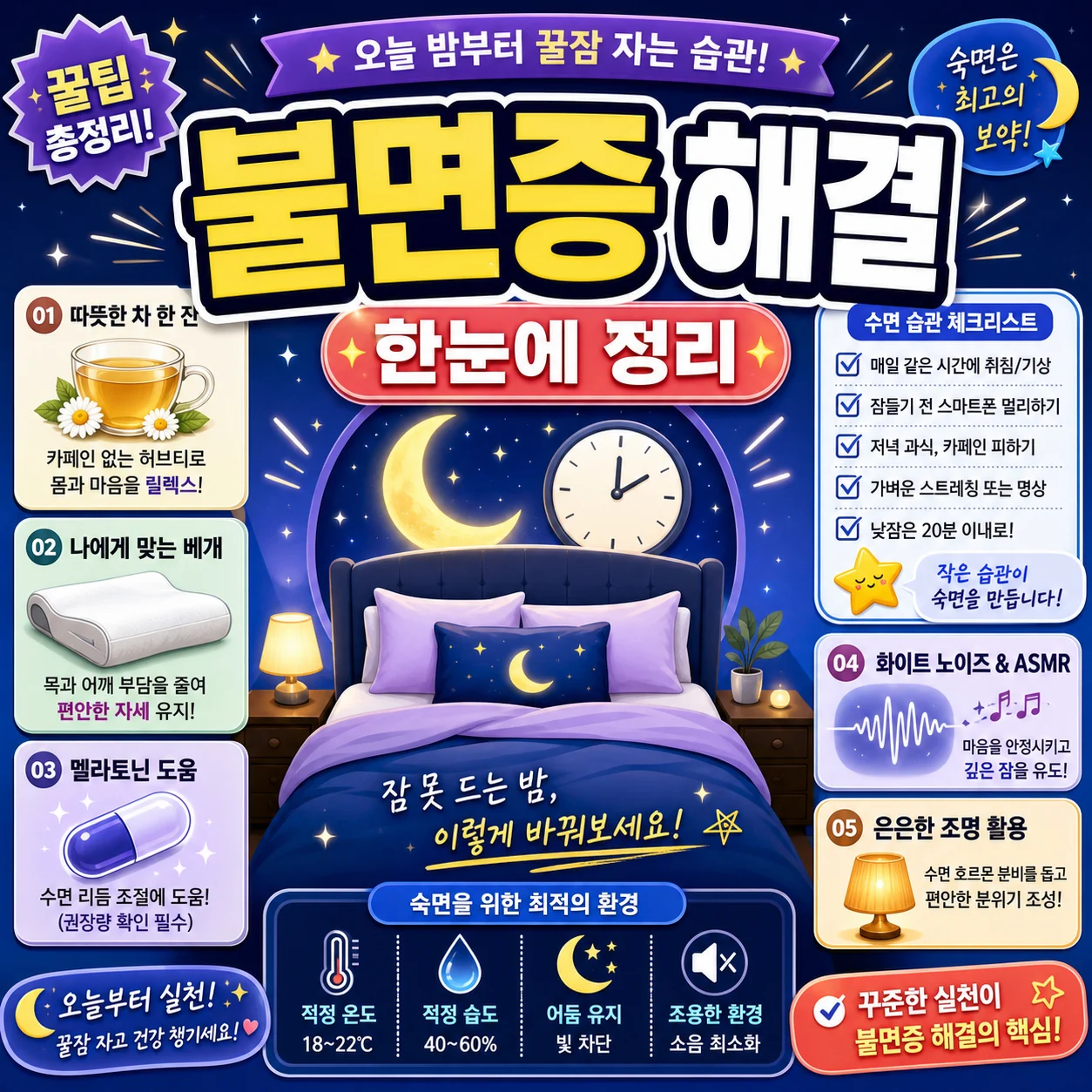
Changing your sleep patterns and evening environment first is the fastest way to improve insomnia. Regular weather and light exposure are key. If it becomes chronic, a professional evaluation is required. I recommend checking your lifestyle habits, even for a short period. Key Practices와 Criteria for Selecting Specialized TreatmentOrganize at a glance.
Establishing a habit of going to bed and waking up at the same time every day rapidly improves sleep efficiency. Deep sleep is possible with simple environmental adjustments and behavioral changes. If the issue persists, professional counseling and treatment are the safest option.
Correcting Sleep Hygiene
In conclusion, improving sleep hygiene is the first step to insomnia. It is important to align your biological clock with a consistent wake-up time and regular daytime activities. Exposure to natural light for at least 20 minutes in the morning normalizes the melatonin secretion cycle. You should associate sleep with your space by using the bed exclusively for sleep and rest. Limit naps to 20 to 30 minutes.If you do that, it has less impact on nighttime sleep.
| item | Improvement of lifestyle habits | professional treatment |
|---|---|---|
| target | Improving sleep efficiency and regularization | Correction of psychological/physiological causes |
| Time of effect | Changes possible within 1 to several weeks | Treatment required for weeks to months |
| Recommended for | Short-term insomnia or minor problems | Accompanied by chronic insomnia or daily disturbances |
Evening routine and environmental control
Your behavior 1 to 2 hours before sleep has a significant impact on falling asleep. Blue light from screens inhibits melatonin, so please reduce the use of electronic devices before bed. Lowering your body temperature with a warm bath before sleep makes it easier to fall asleep. Caffeine is known to have stimulating effects for up to six hours or more after consumption, so it is best to avoid it late in the afternoon. While alcohol can help you fall asleep, it interferes with deep sleep, so please be careful.
How does Cognitive Behavioral Therapy (CBT-I) differ from specialized therapy?
CBT-I has been proven effective as the recommended first-line treatment for insomnia. Several studies report that CBT-Is have demonstrated 50 to 70 percent symptom improvement in moderate insomnia. CBT-Is correct misconceptions about insomnia and involve sleep restriction and stimulus control. While drug treatment is useful for short-term symptom relief, the risk of long-term dependence must be considered. Experts recommend evaluation when insomnia persists for more than three months or when daytime functioning declines significantly.
Comparison of drugs and supplements
Drugs and supplements differ in their purpose and duration of use. Melatonin supplements can provide short-term help with jet lag or difficulty falling asleep, with a range of 0.5 to 3 milligrams generally recommended. Prescription sleeping pills have a significant immediate effect, but the potential for tolerance and withdrawal should be considered. Antihistamines induce drowsiness, but residual drowsiness may occur the following day. Before using supplementsTry improving your lifestyle habits first.
| Product family | Key Advantages | Precautions |
|---|---|---|
| Melatonin | Helps with adjusting to time differences and falling asleep | Dose adjustment needed, long-term effects unknown |
| Prescription sleeping pills | Rapid symptom relief | Dependence, need for dosage reduction |
| OTC antihistamines | Easy to purchase, induces short-term drowsiness | Residual drowsiness the next day is possible |
When should I go to the hospital for insomnia?
It is advisable to seek a professional diagnosis in the following situations. You are subject to evaluation if you are unable to fall asleep at night for more than three months and experience severe daytime fatigue or reduced attention span. If you experience severe symptoms of depression or anxiety, or have thoughts of self-harm, along with insomnia, seek professional help immediately. If other sleep disorders, such as sleep apnea, are suspected, a polysomnography test is recommended. Consider seeking counseling early to prevent it from becoming chronic..
Simple Checklist and Recommended Routine
Fixing an executable routine is the most realistic approach. Establish a consistent daily wake-up time and get at least 20 minutes of morning sunlight. Reduce lighting and noise starting two hours before dinner, and avoid heavy meals and excessive drinking. Before going to bed, release tension with relaxation breathing or light stretching. The recommended routine below consists of steps that anyone can try on a monthly basis. ConsistencyThis is the key.
| slot | Recommended behavior |
|---|---|
| morning | 20 minutes of sun exposure and light activity immediately after waking up |
| afternoon | Regular exercise, limit caffeine intake |
| dinner | Reduce use of electronic devices, warm baths, relaxation activities |
| going to bed | The bed is for sleep only; maintain a consistent bedtime. |
Frequently Asked Questions
Where should I start changing to quickly improve insomnia?
Changing your sleep patterns and evening environment first is the most effective, and the key is to wake up at the same time every day and get natural light in the morning.
What routines and environmental adjustments are helpful before bedtime?
Reduce the use of electronic devices for 1 to 2 hours before going to sleep (block blue light), lower your body temperature with a warm bath, avoid caffeine and excessive alcohol consumption, and limit naps to within 20 to 30 minutes.
How does CBT-I differ from drug treatment?
CBT-I is the first-line recommended treatment for insomnia and has shown symptom improvement levels of 50–701 in studies including the correction of false beliefs, sleep restriction, and stimulus control. While the drug is useful for short-term symptom relief, caution is required for long-term use due to the risk of dependence and withdrawal.
When should I receive a professional diagnosis or treatment?
If insomnia persists for more than 3 months, or if there is severe daytime decline in functioning, or if there is depression, anxiety, or self-harming thoughts, or if other sleep disorders such as sleep apnea are suspected, it is recommended to receive a professional evaluation.