
Do you experience persistent runny nose and sneezing every August? If rhinitis symptoms begin before autumn even arrives, it is a sign that the fall pollen season is already right around the corner. Autumn allergies, which peak from August to October, can easily disrupt your daily life if you face them unprepared.
However, if you identify the cause of your symptoms now and prepare accordingly, you can get through the upcoming peak season much more easily. In this article, we have summarized the nature of autumn pollen rhinitis, how to distinguish it from a cold, and effective ways to deal with it.
I thought it was a cold, but it's rhinitis.

Autumn rhinitis and the common cold may look similar on the surface, but they are completely different diseases. If there is no fever, a runny nose with clear discharge, and repeated paroxysmal sneezing, it is allergic rhinitis.You should suspect that. On the other hand, a cold presents with fever, muscle aches, and a sore throat, and usually improves within 1 to 2 weeks.
Itching of the eyes and nose, or red eyes accompanied by watery eyes, are also characteristics of rhinitis. In some patients, it may even be accompanied by skin itching. If these symptoms persist for more than two weeks without a fever, you should focus on treating the rhinitis rather than taking cold medicine.
| season | Main causes | characteristic |
|---|---|---|
| Spring (March–May) | Alder, birch, and oak pollen | Spring and autumn are the peak seasons for rhinitis. |
| Summer (June–August) | Grass and pastures, house dust mites, mold | Increase in autumn weeds from the end of August |
| Autumn (August–October) | Mugwort, ragweed, Japanese knotweed | The peak is around September. |
| Winter (November–February) | House dust mites, pet dander, dryness | Increased exposure to mites due to increased indoor activities |
The reason for preparing in August
![Pollen dispersal begins for autumn weeds such as mugwort, ragweed, and Japanese knotweed, which reach their peak in [Month].](https://goodlifetips.co.kr/wp-content/uploads/2026/08/image-93.png)
The main culprits of autumn pollen are ragweed, mugwort, and Japanese knotweed. The peak season is around September, but, These weed pollen has already started floating in the air since the end of August.It is important to observe your symptoms from now on and identify which allergens you are sensitive to.
If similar symptoms recur at the same time every year, it is highly likely that you have seasonal allergies rather than a simple cold. Getting an allergy test at a hospital can clearly identify which pollen is the cause, allowing for the development of a treatment plan involving medication or immunotherapy. It is much more effective to start preparing now rather than trying to deal with the condition after symptoms become severe.
Reasons why rhinitis worsens during the change of seasons
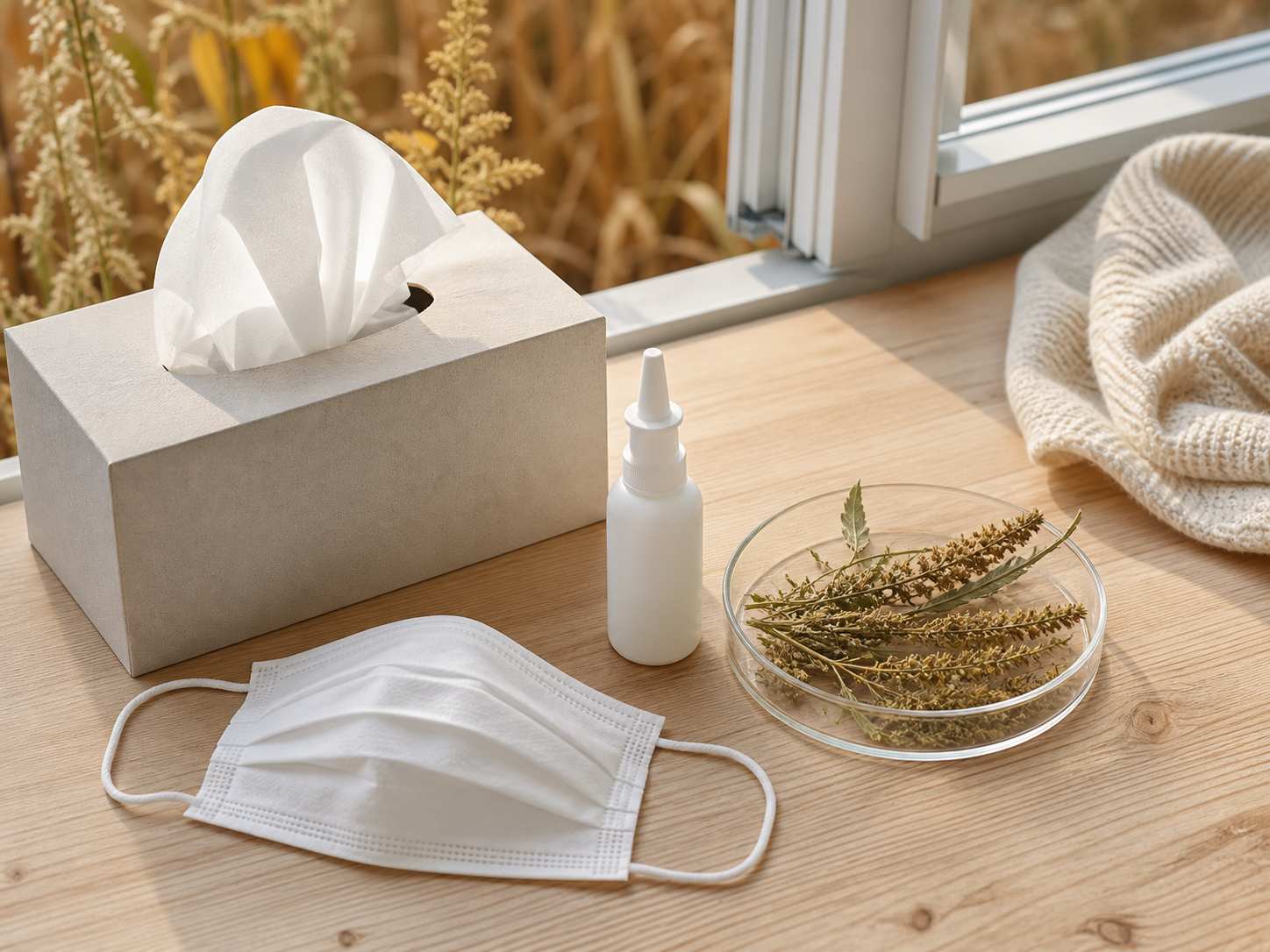
It is not simply due to pollen. The worsening of allergies during the change of seasons occurs as three causes overlap. First, rapid changes in temperature and humidity make the nasal mucosa sensitive. Second, not only does pollen from weeds like mugwort and ragweed increase, but fine dust and dead mites also rise.
Third, if you expend a lot of energy regulating your body temperature during the change of seasons, the balance of your immune system is disrupted, causing you to overreact to even minor stimuli.
When these three factors act simultaneously, rhinitis symptoms become much more severe than usual, although there are individual differences. This is precisely why even people who previously had mild rhinitis symptoms complain of distress whenever the seasons change.
Basic indoor care
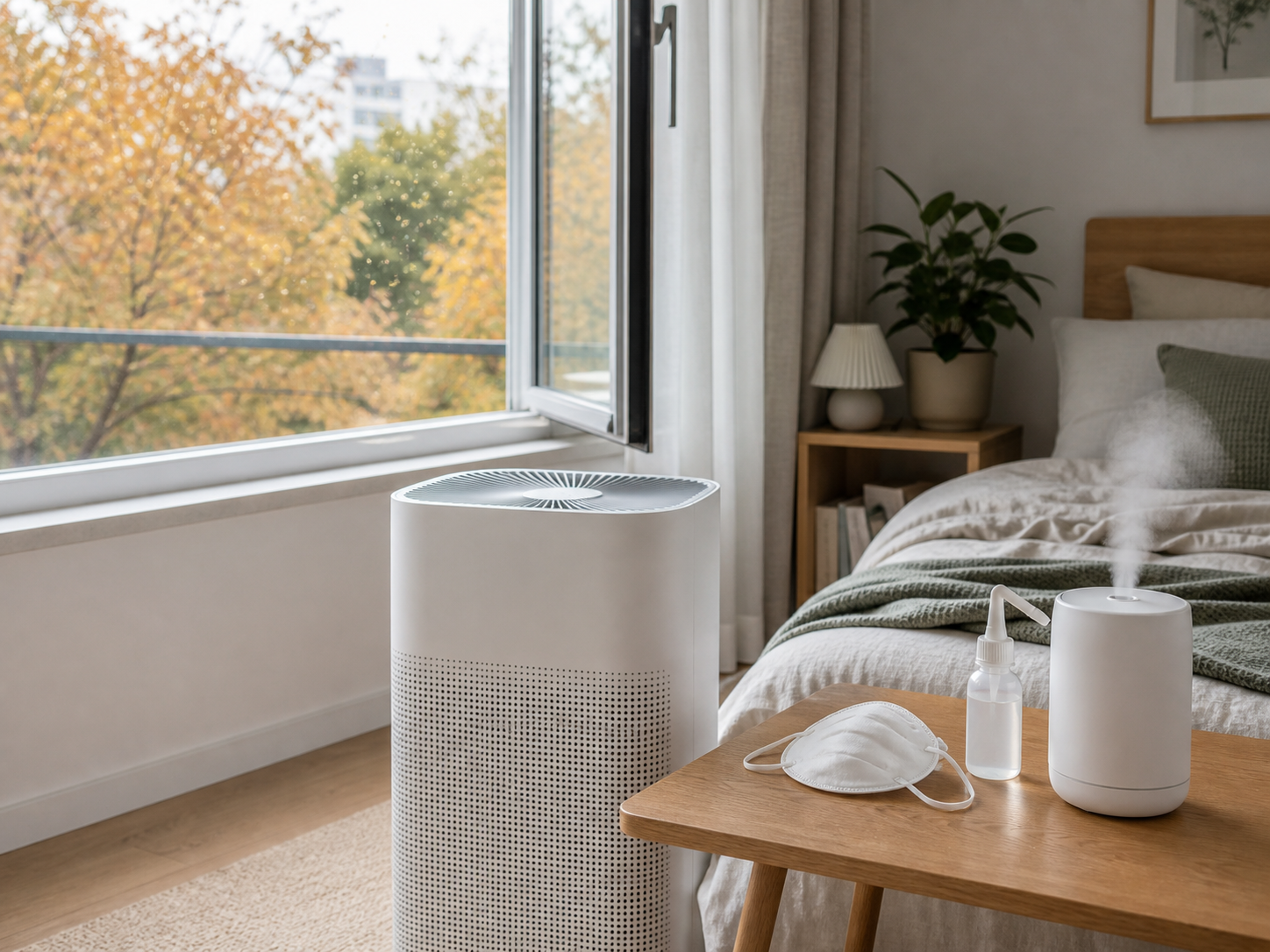
Lifestyle management is just as important as hospital treatment. Maintain indoor humidity at 40–50°C and temperature at around 20–22°C.Doing so can prevent the nasal mucosa from drying out. If it is too dry, the mucosa gets irritated, which worsens symptoms.
When rinsing your nose with salt water after returning from an outing, it is best not to do it too often. Excessive washing can damage the mucous membranes and make them drier. Doing it appropriately after going out or before going to sleep is sufficient.
Wearing a mask with a KF80 rating or higher can significantly reduce pollen exposure. Air purifiers equipped with HEPA filters are also effective. These physical barrier methods are just as important as medication.
Medication and medical counseling
Recent second-generation antihistamines have been proven to have fewer side effects such as drowsiness and be safe for long-term use. They are most effective when taken as soon as symptoms appear. Topical steroid nasal sprays require a doctor's prescription and must be used consistently at a set time to be effective.
However, please remember that medication controls symptoms, not provides a cure. If symptoms are severe and recur annually, you may consider specialized immunotherapy (allergen immunotherapy). This treatment involves regulating the immune response by consistently administering the causative allergen for 3 to 5 years.
However, just because an allergy test comes back positive does not mean that immunotherapy begins immediately. Together, check whether you are being exposed to that allergen in your daily life and whether the symptoms are really due to it.You must do it. You can only expect effective treatment when the test results match the actual symptoms.
- The 2026 Student-Tailored Integrated Support Act will be implemented! "No more teachers struggling alone." Schools will work as a team to support students in crisis.
- Landscape and Outlook After MLB Championship Contender Trade Deadline
- Apple and Google's AI Collaboration: 5 Changes and Impacts on Siri
When you need to go to the hospital
If symptoms persist for more than two weeks, or if yellow nasal discharge is accompanied by fever or a headache, you should not delay seeing a doctor. If simple rhinitis worsens, it can lead to secondary complications such as otitis media or sinusitis. If you experience recurring itchy or red eyes every season, or if you are wondering which allergen is causing it, now is a good time to get tested.
If you simply endure rhinitis symptoms, sleep disturbances will weaken your immune system, eventually making you vulnerable to more severe infections. If you address these issues now in August, you can welcome the upcoming autumn with much greater ease.