
If headaches and fatigue recur even with an indoor-outdoor temperature difference of only around 5℃, it is difficult to simply dismiss it as the price of avoiding the heat. This article explains why symptoms of air conditioning sickness occur, how to distinguish it from a summer cold, and how to minimize discomfort while using the air conditioner.
"Air conditioning sickness" is not a single medical diagnosis, but rather a collective term for symptoms caused by cold and dry air-conditioned environments. If you feel dizzy and nauseous but do not feel better even after taking cold medicine, it is time to examine your indoor environment.
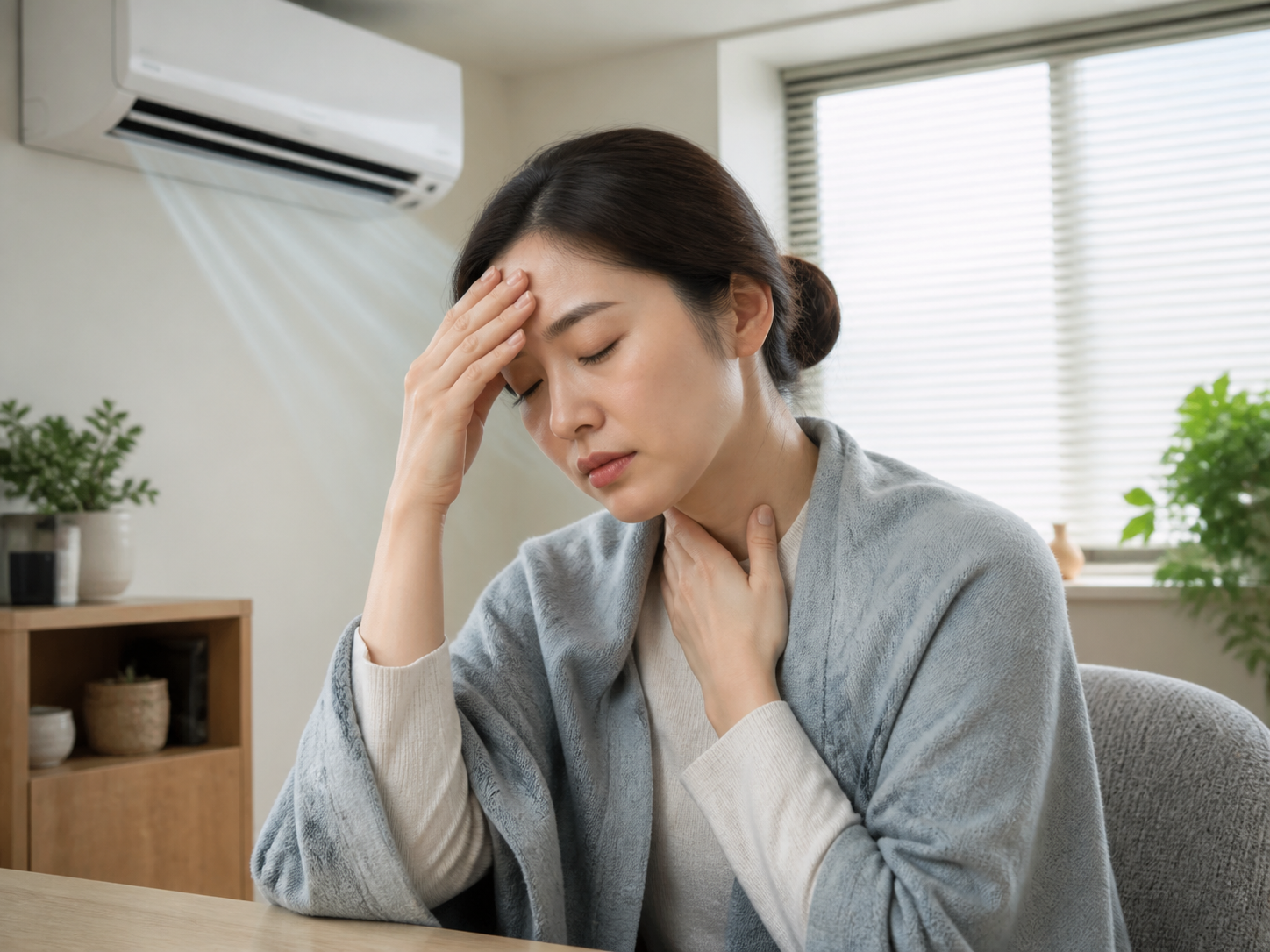
Symptoms of air conditioning sickness begin with headaches, fatigue, and digestive discomfort.

The core of air conditioning sickness is the body's inability to adapt to sudden temperature changes and cold air. It manifests as a heavy, foggy head, or stiff shoulders and neck after staying in a cold indoor environment for a long time.
Common systemic symptoms include fatigue, lethargy, dizziness, muscle pain, and a sensation of cold hands and feet. If wind blows directly at the neck or face, the throat may become dry, the nose may become stuffy, and the eyes may sting.
When the stomach gets cold, digestion slows down, and digestive symptoms such as bloating, abdominal pain, and diarrhea may follow. In particular, stomach discomfort becomes even more pronounced if you frequently drink cold beverages.
If headaches and fatigue begin after turning on the air conditioner, and you feel much better when you go outside and move your body, the cooling environment is often affecting your symptoms.
Even if you have a headache, it is not the same problem as a summer cold.
| division | air conditioning sickness | summer cold |
|---|---|---|
| Main cause | Low indoor temperature, dryness, lack of ventilation | Viral infection |
| Headache patterns | A heavy and throbbing sensation in the head, accompanied by fatigue | May occur with fever and muscle pain |
| respiratory symptoms | Mild thirst, nasal congestion | Prominent cough, runny nose, sneezing, and sore throat |
| Digestive symptoms | Cold sensation in the abdomen, indigestion, diarrhea | Generalized fever and chills may become more pronounced |
Air conditioning sickness and the summer cold can both cause headaches, fatigue, and sore throats, making them easy to confuse. However, there is a clear difference: air conditioning sickness is a group of symptoms resulting from environmental changes, whereas the common cold is caused by a viral infection.
Fever, a distinct cough, runny nose, sneezing, and sore throat are more noticeable signs of a summer cold.Conversely, air conditioning sickness often occurs together with a dizzy head, a sensation of coldness in the body, indigestion, mild nasal congestion, and a dry throat.
If you experience a high fever, severe cough, difficulty breathing, repeated vomiting, or changes in consciousness, do not dismiss it as air conditioning sickness; you must seek medical attention. Persistently worsening headaches should also be treated under the same criteria.
You must reduce the difference between the indoor and outdoor temperatures before the air conditioner temperature.

Air conditioning sickness is less likely to occur the lower the indoor temperature, and the burden increases when frequently moving between the hot outdoors and the cold indoors. Avoid environments where there is a large temperature difference between the inside and outside, and indoors 26~28℃ rangeIf you maintain it, your body will find it easier to adapt.
Direction is just as important as wind speed. You can reduce direct exposure by adjusting the vents so they do not point toward your face, neck, stomach, or knees, and directing the air toward the ceiling or walls.
In places like offices where it is difficult to adjust the temperature at will, a thin cardigan or shawl is helpful. Simply covering your neck and stomach can reduce the amount of time cold wind touches your skin.
Dryness and lack of ventilation also exacerbate the symptoms of air conditioning sickness.

Running an air conditioner for a long time lowers indoor humidity, making the mucous membranes of the nose and throat prone to drying out. If your throat feels scratchy and your eyes feel gritty, you should consider dry air as a cause along with the cold wind.
The habit of opening windows to change the indoor airIt reduces the stuffiness of the air-conditioned environment. Even while air-conditioned, ventilating for at least 10 minutes at regular intervals can alleviate the problem of recirculated air and indoor odors accumulating.
Since dust accumulation on the air conditioner filter can worsen air quality, cleaning is also essential. Typical household air conditioners A method of managing the filter about once every two weeksThis is widely used, and the more it is used, the faster dust accumulates.
Drinking lukewarm water in small sips rather than a large amount at once helps reduce throat dryness and dehydration. Ice drinks can make an already cold stomach feel more uncomfortable.
When symptoms appear, you should warm your body and avoid exposure to air conditioning.
When you experience a headache or a sensation of coldness similar to chills, you should first move away from the cold air. Raising the indoor temperature, changing the direction of the wind, and covering your neck and shoulders with outerwear will give your body time to recover.
If you have been sitting for a long time, it is better to get up and take a light walk every hour or two. As your stiff neck and shoulders loosen up, the soreness exacerbated by air conditioning will also decrease.
People with asthma, allergies, chronic sinusitis, or severe dry eyes, as well as the elderly and those with chronic diseases, may be more sensitive to irritation from air-conditioned environments. A method of controlling temperature, airflow, and ventilation together rather than turning off the air conditioner.This is the key to reducing discomfort this summer.
Symptoms of air conditioning sickness are not a matter of enduring them, but rather a problem that must be solved by addressing living environments that reduce cold drafts and large temperature differences.