
While there is no need to immediately think of pancreatic cancer just because of swollen eyes, there have been actual reports of cases where eye swelling led to an unexpected cancer diagnosis. Grace Grant, a woman in her 20s, visited a hospital due to severe swelling in one eye and discovered a tumor in her neck. Following a thorough examination, she was diagnosed with stage 4 pancreatic cancer and lymph node metastasis.
The key point of this case is that eye swelling is not a common symptom of pancreatic cancer. Pancreatic cancer may not show distinct early symptoms, and if it metastasizes through rare pathways, it may be discovered as an abnormality in a region far from the digestive system.It has meaning.
The process leading from eye swelling to the diagnosis of stage 4 pancreatic cancer
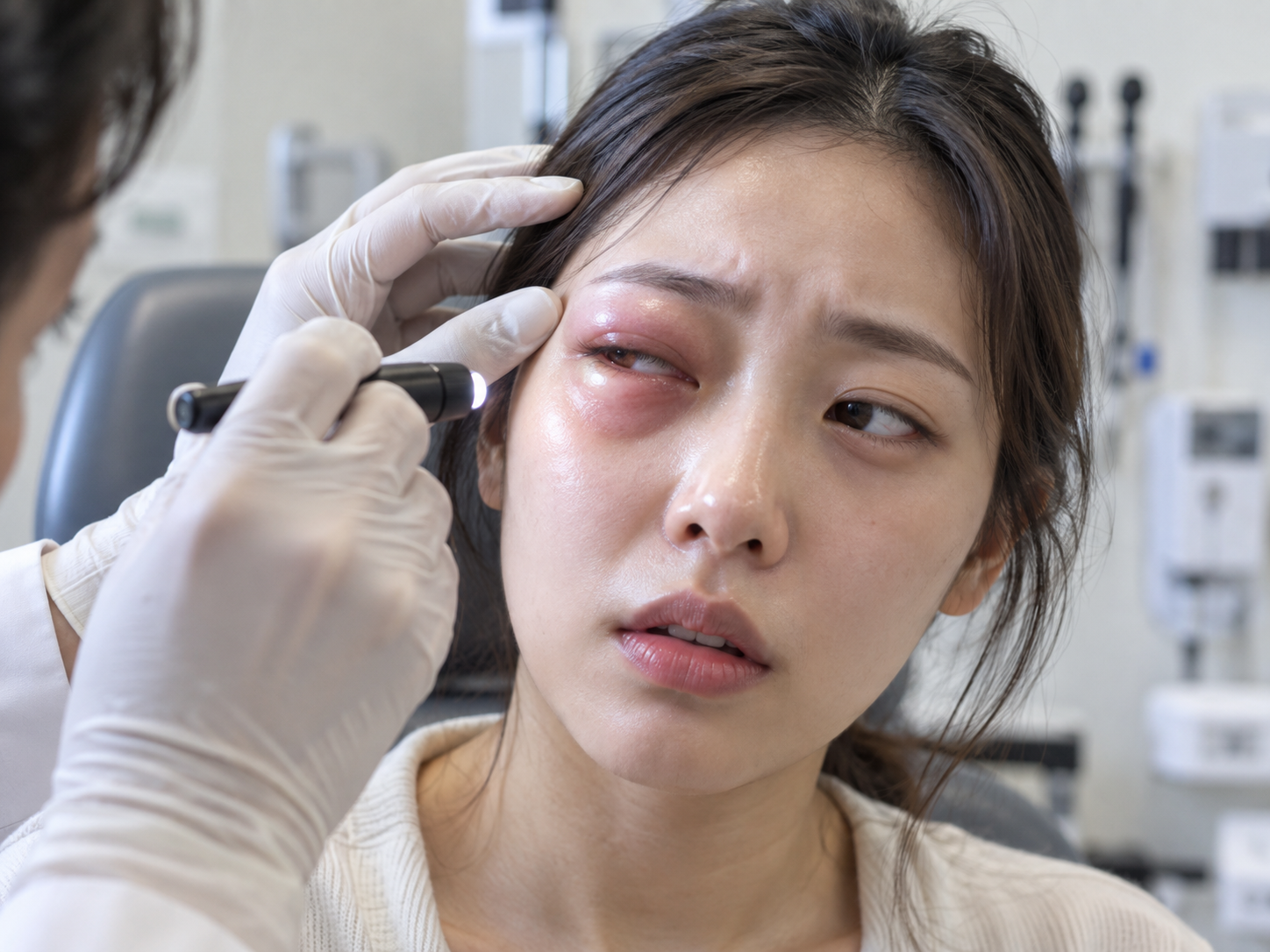
It started with severe swelling in one eye. Grant, then 24 years old and living in Ohio, USA, woke up in May with a swollen eye and was diagnosed with conjunctivitis at a nearby emergency center, where he was prescribed antibiotics and steroid eye drops.
However, the swelling did not subside. Later, during a neurological examination, it was discovered that blood flow in the left side of the neck was not smooth, and after being transferred to the emergency room for tests, it was revealed that there was a tumor in the neck.
Due to the patient's young age, the medical team initially suspected lymphoma. A PET-CT scan performed about two weeks later revealed an abnormality in the pancreas, and a subsequent biopsy... Stage 4 pancreatic cancer that has metastasized to the lymph nodes in the neckThis has been confirmed.
Eye swelling was the starting point of this case, but it is not classified as a typical symptom of pancreatic cancer.
Are eye and facial swelling a common sign of pancreatic cancer?

| Symptoms or changes | aspects that may appear | Points to consider |
|---|---|---|
| upper abdominal pain | Pain around the pit of the stomach may spread to the back or lower back. | Observe whether it is repeated or persistent |
| jaundice | It can occur when a tumor in the head of the pancreas blocks the bile duct. | Whether accompanied by changes in skin and whites of the eyes, and changes in urine color |
| Weight loss and indigestion | Weight loss or digestive discomfort without a specific reason | Check if it persists regardless of meal size |
| eye and facial swelling | It is not a typical symptom of pancreatic cancer | We also examined other causes, such as eye diseases and vascular and lymphatic problems. |
To start with the conclusion, swelling around the eyes or face is not a common representative symptom of pancreatic cancer. Since the pancreas is located deep within the abdomen, there are cases where pain or distinct digestive symptoms do not appear in the early stages even when cancer develops.
The changes commonly mentioned in pancreatic cancer are as follows. Rather than diagnosing the cancer based on a single symptom, it is important to examine whether multiple changes persist or appear together.
Therefore, you should not suspect pancreatic cancer or self-diagnose solely because your eyes are swollen. Conversely, the absence of typical symptoms such as abdominal pain or jaundice does not mean that the possibility of pancreatic disease can be completely ruled out.
The reason pancreatic cancer spread to the neck lymph nodes

It is rare for pancreatic cancer to metastasize to lymph nodes around the neck. Since metastasis to surrounding tissues inside the abdomen, the liver, or the peritoneum is usually known first, metastasis to the neck lymph nodes is a difficult pathway to anticipate.
Nevertheless, there are anatomical pathways for metastasis. This is because lymphatic fluid from the abdomen can travel through the thoracic duct to the left supraclavicular lymph nodes. If cancer cells travel along this path, tumors may be found in the neck or lymph nodes above the clavicle.
Enlarged lymph nodes around the neck can compress nearby blood vessels or lymphatic vessels, causing swelling in the face and around the eyes. However, a direct causal relationship between Grant's eye swelling and metastasis to the neck lymph nodes has not been confirmed.
Pancreatic cancer in people in their 20s is rare in itself, and this case, which was accompanied by metastasis to the neck lymph nodes, should not be taken as a typical course of pancreatic cancer. This is also why pancreatic cancer or metastasis cannot be confirmed based solely on eye swelling and a neck tumor.
Can pancreatic cancer occur in people in their 20s?

Pancreatic cancer is known to primarily affect the elderly, and data from the American Cancer Society indicates the average age of diagnosis as 70. In this regard, Grant's case, diagnosed at age 24, is exceptional in terms of age as well.
Being young does not mean that you will not develop pancreatic cancer. A family history of pancreatic cancer, chronic pancreatitis, smoking, and obesity are known risk factors, and multiple factors can interact.
In particular, the sudden onset of diabetes around the age of 50, or a rapid deterioration of existing diabetes without a specific reason, can serve as a catalyst for examining pancreatic disease. Of course, these changes do not necessarily mean pancreatic cancer, but if the progression of the existing disease has changed, the condition of the pancreas may be examined during the medical consultation.
Pancreatic Cancer Survival Rate and Lifestyle Management
According to figures from the US NCI SEER data for the years 2019–2023, the 5-year relative survival rate for cases confined to the pancreas was 47.81 TP3T. For the local stage, where the disease has spread to surrounding tissues or lymph nodes, the rate was 23.51 TP3T, and for cases with distant metastasis to other organs, it was 2.41 TP3T.
This figure is based on statistics from a U.S. patient population and is not a determining factor for individual survival. The actual course of the disease varies depending on the histological characteristics of the cancer, the extent of metastasis, the response to treatment, and the patient's general condition.
It is reported that Grant began chemotherapy after freezing her eggs to preserve her fertility. For young patients, it is important to address not only cancer treatment but also the possibility of future pregnancy, the timing of treatment, and psychological burden.
There is no single preventive method that can definitively stop pancreatic cancer. However, habits such as avoiding smoking, maintaining a healthy weight, eating a balanced diet, and consistently managing diabetes and chronic pancreatitis help reduce risk factors.
The criteria for judgment are simple. Rather than worrying about pancreatic cancer based solely on eye swelling, you should check if changes such as abdominal pain, jaundice, and weight loss occur along with persistent swelling or a lump in the neck.