
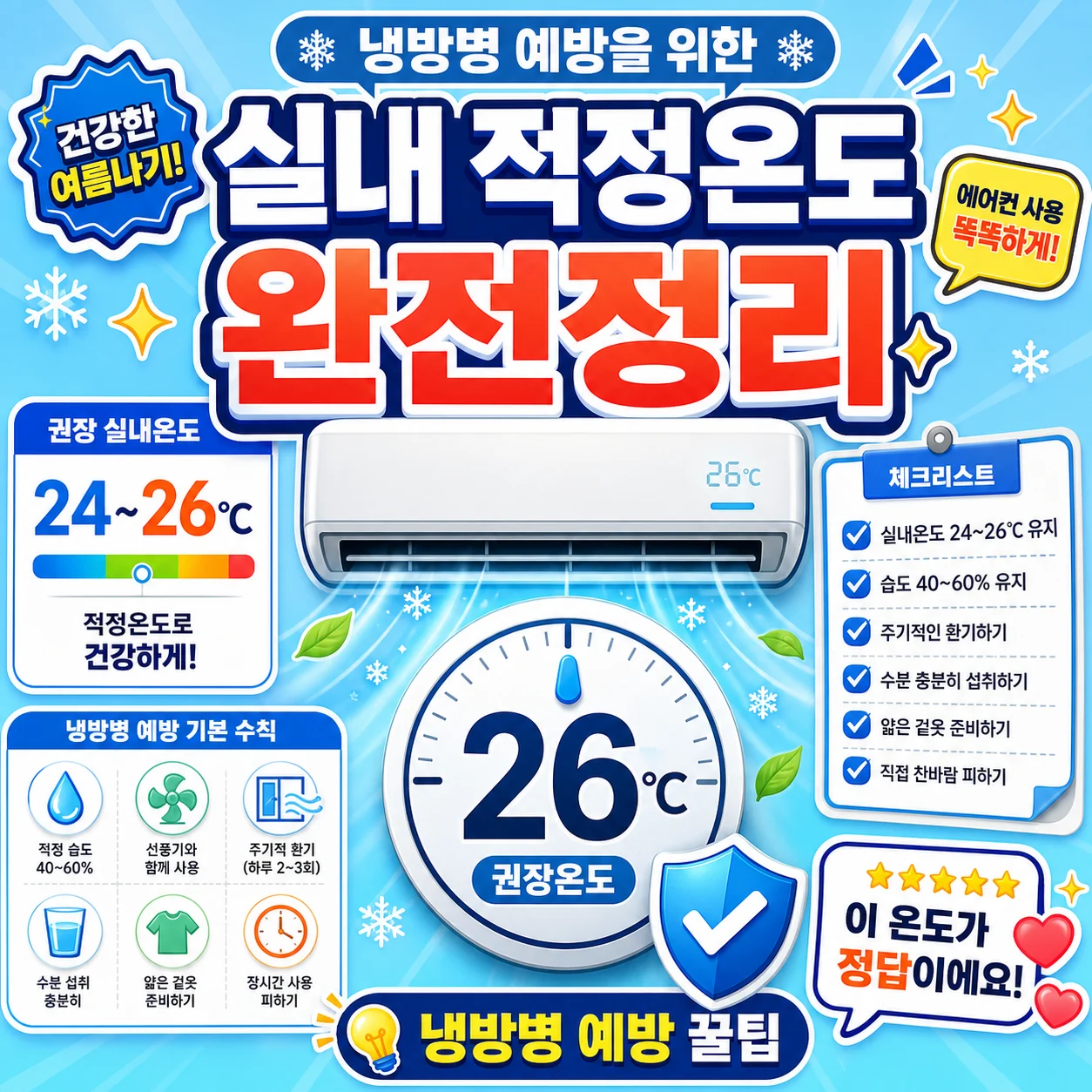
The indoor temperature is 26~28℃If you aim for this, you can significantly reduce air conditioning sickness. The temperature difference compared to the outdoor unit is within 5℃.Maintain as, Humidity is 40~60%Manage it. Do not let the air conditioner blow directly at your body.is important. Quick Checklist와 Ventilation routinePlease check it right away.
Maintaining the indoor temperature at approximately 26–28°C can reduce autonomic nervous system overload caused by temperature fluctuations. It is recommended to keep the temperature difference with the outdoor unit within 5°C and to maintain a humidity range of 40–60°C.
What is the appropriate indoor temperature?
Basically, an appropriate indoor temperature for adults is 25–26°C. When sleeping, 26–27°C is recommended to reduce discomfort caused by perceived cold. For infants and the elderly, whose ability to regulate body temperature is lower, it is safer to recommend a range of 27–28°C. Temperature settings vary depending on age and activity level. Therefore, please adjust the temperature with a difference of 1 to 2°C, taking into account the condition of each family member.
| situation | Recommended indoor temperature | note |
|---|---|---|
| General adult | 25 ~ 26℃ | Daily activity standards |
| going to bed | 26 ~ 27℃ | Recommended to supplement body temperature with a thin blanket |
| Infants and the elderly | 27 ~ 28℃ | Beware of direct wind and sudden temperature changes |
How is the indoor-outdoor temperature difference managed?
If the temperature difference between indoors and outdoors exceeds 5℃, symptoms such as headaches or muscle pain are likely to occur due to the strain on the autonomic nervous system. It is recommended to ventilate first and then gradually lower the set temperature, rather than lowering it abruptly immediately after returning from outside. A method of adjusting the temperature one step at a time when entering from the outside to the inside.Reduce this perceived burden. When operating the air conditioner, keep the difference between the outdoor unit setting and the indoor setting within 5℃.
| Cooling control method | Rapid cooling effect | Risk of air conditioning sickness |
|---|---|---|
| Lower immediately due to strong winds | height | very high |
| Gradually lower after ventilation | middle | lowness |
| Combined fan and dehumidifier | middle | middle |
How should humidity and air conditioner airflow be adjusted?
The appropriate range for comfortable indoor humidity is 40 to 601 TP3T. Since running the air conditioner can dry out the air and cause respiratory symptoms due to mucosal dryness, please use a humidifier or a small water bottle. The air conditioner's airflow Not facing directly at the body By directing it upwards or using wrapping to control the airflow as indirect, you can reduce discomfort while maintaining the perceived temperature. Keep a hygrometer and thermometer in a visible place and monitor them.If you do this, you can respond quickly to changes.
How should ventilation be effective?
Ventilation is recommended 2 to 3 times a day for 5 to 20 minutes at a time. Opening windows in a cross-ventilation style allows for rapid indoor air exchange in a short period. When fine dust concentrations are high, reduce window opening and use mechanical ventilation or an air purifier in conjunction. After ventilation, remove dust from the floor with a wet mop.Doing so helps reduce indoor fine dust residue.
| Ventilation method | Time efficiency | Risk of fine dust inflow |
|---|---|---|
| cross ventilation | excellence | middle |
| Single window, short ventilation | middle | lowness |
| mechanical ventilation | middle | lowness |
Assistive Device Use and Daily Checkpoints
You can automate maintenance by utilizing an air conditioner remote equipped with a thermometer, hygrometer, particulate matter sensor, and timer function. Check the air conditioner filter every two weeks to one month and clean it if necessary. In terms of energy, it is known that raising the set temperature by 1°C reduces cooling power consumption by approximately 3 to 81 TP3T, allowing you to manage both indoor comfort and electricity costs simultaneously. Especially for households with young children, manage wind direction and temperature differences more conservatively.do
Recommended for This is a household where infants and the elderly live together with someone who frequently experiences headaches or nasal congestion in hot indoor environments. Checkpoint Please check the temperature 26~28℃, temperature difference within 5℃, and humidity 40~60% first. Make simple checklists a habit.If you do this, you can substantially lower the risk of developing air conditioning sickness.
Frequently Asked Questions
What is the appropriate indoor temperature?
The target indoor temperature is 26–28℃ to reduce air conditioning sickness, and a range of 25–26℃ is recommended for general adults, 26–27℃ for sleeping, and 27–28℃ for infants and the elderly.
How do you manage the temperature difference between indoors and outdoors?
It is recommended to keep the indoor and outdoor temperature difference within 5℃ and, after going out, ventilate and gradually lower the set temperature by one step at a time to reduce the perceived burden.
How should I adjust the humidity and air conditioner airflow?
The comfortable indoor humidity is 40 to 601 TP3T. If the air becomes dry due to the operation of the air conditioner, use a humidifier or a small water tank, and direct the air conditioner's air upward or adjust it to indirect airflow so that it does not hit your body directly.
How can ventilation be done effectively?
Ventilation is recommended 2 to 3 times a day for 5 to 20 minutes at a time. Opening windows in a cross-window style is efficient, and when fine dust concentrations are high, reduce window opening and use mechanical ventilation or an air purifier. It is also helpful to remove dust from the floor by mopping after ventilation.