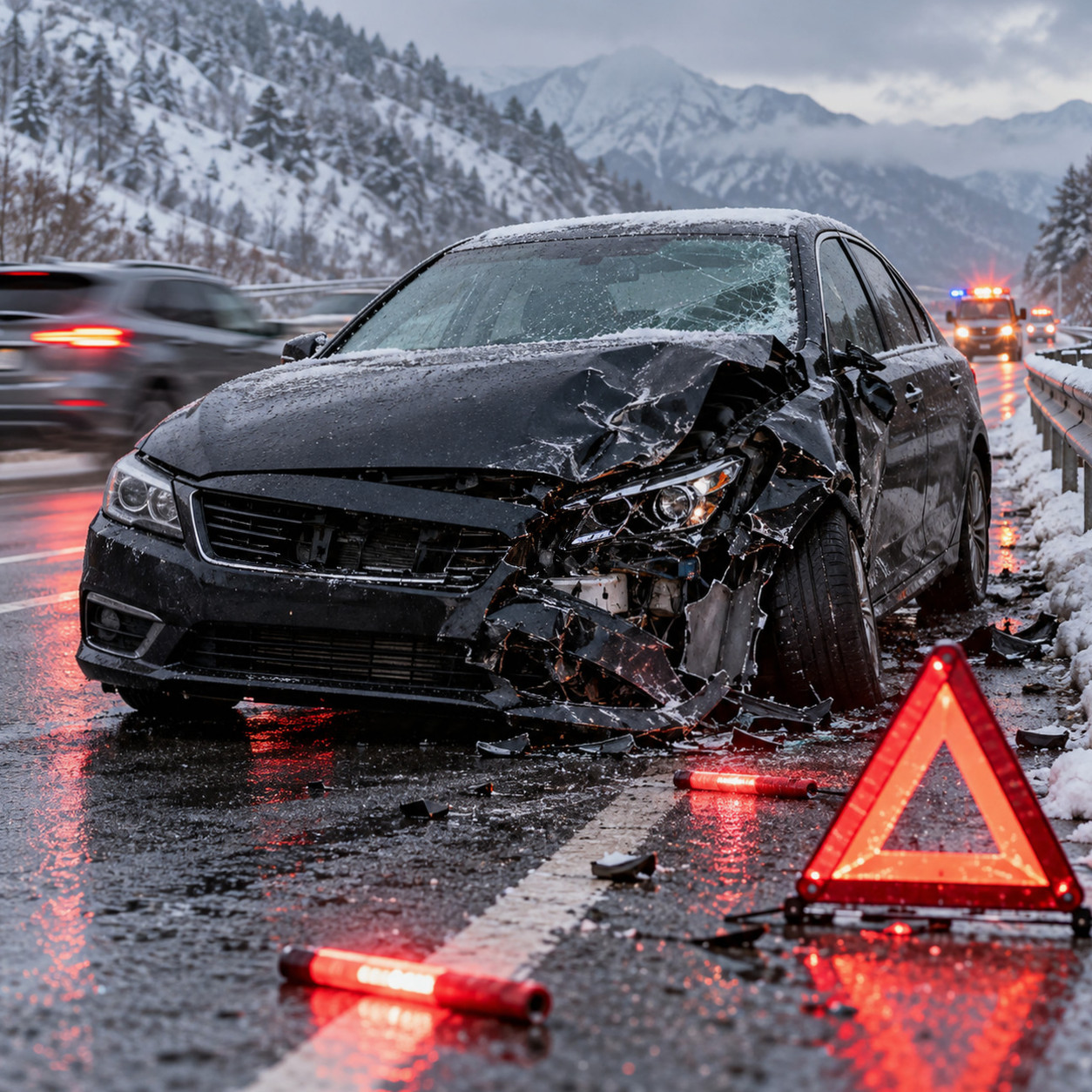
Many people believe that the most dangerous moment after a primary accident on a highway is the split second when the collision occurs. However, in reality, the very moment immediately after the accident, when the driver gets out of the car to check the situation, can be even more fatal. This is because "secondary accidents," in which following vehicles fail to avoid a stopped person or vehicle and crash directly into them, occur repeatedly every year.
Recently, a couple was killed in an accident on the Gangwon Yeongdong Expressway after being struck by a vehicle following behind while dealing with a primary accident. This article summarizes why secondary accidents are particularly fatal and outlines the guidelines for action to take in the event of an accident.
Is it true that the fatality rate in secondary accidents is higher than in general accidents?
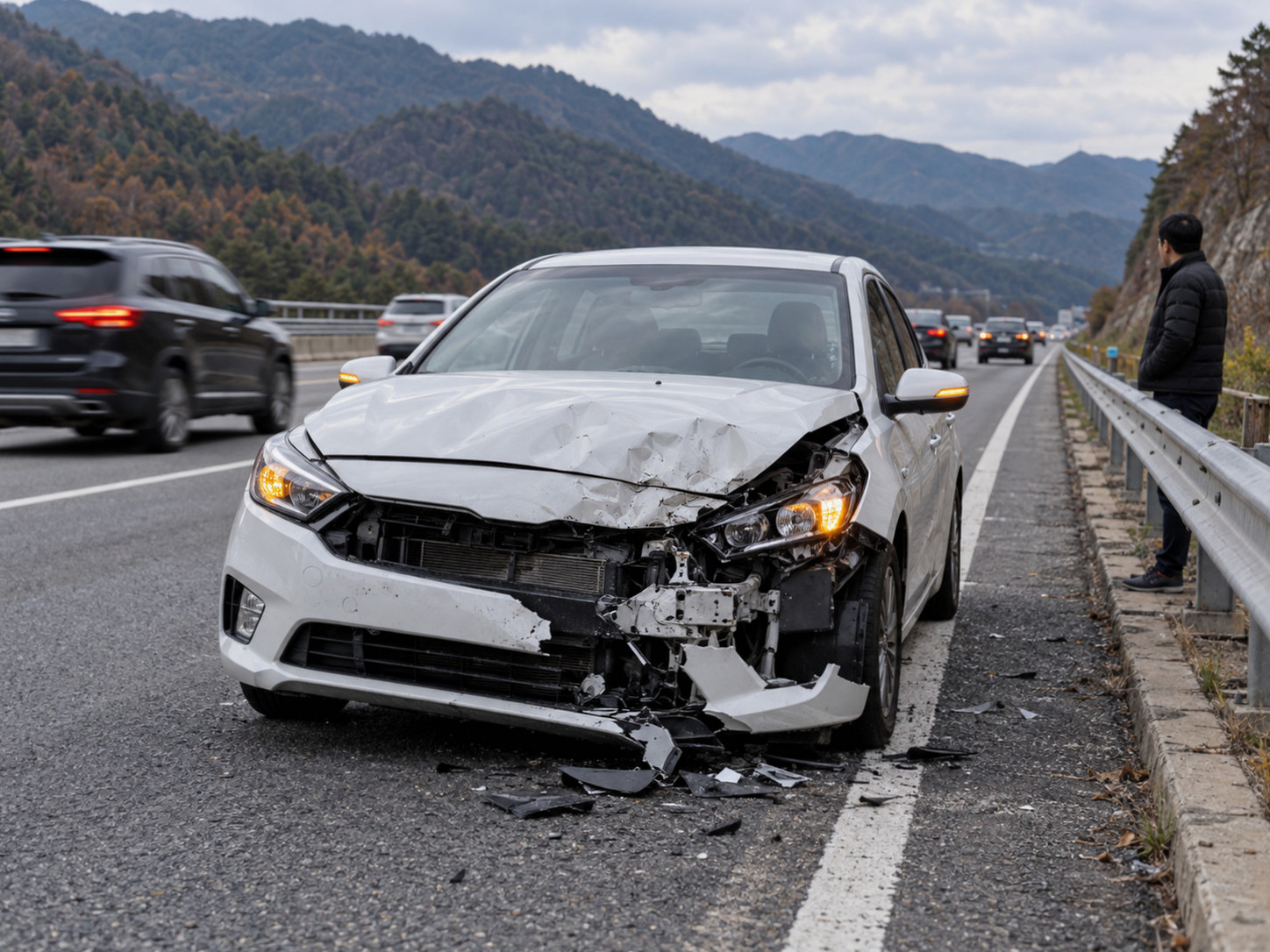
According to five-year data from 2021 to 2025 compiled by the Gangwon Regional Headquarters of the Korea Expressway Corporation, the fatality rate of secondary accidents on expressways in the Gangwon region was 5.6 times higher than that of general traffic accidents. The fatality rate refers to the number of deaths per 100 accidents; while the figure for secondary accidents was 33.3, it was only 5.9 for general traffic accidents.
During the same period, there were 27 secondary accidents on the Gangwon Expressway, resulting in 9 deaths. This means that while the number of accidents itself is not high, once they occur, the probability of them leading to death is much higher.
Many people think of secondary accidents simply as "another accident," but in reality, they are a structural risk in which stopped vehicles and pedestrians are directly exposed to the path of high-speed vehicles. The numbers show that this structural risk is also confirmed by statistics.
The reason why accidents are concentrated on the Yeongdong Expressway and the Seoul-Yangyang Expressway
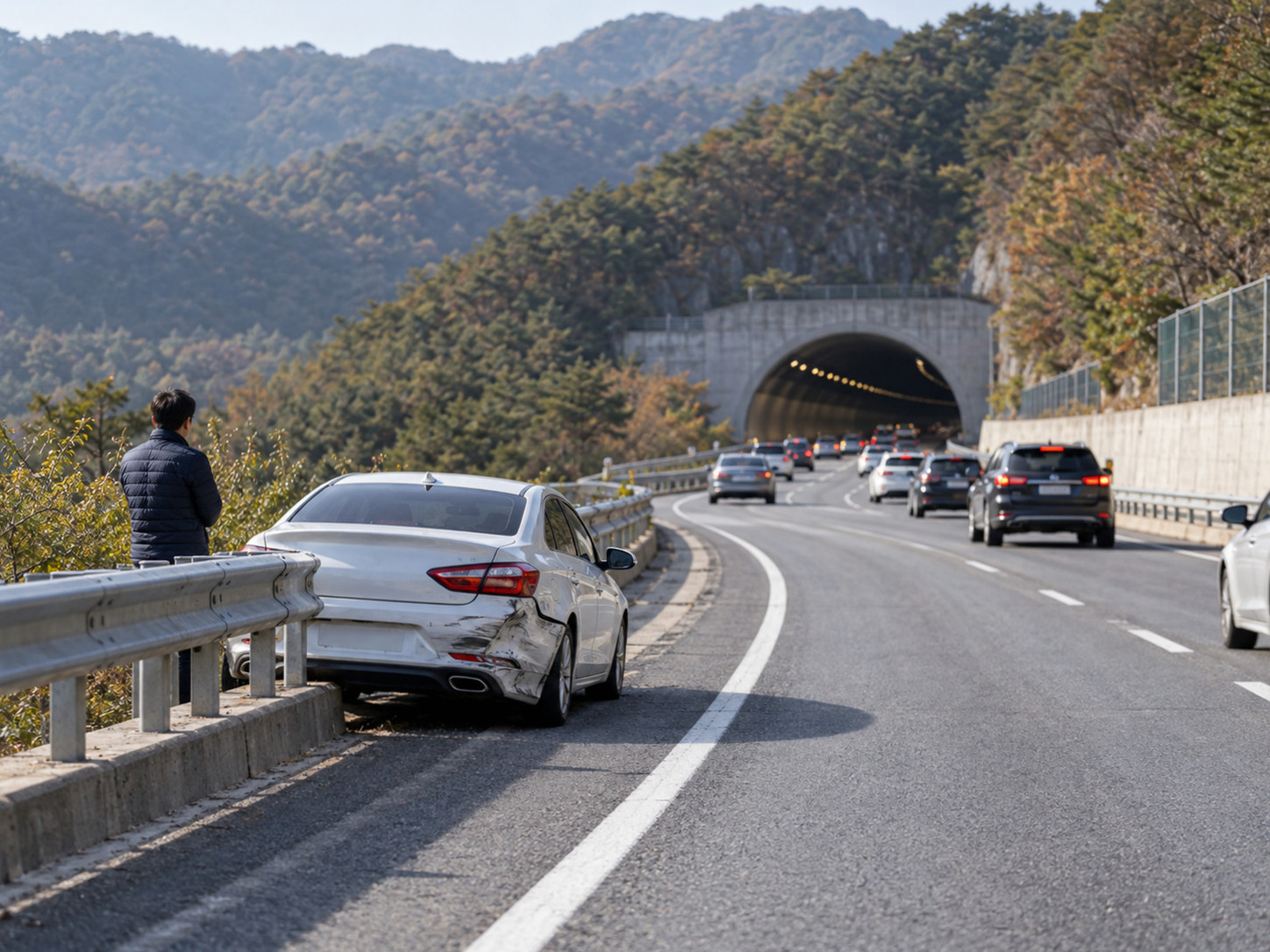
In the same five-year statistics, 66.71% of secondary accidents in the Gangwon region were concentrated on the Yeongdong Expressway and the Seoul-Yangyang Expressway. Both routes share the commonality of having high traffic volume and including sections where visibility is difficult, such as tunnels and curved sections.
By cause, drowsy driving and failure to pay attention to the road ahead accounted for the largest share at 63.01 TP3T, followed by speeding at 18.51 TP3T. Regarding the time of day, the proportion was higher during the day than at night at 59.31 TP3T, indicating that secondary accidents are not necessarily concentrated only during late-night hours when drowsy driving is prevalent.
Passenger cars were the most frequent cause of subsequent accidents, accounting for 48.11%. This means that simply being careful with specific car models or specific times of day is not enough to feel safe.
The dangers shown by the recent fatal accident involving a married couple
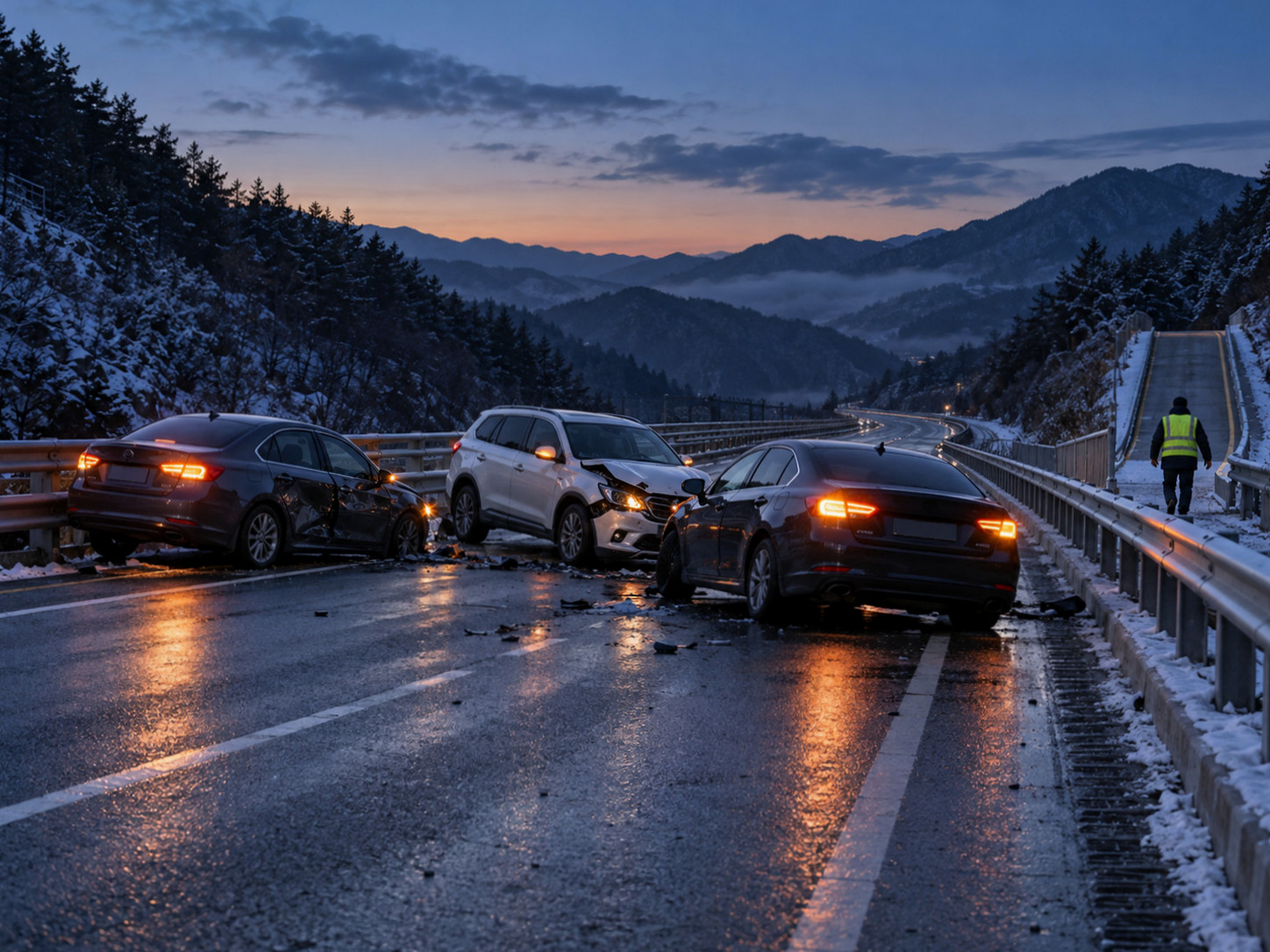
Around 2:20 AM on October 24, 2026, an accident occurred at the 141.5 km mark of the Yeongdong Expressway in the direction of Gangneung, Beopju-ri, Ucheon-myeon, Hoengseong-gun. An SM3 passenger car and an Orlando passenger car collided first, and the damage worsened as a Palisade following behind rear-ended them.
A couple in their 70s and 60s, who were in the Orlando, got out of the car immediately after the first collision to deal with the accident, but were struck and killed by a vehicle following behind. It is necessary to clearly distinguish that while they were the direct parties involved in the first accident, their deaths were caused by the second accident.
There have been similar types of accidents in the past. In March 2025, near the Gakhan Tunnel in Nam-myeon, Yeongwol-gun, a cargo truck rear-ended a passenger car stopped on the shoulder, and then another SUV struck citizens who were clearing the scene, resulting in two deaths and two injuries. In June 2025, one person died when a following vehicle rear-ended an overturned passenger car in the Inje-Yangyang Tunnel on the Seoul-Yangyang Expressway.
What is the first thing you should do immediately after an accident?
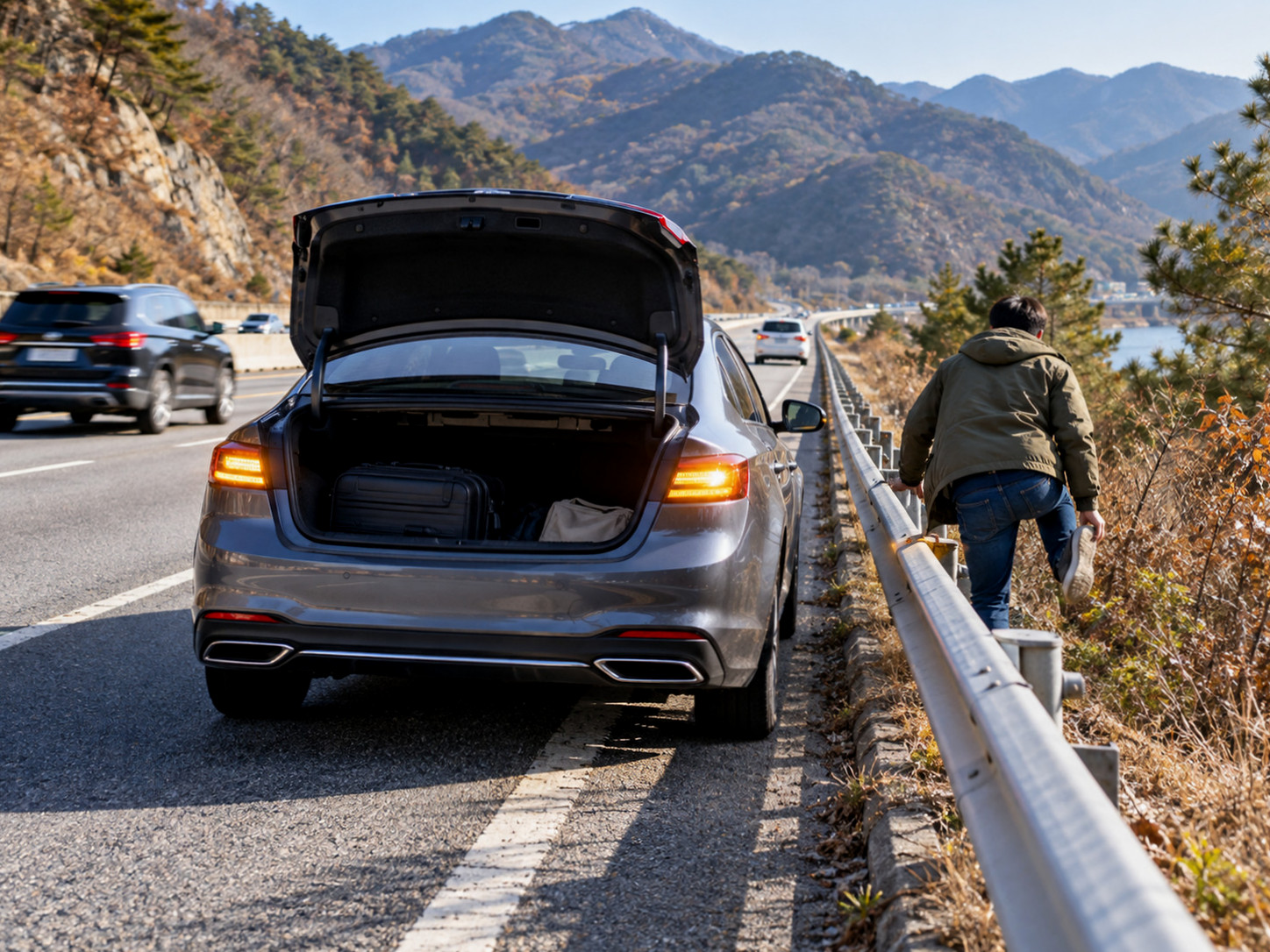
When an accident occurs, the first thing you must do is move to a safe zone outside the guardrail, rather than staying near the vehicle. The Korea Expressway Corporation provides guidance on this sequence under the name "Beat Box," which consists of turning on hazard lights, opening the trunk, evacuating to a safe zone, and reporting the incident.
Turning on the hazard lights signals to following vehicles that there is an abnormal situation ahead. Opening the trunk serves the same purpose, allowing a stopped vehicle to be recognized from a distance at night or in poor visibility conditions.
After completing these two measures, do not linger next to or near the vehicle; you must move immediately to outside the guardrail. It is not too late to check the accident situation or talk to the other party after you have evacuated to a safe zone.
Why reaction time is important while driving at 100 km/h
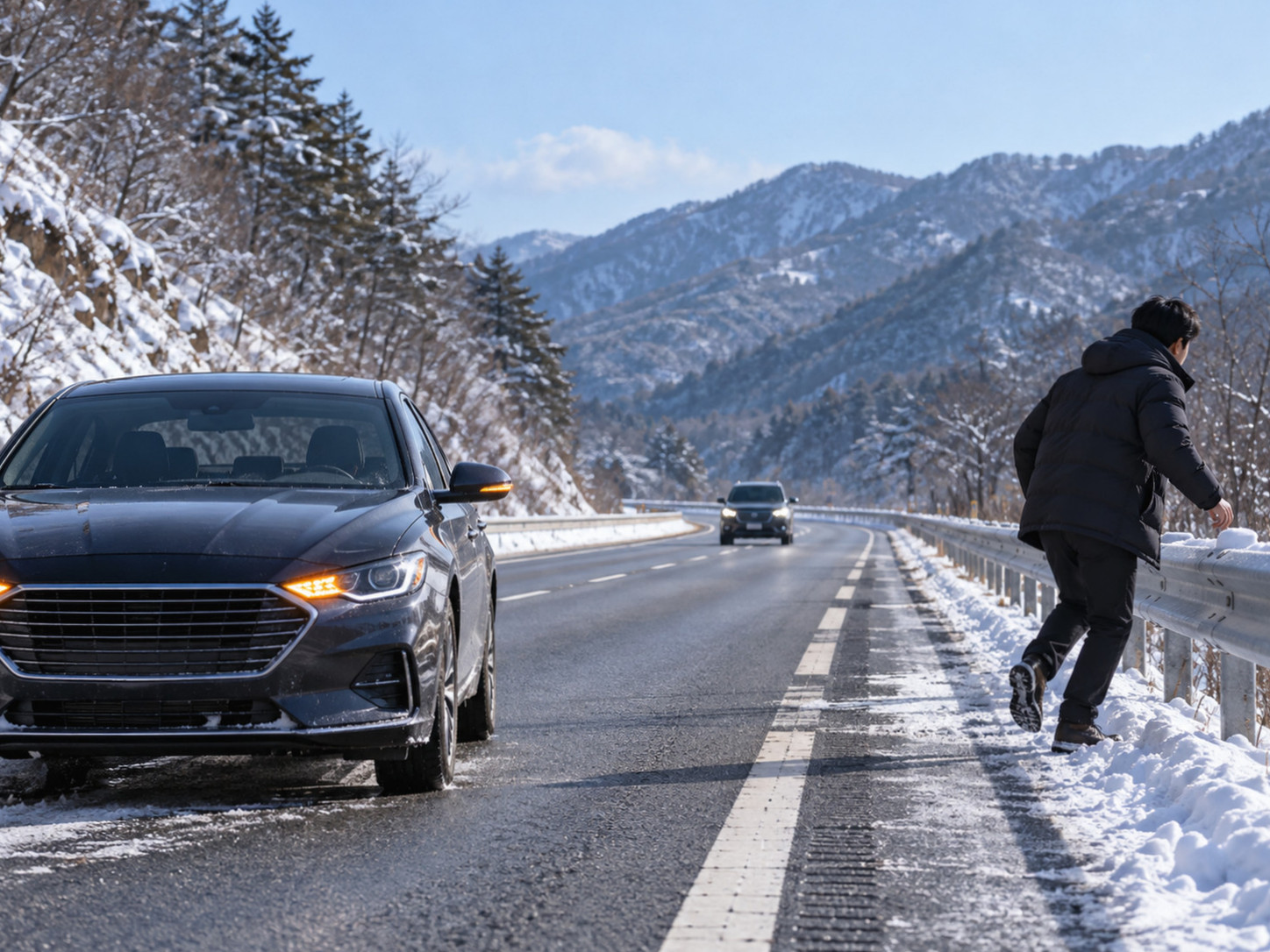
A vehicle traveling at 100 km/h moves approximately 28 meters per second. If it takes 3 seconds to perceive the situation ahead, the vehicle will have already traveled approximately 83 meters during that time.
This distance is often insufficient to stop with sudden braking. This is why people standing at the accident scene or stopped vehicles are inevitably perceived as 'suddenly appearing obstacles' by drivers following behind.
Ultimately, no matter how quickly the parties involved in the accident try to resolve the situation, they cannot avoid the physical limitations of the reaction time and braking distance of following vehicles. Therefore, evacuation must take precedence over recovery.
How to use the Korea Expressway Corporation's emergency towing service
If you need to move your vehicle due to a breakdown or minor accident on the highway, you can use the Korea Expressway Corporation's emergency towing service. This service is a system that tows accident vehicles to the nearest safe zone free of charge.
Attempting to push or move the vehicle yourself can expose you to secondary accidents, so it is safer to contact relevant agencies for assistance rather than trying to handle the situation alone. You can check how to use the service and contact information through the Korea Expressway Corporation's official channels.
Frequently Asked Questions
Q1. What exactly does a secondary accident mean?
This refers to an accident on a highway where a following vehicle collides with the scene of a primary accident that occurred earlier. Often, vehicles or people stopped by the initial accident act as obstacles, leading to subsequent rear-end collisions.
Q2. Is it true that the fatality rate of secondary accidents is much higher than that of general accidents?
According to statistics from the Gangwon Regional Headquarters of the Korea Expressway Corporation for the period 2021–2025, the fatality rate for secondary accidents was 5.6 times that of general traffic accidents. The fatality rate is calculated based on the number of deaths per 100 accidents, with 33.3 deaths for secondary accidents and 5.9 deaths for general accidents.
Q3. Can't I get out of the car immediately after an accident to check?
Staying near the vehicle immediately after an accident leaves you fully exposed to the risk of a subsequent collision. After turning on the hazard lights and opening the trunk, your priority is to immediately move to a safe zone outside the guardrail.
Q4. In which sections do secondary accidents mainly occur?
In the Gangwon region, 66.71 secondary accidents are concentrated on the Yeongdong Expressway and the Seoul-Yangyang Expressway. Both routes are characterized by high traffic volume and include tunnels and curved sections.
- Reasons for Brils' Stock Price Rising 661 TP3 T from IPO Price on First Day of KOSDAQ Listing and Business Status
- Learn about the characteristics of secure, anxious, and avoidant attachment styles with the Adult Attachment Style Test.
- From Early Diabetes Symptoms to Numbness in the Toes: 5 Easy-to-Miss Signals
Q5. What are the main causes of secondary accidents?
Drowsy driving and failure to pay attention to the road ahead accounted for the largest share at 63.01 TP3T, followed by speeding at 18.51 TP3T. The proportion of incidents was higher during the day than at night.