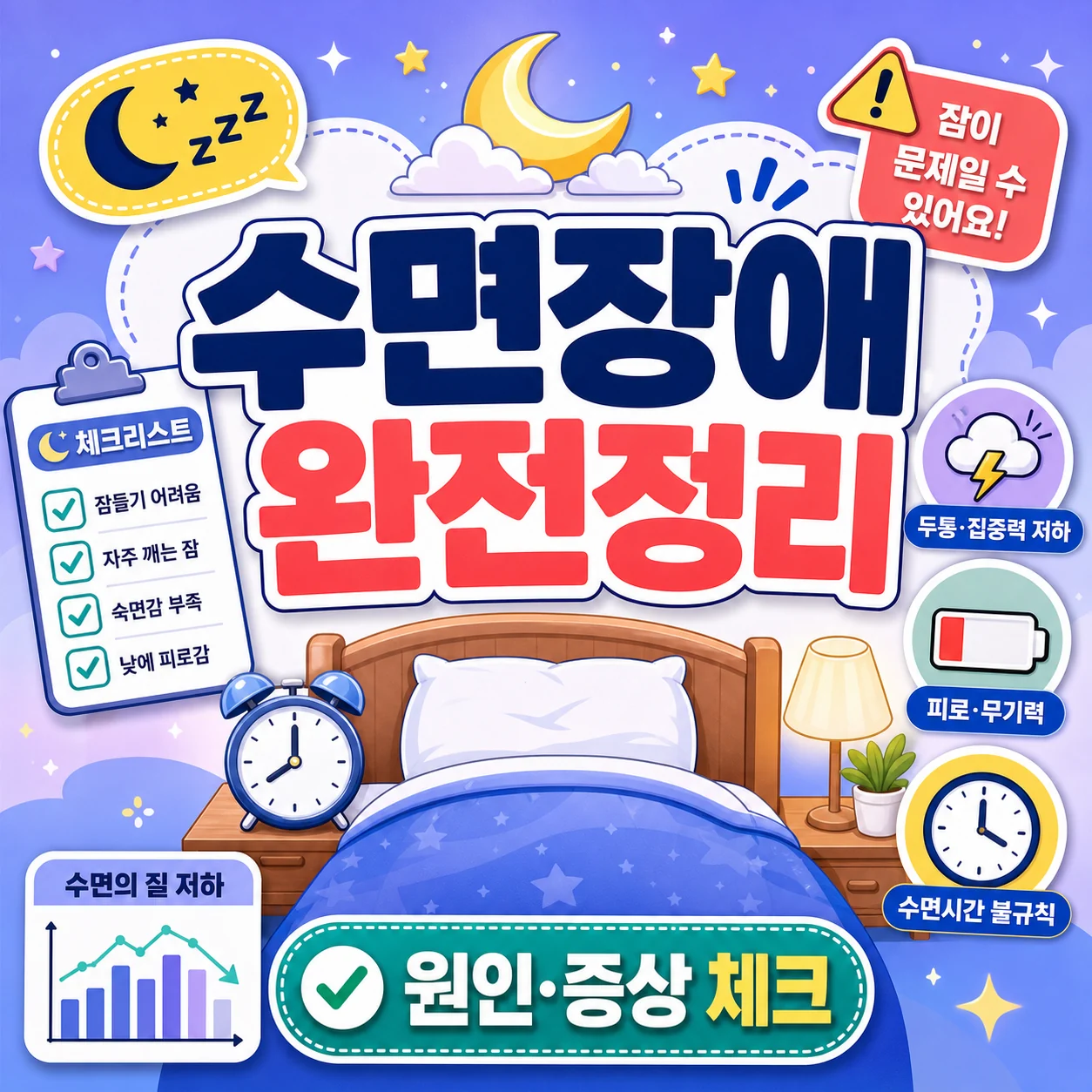

If you have trouble falling asleep and feel constantly drowsy during the day, first check the symptom classification and immediate checkpoints.. lifestyle habitsfrom Diagnostic testA step-by-step approach is required up to this point. First, record your sleep patterns for 1 to 2 weeks.do symptoms과 Daily impactPlease organize it.
Sleep disorders manifest in various forms, including difficulty falling asleep, difficulty maintaining sleepiness, excessive sleepiness, and respiratory abnormalities. The causes involve a complex interplay of factors, including stress, lifestyle habits, underlying medical conditions, medications, and environmental factors. Early evaluation and lifestyle modification are key to treatment.
1. Major Types and Characteristics of Sleep Disorders
Representative types include insomnia, sleep apnea, hypersomnia, parasonia, and rhythm disorders.It can be divided into the following. Insomnia is characterized primarily by difficulty falling asleep or waking up frequently during the night. Sleep apnea involves snoring and cessation of breathing, which can increase daytime sleepiness and the burden on the cardiovascular system. Hypersomnia refers to a condition where one feels sleepy during the day despite having slept sufficiently. Parasonia includes sleepwalking and nightmares, and can interfere with daily functioning.
| item | Insomnia | sleep apnea |
|---|---|---|
| Key symptoms | Difficulty falling asleep, nighttime awakening | Observation of severe snoring and breathing cessation |
| Main causes | Stress and irregular sleep habits | Obesity, anatomical problems, airway obstruction |
| diagnosis | Sleep diary questionnaire clinical evaluation | Polysomnography AHI measurement |
| therapy | CBT-I sleep hygiene medication | CPAP oral appliance surgery |
2. What are the main causes of sleep disorders?
The cause is a complex interplay of mental, physical, and environmental factors.Chronic stress, depression, and anxiety are typical factors that disrupt sleep. In terms of lifestyle habits, irregular sleep schedules, excessive caffeine intake, and nighttime smartphone use have a significant impact. Underlying conditions such as cardiovascular disease, diabetes, thyroid disorders, and chronic pain, as well as certain medications, also impair sleep quality. The prevalence rate is relatively high, with reports indicating that approximately 20 to 40 percent of the population experiences temporary or chronic sleep problems.
3. What symptoms are danger signs?
The following symptoms require a rapid evaluation.. Immediate consultation with a specialist is recommended if you experience excessive daytime sleepiness that interferes with daily life or work, repeated pauses in breathing, or sudden changes in breathing sounds. Drowsiness while driving or frequent daytime sleepiness are indicators for a hospital visit, as they lead to an accident risk. Caution is required as studies have reported that sleep apnea can increase cardiovascular risk by approximately 1.5 to 2 times. If sleep problems persist for more than three months and affect your daily life, you should seek a diagnosis.
4. Diagnostic methods and when to visit the hospital
A step-by-step diagnosis is conducted, ranging from simple sleep diaries and questionnaires to polysomnography.. The first step involves keeping a sleep diary for one to two weeks and completing questionnaires such as the Epworth Sleepiness Scale. If sleep apnea is suspected, a polysomnography (PSG) is performed to measure brain waves, oxygen saturation, and deep breathing patterns over a one-night period, typically lasting 6 to 8 hours. Severity is classified based on the AHI (Area Hypothesis Indicator) score: 5–15 is mild, 15–30 is moderate, and over 30 is severe. Checking thyroid and iron levels through blood tests and conducting a mental health assessment alongside the PG helps in identifying the cause.
| test | purpose | characteristic |
|---|---|---|
| Sleep Diary Survey | Identifying patterns and subjective symptoms | Low cost and convenience |
| polysomnography | Respiration, brainwaves, oxygen measurement | Precise diagnostic overnight examination |
| Self-test for sleep apnea | Screening for respiratory abnormalities | High convenience. The disadvantage is limited information. |
5. Comparison of Treatment Options and Lifestyle Improvement Tips
Treatment is selected based on the cause, and lifestyle improvement is fundamental.. For insomnia, cognitive behavioral therapy (CBT-I) is recommended due to strong evidence that it is the most effective for long-term improvement. For sleep apnea, continuous positive airway pressure (CPAP) is the standard treatment, and oral appliance surgery may be considered depending on the severity. Medications are used for short-term symptom relief, and it is safe to follow a doctor's instructions. Sleeping and waking up at the same time every day Prioritize limiting caffeine intake in the afternoon and maintaining regular exercise.
| therapy | merit | Recommended for |
|---|---|---|
| Sleep hygiene and lifestyle habits | No side effects, low cost | Early management of mild insomnia |
| CBT-I | Lasting effect, low recurrence rate | Chronic Insomnia Priority |
| CPAP | Direct correction of respiratory impairment reduces cardiovascular risk | Moderate to severe sleep apnea |
6. Quick Checkpoints
First, try writing a sleep diary for two weeks.. If you experience severe daytime sleepiness or if someone witnesses you stopping breathing, we recommend seeking medical attention immediately. If there is no improvement within 4 weeks with lifestyle changes or if symptoms worsen, please consider getting tested. Simple checkYou can check the consistency of sleep duration, daytime function decline, and whether breathing sounds are observed. If necessary, consult a specialist to establish an appropriate examination and treatment plan.
Frequently Asked Questions
What are the main types and characteristics of sleep disorders?
The main types are classified into insomnia, sleep apnea, hypersomnia, parasonia, and rhythm disorders, each exhibiting symptoms such as difficulty falling asleep and nighttime awakenings, severe snoring and breathing cessation, excessive daytime sleepiness, sleepwalking and nightmares, and sleep-time inconsistency, respectively.
What are the main causes of sleep disorders?
Mental factors such as chronic stress, depression, and anxiety; lifestyle habits such as irregular sleep patterns, excessive caffeine intake, and nighttime smartphone use; underlying conditions such as cardiovascular disease, diabetes, thyroid abnormalities, and chronic pain; and certain medications and environmental factors interact in a complex manner.
What symptoms are danger signs?
Excessive drowsiness that interferes with daily life or work, witnessing repeated pauses in breathing, severe snoring, or drowsiness while driving require prompt evaluation, and if symptoms persist for more than 3 months, a diagnosis is recommended.
What are the diagnostic methods and when should I visit the hospital?
Initially, it is evaluated using a 1-2 week sleep diary and questionnaires (e.g., Epworth). If sleep apnea is suspected, the severity is classified by measuring values such as AHI through polysomnography, and if there is no improvement within 4 weeks after lifestyle changes or if there are warning signs, a visit to the hospital is recommended.