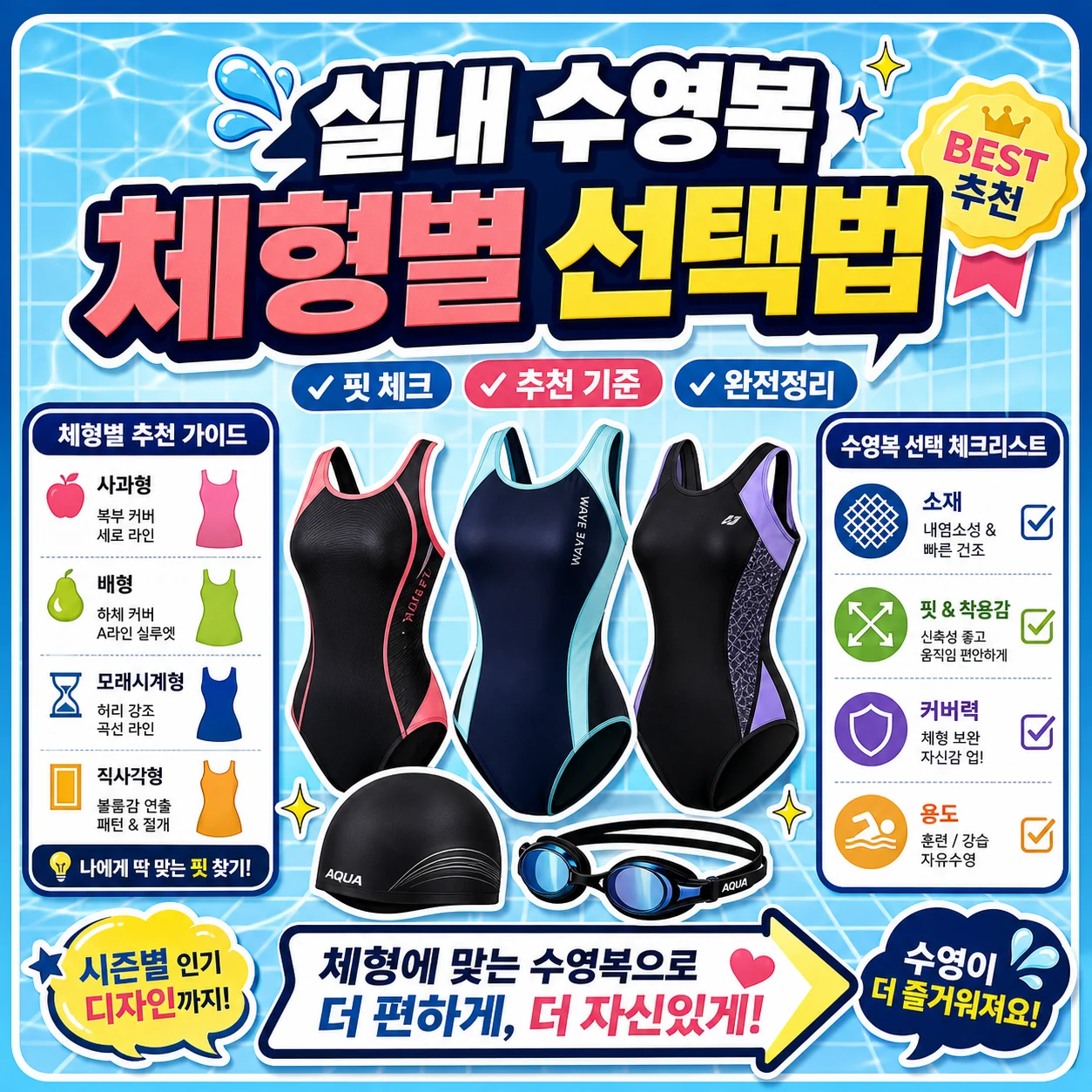

Indoor swimwear은 activity과 Comfort, Body shape balance, sizeIt is easy to choose if you look at it first. It was a slightly tight fit at firstThis natural, and, Chest, waist, and hip measurementsIf you look at them together, choosing becomes much easier. The feeling may change once you enter the water..
Today, we will look at usage, body type, and size in that order.
For indoor swimwear, it is more important to determine the intended use and fit before looking at the design. By considering the lines that fit your body type along with your measurements, it is easier to create a stable silhouette even in the water. Since size charts vary by brand, checking the measurements is the most important step.
1. Defining the purpose of the activity first makes the selection easier.
If it is for instruction A fit that holds the body securelyThis comes first, and if it's freestyle swimming... Lines that allow for comfortable movementThis fits well. If it is for a vacation or photography, the color and neckline may appear larger. Even with the same swimsuit, the standards change depending on its intended use.
Indoor swimming pools, in particular, have a lot of movement in the water. It hugs the body rather than being loose.It looks good. If you hold your upper body steady, your posture looks neat, and the overall silhouette is neatly organized.
| use | Recommended direction | Points to check |
|---|---|---|
| storm | Type with good shoulder stability | Strap width and back stability |
| Freestyle swimming | A type that allows for comfortable movement | Thigh tightness and contraction |
| Relaxation and photography | The type with distinct lines | Colors, neckline, and accent decorations |
| Wearing for a long time | fabric with good resilience | Stretch, lining, finishing lines |
Based on this criterion, even one-piece styles can feel quite different. If your focus is on lessons, it is better to choose one that neatly accentuates the figure, whereas if you are looking for both relaxation and photography, paying a little more attention to color and detail is a good idea.
2. Which lines suit different body types?
Choosing by body type is better than hiding Where you lookIt is closer to determining the right fit. Choosing a design that balances the proportions of the shoulders, waist, and lower body makes the overall impression look more balanced. It is much easier to choose if you divide the key points by body type as shown in the table below.
| Body shape concerns | Recommended Line | Good points to see |
|---|---|---|
| Having a wide or voluminous upper body | V-neck, crossbody bag, wide strap | Disperses the eye vertically and adds a sense of stability |
| Wide hips and lower body | High-waisted, simple bottoms, bright top | Tidy up the lower body and draw attention upwards |
| I want my legs to look longer | Mid-cut, semi-high cut | The effect of making the starting point of the legs look higher |
| slim body type | frills, ruffles, horizontal stripes, patterns | Good for adding volume and accentuating details |
| broad shoulders | Halter neck, cap sleeves, wide band | A feeling of gently wrapping around the shoulder line |
| He has a long upper body and a long torso. | Tie-back, adjustable strap | Good for adjusting upper body proportions with strap length |
High-waistedIt is often used to adjust lower body proportions, and, crossbody bagIt tends to provide more stable support for the upper body. Rather than having a single correct answer for body type recommendations, it is more appropriate to consider the desired vibe and movement together.
3. What size should I choose?
When you first wear an indoor swimsuit A slightly close fitThis is natural. Since the fabric stabilizes slightly upon entering water, the fit can change; therefore, if it is too loose from the start, the lines can easily become distorted. That is why comparing measurements is more important than the stated size when looking at brand charts.
It is recommended to check the bust, waist, and hip measurements together, as well as the elasticity rating. The type with a band provides stability under the bust.This is important, and for high-waisted bottoms, it is helpful to check if they gently support the waist and abdomen.
| Confirmation items | In good condition | Checkpoint |
|---|---|---|
| chest circumference | Minimal gaping and comfortably wraps | Is the area around the cup stable? |
| Waist circumference | The belly area is naturally toned. | Whether it sticks without curling |
| hip circumference | The pulling sensation is not excessive. | I wonder if the bottoms are riding up and not visible |
| shoulder strap | The position is well maintained even when moved. | Is there little dripping? |
| crotch length | Fits body length well | Check if the back or front is pulling too much |
If you are between the two sizes, it is better to choose the one that fits slightly closer to the body for active use. Conversely, if you are looking for a loose fit for photography or relaxation, a design with adjustable straps is more versatile.
Size selection can be a criterion to consider even before the design. If the measurements fit well, the body shaping effect is more natural, and the lines are maintained stably even underwater.
4. Why should materials and finishes be considered together?
The material directly affects comfort and shape retention. Fabrics with a high polyester content help maintain their shape, while a blend of spandex allows for more flexible movement. This balance is quite important in environments with many repetitive movements, such as indoor swimming.
It is also a good idea to check if there is a lining and if the stitching is finished flat. Whether it feels soft against the skin, If you check whether the shape remains stable even when wet, it becomes a choice that is comfortable to look at for a long time. Especially chlorine-containing swimming pool environmentsIn this regard, fabrics with good resilience are more useful.
Even if you like the design, satisfaction with the fit increases if the finish is natural. You can easily assess the overall quality by checking if the neckline, armholes, and waistline connect to fit the body.
5. Which combination would be a good fit for whom?
If you take lessons frequently One-piece style with good fitCrossbody styles are comfortable. If you spend a lot of time swimming, a mid-cut or semi-high cut that restricts movement is more natural, while if you are looking for both photos and a relaxing vacation, designs with vibrant colors and accents are a good match.
If your goal is body shape correction, do not look at just one factor. Neckline, bottom cut, strap widthIt is recommended to look at them together. For example, if your upper body tends to look wide, a V-neck and wide straps provide balance, and if you are concerned about your lower body proportions, high-waisted bottoms refine your overall impression.
To sum up The lesson provides a sense of stability, Freestyle swimming is movement, Relaxation and photography: atmosphereIt is much more comfortable to choose by placing it in that position first. If you match it with your body type and size, selecting an indoor swimsuit becomes much more natural.
Frequently Asked Questions
What criteria should I use first when choosing an indoor swimsuit?
It makes choosing easier if you determine the intended use first. For lessons, prioritize stability; for freestyle swimming, focus on movement; and for relaxation or photography, prioritize color and neckline.
How should I choose an indoor swimwear line based on my body type?
If you have a wide upper body, V-neck tops or crossbody bags are a safe choice, while if you have a wide lower body, high-waisted tops or simple bottoms are suitable. For a slim figure, designs that add volume, such as frills or patterns, work well.
How do I check my indoor swimsuit size?
Initially, a slightly snug fit feels natural, and it is important to check the bust, waist, and hip measurements together. Since labeling varies by brand, it is better to compare the actual measurements rather than the stated size.
Why should material and finish be considered together?
The fabric affects comfort and shape retention, while the lining and stitching affect skin irritation and stability. In chlorine-containing swimming pools, choosing materials with good resilience is helpful.