
The Jikji Culture Festival, attended by approximately 100,000 people, and the Cheongju Eupseong Grand Festival, with over 40,000 participants, concluded on September 6th as part of the 2026 Cheongju Autumn Festival. It was an event where visitors could experience Jikji, documentary culture, the history of Cheongju Fortress, and traditional culture all in one place.
In this post, I will systematically outline when and where the two festivals were held and what programs they consisted of. We will also examine the differences between the Jikji Culture Festival, which featured digital experiences and nightscapes, and the Cheongju Eupseong Grand Festival, which was adorned with parades and historical reenactments.
Cheongju Autumn Festival 2026, what were the key points of the two events?

The Jikji Cultural Festival is an event that adds digital content to Jikji and humanity's record culture.The Cheongju Eupseong Grand Festival was a historical and cultural event commemorating the 434th anniversary of the recapture of Cheongju Fortress. Both festivals were held in Cheongju in early September, attracting citizens and tourists.
The Jikji Culture Festival was held from September 4 to 6 at the Cheongju Ancient Printing Museum and the Cheongju Arts Center, attracting approximately 100,000 visitors. The Cheongju Eupseong Grand Festival took place from September 5 to 6 at the Central History Park, with about 40,000 people participating.
The Jikji Cultural Festival focused on records and technology, while the Cheongju Eupseong Grand Festival focused on history and tradition.
What could you see at the Jikji Culture Festival?

The theme of this year's Jikji Culture Festival is ‘Jikji, Opening the Door of Time’It was. A special exhibition highlighting individual winners of the UNESCO Jikji Prize and an exhibition examining the history of human record media were organized, broadly showcasing the significance of the record culture embodied by Jikji.
Moving beyond a simple viewing experience, programs allowing direct visitor participation were also operated. In the calligraphy experience utilizing generative AI, visitors could encounter the sensation of writing and recording created through technology, while the QR message wall incorporated a participatory element enabling visitors to leave their own messages.
The Jikji Cultural Festival stood out for not merely describing Jikji as a printing heritage of the past, but for connecting it with current digital technology. In a sense, it unfolded the process of records expanding from paper and movable type to digital screens through experiential content.
At night, the Hanji lanterns on Jikji Bridge added to the atmosphere.
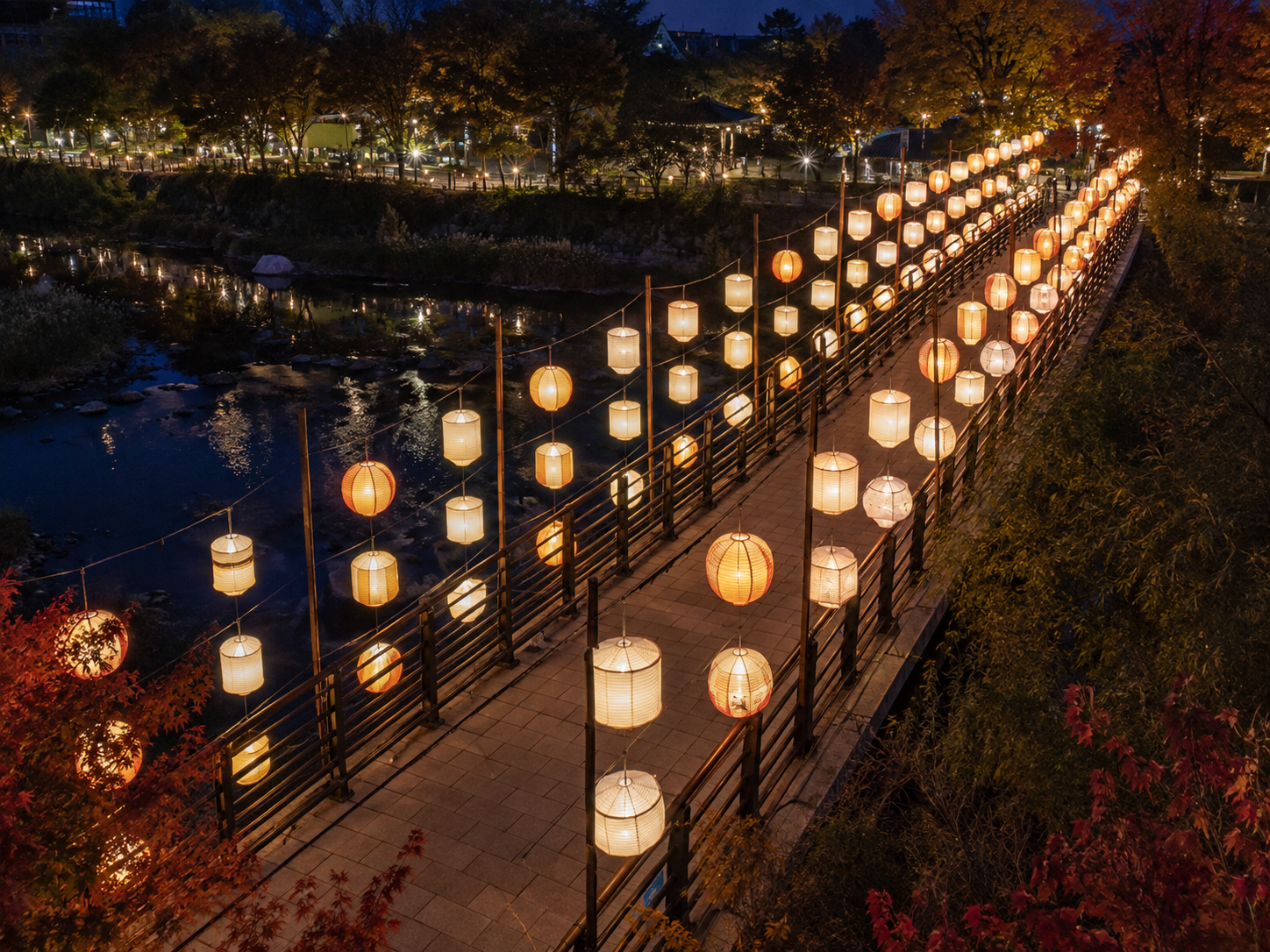
The place that caught the eye at night was the area around Jikji Bridge. Here, 1,377 wish paper lanternsIt was installed to create a landscape where traditional Hanji material harmonizes with night lighting.
Hanji lanterns naturally connect with the theme of documentary culture at the Jikji Culture Festival. Since it involves writing one's thoughts on paper and expressing them through light, it creates a flow where visitors can enjoy exhibitions and experiences during the day and then encounter unique visual spectacles in the evening.
However, details regarding on-site operations, such as the lighting times of the Hanji lanterns or specific viewing routes, were not covered as core programs in the festival introduction. For this event, the quantifiable scale of the installations and the night scenery around Jikji Bridge were introduced as the representative attractions.
What kind of historical experiences were featured at the Cheongju Eupseong Grand Festival?

The Cheongju Eupseong Grand Festival commemorates the 434th anniversary of the recapture of Cheongju Fortress.It was held in the area of the Central History Park. Organized by the Cheongju Cultural Center, this event presented a different atmosphere from the Jikji Culture Festival by interpreting historical significance through performances and participatory programs.
A street parade and a performance themed around the recapture of Cheongju Fortress enlivened the event venue, while the history talk concert offered a narrative experience of Cheongju's past. Traditional culture experience programs were also offered, creating an enjoyable experience for not only history-interested visitors but also families.
In particular, the participatory program titled "Select the Top Scholar of the Civil Service Examination" stimulated visitors' curiosity by using ancient examination culture as its theme. Since it involved direct participation rather than simply listening to historical explanations, the connection between the event's theme and the experience was clear.
The Significance Left by the Two Festivals and the Autumn Scenery of Cheongju in 2026
| division | Jikji Culture Festival | Cheongju Eupseong Grand Festival |
|---|---|---|
| period | September 4–6, 2026 | September 5-6, 2026 |
| location | Cheongju Ancient Printing Museum and Cheongju Arts Center area | Central History Park area |
| subject | Jikji and the culture of records | 434th Anniversary of the Recapture of Cheongju Fortress |
| Representative Content | Special Exhibition · AI Calligraphy · QR Message Wall | Parade, History Talk Concert, Traditional Culture Experience |
The reported visitor numbers for the two events were approximately 100,000 for the Jikji Culture Festival and around 40,000 for the Cheongju Eupseong Grand Festival. These figures were released immediately after the two events concluded on September 6, 2026; the Jikji Culture Festival engaged citizens and tourists through archival culture and digital content, while the Cheongju Eupseong Grand Festival focused on historical reenactments and traditional experiences.
Cheongju City assessed that the two festivals were safely concluded thanks to the active participation of citizens. It also announced plans to continue discovering cultural content that promotes the historical value of Cheongju and allows citizens to enjoy it together.
This festival, representing autumn in Cheongju, was difficult to explain with just a single program. A time to encounter records and light at the Cheongju Ancient Printing Museum and Jikji Bridge, and the history of the fortress and traditional culture at Central History Park.The biggest feature is that this continued.
Although the event itself concluded on September 6, the 2026 Cheongju Autumn Festival remains an example of how local historical resources were interpreted into modern experiences. When examining other cultural events in Cheongju in the future, it would be beneficial to compare the approach of expanding upon records, like Jikji, with the structure of the Eupseong Keunjanchi, which conveys history in a participatory manner.