
If you can drink more than before and feel fine, has your tolerance really increased? A change where the amount of alcohol needed to feel the same level of intoxication continues to increase does not mean that you have become "more tolerance," but rather... Addiction signal called alcohol toleranceIt could be.
Alcohol use disorder is not a problem that only appears after work and family life have collapsed. Since increased drinking, memory loss, and failure to control alcohol consumption can occur even while continuing to go to work and perform one's duties, you must first examine your relationship with alcohol rather than focusing on your outward lifestyle.

You should look at alcohol tolerance rather than the increase in drinking capacity.

If you initially got drunk after drinking just half a bottle of soju, but at some point need to drink about two bottles to feel a similar sensation, it is difficult to view this as simple adaptation. Alcohol tolerance is the phenomenon where you need a much larger amount than before to achieve the desired level of intoxication or effect, or where the effect weakens even when drinking the same amount.
Tolerance is treated as one of the diagnostic criteria for alcohol use disorder. The important point is not how much is currently drunk at once. Whether the required amount of alcohol has increased compared to the pastIt is.
It may not be that you have become better at drinking, but rather that you now need more alcohol to achieve the same effect.
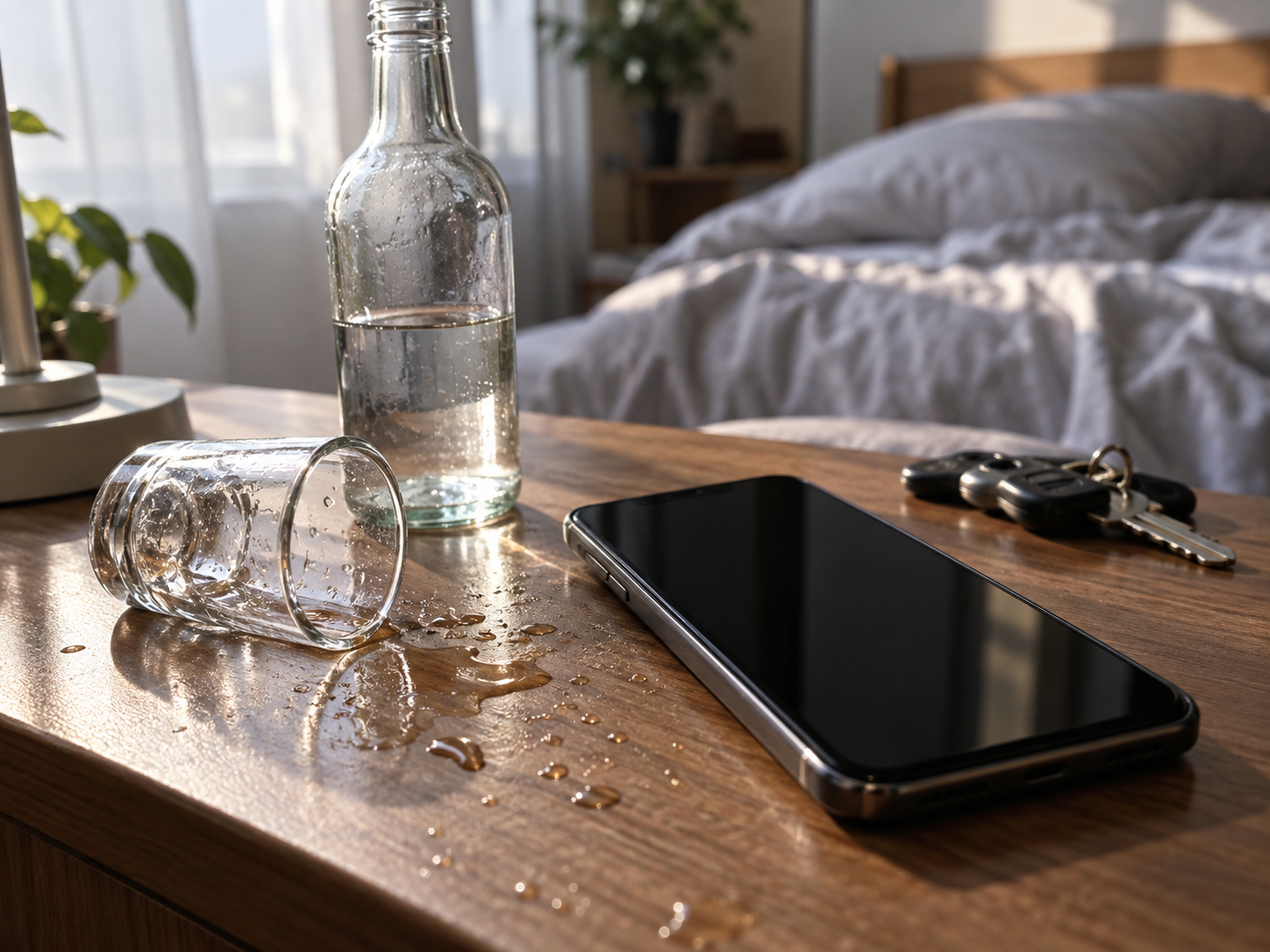
If your memory is blank, it is not just a simple hangover.

Regretting a mistake made while drinking the next day is different from a blackout, where you cannot remember anything that happened during a specific time period. A blackout is not a state of being asleep while intoxicated; rather, it is a phenomenon where memories of actions taken while awake are not properly stored.
Alcohol can interfere with the process in the brain's hippocampus where short-term memories are converted into long-term memories. This results in a memory of the start of the company dinner, but the process of getting home or events from the early morning of the next day disappear.
If you have experienced hearing instructions from someone else for the first time after a blackout, or waking up in an unfamiliar place, it is not something to be taken lightly. While a diagnosis is not confirmed based on a single experience, The very fact that memory formation was interrupted while drinking is a sign to consider counseling.It becomes.

Check to see if you are failing to follow the established drinking rules.

“It is common to set personal standards, such as "I won't drink on weekdays" or "I'll limit myself to five drinks today." The problem arises not just when you break that promise once or twice, but when the same pattern persists despite repeated resolutions to cut back.
If attempts to control the amount or duration of your drinking consistently fail, it serves as a sign that your ability to control your alcohol consumption is declining. If you had a clear plan before drinking but find it difficult to stop once the session begins, it is safer not to attribute it solely to a lack of willpower.
| Scenes to examine | Signals different from routine drinking |
|---|---|
| Amount of alcohol consumed | The amount consumed continues to increase to achieve the same effect as before. |
| memory | Work from a specific time period is not saved entirely |
| adjustment | Repeated failure to adhere to the set number of drinks or end time |
| Lifestyle impact | Drinking continues even when problems arise with sleep, family relationships, or work. |
Even in the workplace, drinking problems arise.

You cannot rule out alcohol problems simply because you go to work and handle your duties. If your drinking increases, you develop tolerance, experience memory loss after company dinners, or repeatedly fail to cut back, problems can progress even while your social functioning is still intact.
This condition is often referred to as 'high-functioning alcohol dependence,' but this is not an official diagnostic term. Diagnosis is determined not by employment status, but by evaluating various aspects such as tolerance, cravings, control failure, and recurring drinking problems.
Since it does not look outwardly different from usual, it is easy for even the individual to notice the danger signals late. In particular, if family or colleagues frequently explain your behavior after drinking sessions on your behalf, you should pay more attention to your drinking patterns than to the fact that you are maintaining your daily life.
If it is difficult to reduce, you must seek safe assistance.

The AUDIT Alcohol Use Disorder Screening Test is used to assess drinking frequency and amount, loss of control, and alcohol-related problems. The World Health Organization recommends AUDIT as a tool to identify risky drinking and potential alcohol dependence, and the test results can be used as a starting point for counseling.
Psychiatric clinics or integrated addiction support centers can examine your current drinking habits and the risks associated with quitting. If you have repeatedly resolved to reduce your alcohol consumption but failed to stick to it, or if you experience recurring blackouts, it is more realistic to develop a plan with a professional rather than trying to endure it alone.
If a person who has consumed large amounts of alcohol for a long time suddenly stops, withdrawal symptoms such as insomnia, tremors, cold sweats, and vomiting may occur, and in severe cases, it can lead to seizures or delirium. In such cases, do not attempt sudden abstinence on your own but seek the assistance of medical professionals, and if seizures or changes in consciousness occur, seek emergency medical attention immediately.
If tolerance, blackouts, and control failures overlap, you may not be a 'high tolerance' but rather in a state where an alcohol evaluation is needed.
First, write down whether the amount you drank in recent months has increased compared to the past, whether you stuck to your set limit of drinks, and whether there were blank periods in your memory the next day. If any of these three things occur repeatedly, taking your drinking records to a psychiatrist or an Integrated Addiction Management Support Center for counseling is the first step in safely preparing for sobriety.