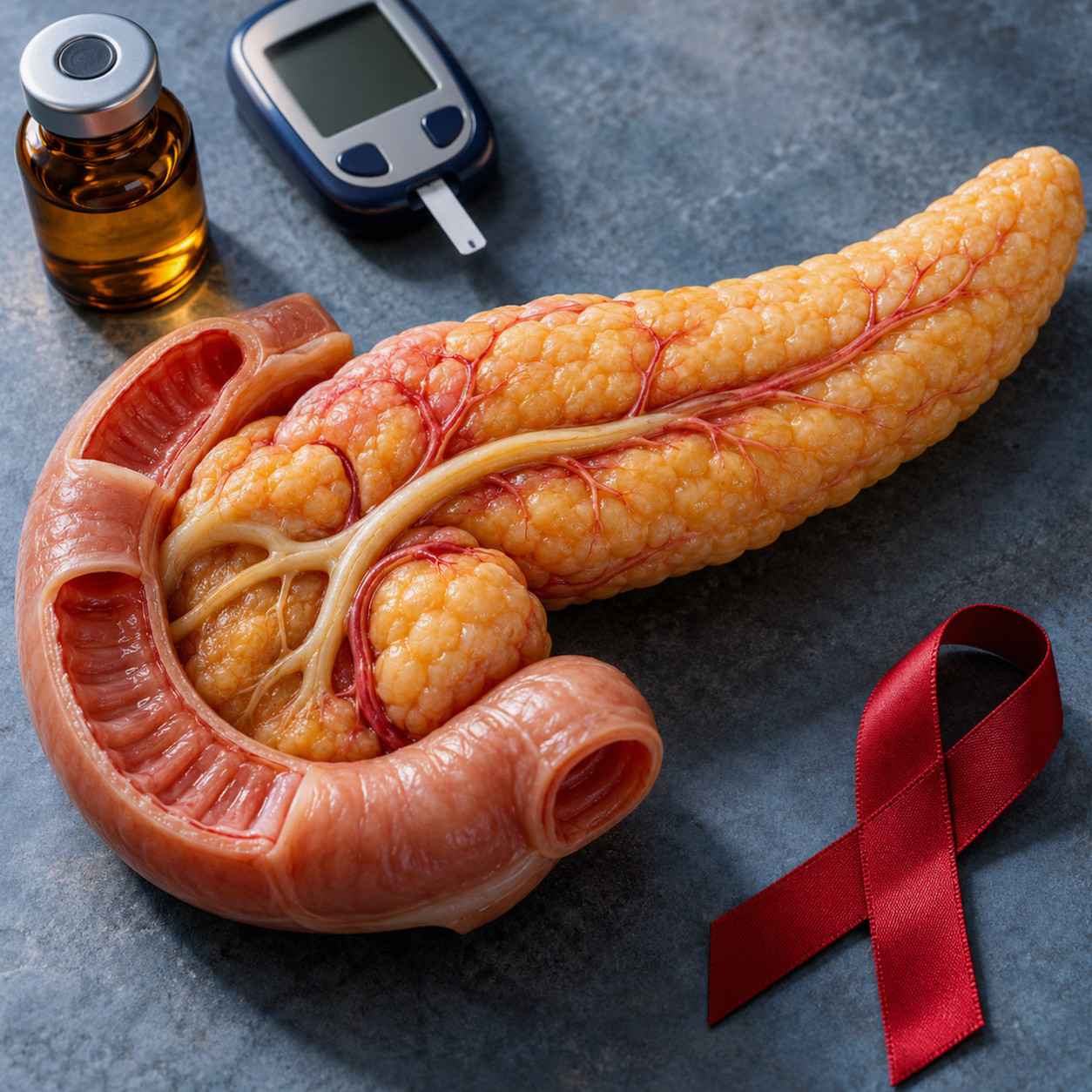
Many people believe that pancreatic cancer is a disease that can only be suspected once diabetes develops. However, this is not an accurate understanding. Diabetes and pancreatic diseases influence each other, and focusing on only one side can cause you to miss important warning signs.
The pancreas is located horizontally behind the stomach and just in front of the spine, so it is often called the "silent organ." This is because it takes time for pain or abnormal symptoms to become outwardly apparent, and its structure makes it difficult to examine its entirety through standard health checkups. In this article, we will sequentially summarize the risk factors that can lead to pancreatic disease and the early warning signs.
First, verify the fact that pancreatic cancer and diabetes may be the result, not the cause.
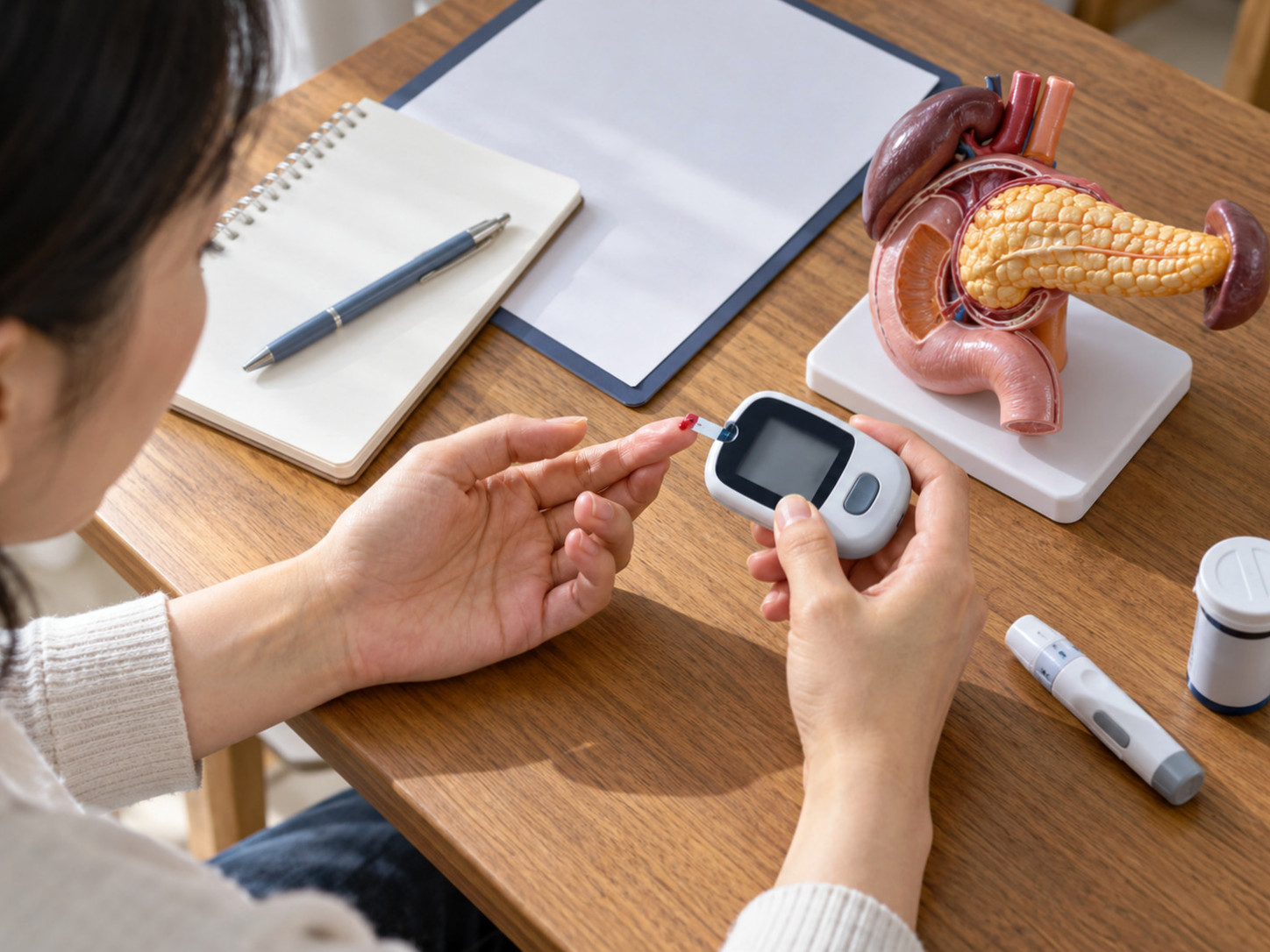
While Type 2 diabetes is known to be a risk factor for pancreatic cancer, conversely, pancreatic cancer can also impair blood sugar control and lead to diabetes. In other words, the two diseases are connected in both directions, not just one.
However, not everyone diagnosed with diabetes needs to worry about pancreatic cancer. In fact, most diabetic patients are unrelated to pancreatic cancer. That said, if you are over 50 and suddenly develop diabetes without a family history or a clear cause, or if your previously well-managed blood sugar levels rapidly deteriorate without any specific reason, you should have your pancreas checked. This is because such changes may be related to the possibility that a tumor has formed around the insulin-secreting cells, disrupting blood sugar regulation.
How to check risk factors leading to pancreatic disease in order

Risk factors for pancreatic disease are often not just a single factor, but rather a combination of multiple factors. Reviewing your condition one by one in the order below can help you gauge your overall risk.
Step 1: Check for gallstones or a history of excessive drinking.

Gallstones can block the junction of the bile duct and the pancreatic duct, preventing pancreatic fluid from draining properly. As a result, internal pressure within the pancreas rises, which can lead to inflammation. Alcohol consumption is also cited as a factor that causes recurring inflammation by directly stimulating pancreatic cells and altering the composition of pancreatic fluid. If you have previously suffered from acute pancreatitis or been diagnosed with gallstones, you should consider these factors first.
Step 2: Examining Weight and Metabolic Status Together

Studies have shown that individuals with severe obesity have a higher risk of developing pancreatic cancer than those with normal weight. It is appropriate to understand obesity not as an isolated factor, but as a factor that places a burden on the pancreas in conjunction with blood sugar and lipid metabolism.
Conversely, sudden weight loss should also be closely monitored. If you have lost more than 51 to 30 kilograms of your original weight over a period of 6 to 12 months without dieting, it warrants medical verification. For example, if a person weighing 70 kilograms loses more than 3.5 kilograms without special dietary restrictions, the cause should be investigated. Of course, since causes of weight loss are much more common, such as thyroid disease, diabetes, digestive disorders, and stress, there is no need to conclude that you have pancreatic cancer based solely on the fact that you have lost weight.
Step 3: Summarizing Family History and Smoking Status

A genetic predisposition should be suspected if two or more immediate family members have been diagnosed with pancreatic cancer, or if there is a family history of multiple cases of breast or ovarian cancer. Smoking is a modifiable risk factor known to accelerate changes in pancreatic cells, and quitting smoking is virtually the only option available for self-management. Regular follow-up is also recommended for those who have suffered from chronic pancreatitis for a long time or have been diagnosed with mucinous pancreatic cysts.
Please check the initial symptoms to distinguish between acute and gradually progressing types.
Acute pancreatitis often manifests as sudden upper abdominal pain and vomiting following fatty foods or excessive drinking. On the other hand, cases that progress slowly, such as pancreatic cancer, show a pattern where dull pain near the epigastric region, loss of appetite, and unexplained weight loss gradually accumulate over several weeks to months.
Acute pancreatitis is characterized by pain that lessens when curling forward and actually worsens when lying flat on one's back. This phenomenon occurs because the pancreas is compressed by the spine. On the other hand, in slowly progressing pancreatic diseases, symptoms such as jaundice, changes in urine color, and grayish stools often appear due to bile duct blockage, making it easy to dismiss these warning signs as mild abdominal pain or indigestion.
Be aware of whether a general health checkup alone is sufficient and the limitations of the testing methods.
Standard abdominal ultrasound has limitations in precisely observing the entire pancreas. This is because the pancreas is located deep behind the stomach, so the image is often obscured by intestinal gas or body fat.
For this reason, if you have multiple of the aforementioned risk factors or experience accompanying symptoms such as upper abdominal discomfort or rapid fluctuations in blood sugar, it is safer to consider advanced imaging tests like abdominal CT or MRCP. Initially, checking amylase and lipase levels through blood tests is also used. However, since the choice of testing method depends on the patient's symptoms and risk factors, it is advisable to make a decision through consultation with a medical professional.
Points to note when looking at pancreatic cancer survival rate figures
According to the National Cancer Registry Statistics released in 2026, the 5-year relative survival rate for pancreatic cancer patients from 2019 to 2023 was recorded at 17.01 TP3T. This figure serves as a reference indicator demonstrating the importance of early detection.
However, this figure is an average based on all patients, and the actual prognosis varies significantly depending on the stage at the time of diagnosis and the individual patient's health condition. Rather than drawing definitive conclusions based on a single statistic, it is more appropriate to regard it as a checklist for early detection.
Risk Factors and Symptoms of Pancreatic Disease, and Criteria for Self-Assessment
To summarize what we have examined so far, gallstones, a history of alcohol consumption, obesity, a family history, and smoking are major risk factors that can lead to pancreatic disease. If these are compounded by the onset or worsening of diabetes of unknown cause after age 50, a weight loss of more than 51% within 6 to 12 months, and symptoms such as pain near the epigastric region and jaundice, it should be considered a time to undergo a thorough examination rather than dismissing it as simple indigestion.
Conversely, if you experience slight weight loss or the onset of new diabetes without risk factors or accompanying symptoms, it is highly likely to be due to other causes that are much more common than pancreatic cancer. Judging based on whether multiple signals overlap helps strike a balance between unnecessary worry and overlooking the issue.
Frequently Asked Questions
Q1. Does acute pancreatitis progress to pancreatic cancer?
Acute pancreatitis and pancreatic cancer have different pathogenesis mechanisms, and acute pancreatitis does not necessarily lead to cancer. However, if inflammation recurs and becomes chronic pancreatitis, long-term follow-up is required.
Q2. Can pancreatic disease be detected early solely through the abdominal ultrasound performed during a health checkup?
Standard abdominal ultrasound has limitations as images can be obscured by intestinal gas or body fat. If there are risk factors or suspicious symptoms, it is safer to perform advanced examinations such as CT or MRCP.
Q3. Should I suspect pancreatic cancer if I am diagnosed with diabetes?
Most diabetic patients are not associated with pancreatic cancer. However, if diabetes develops suddenly after the age of 50 without a clear cause or if blood sugar control deteriorates rapidly, a checkup is necessary.
Q4. Should I suspect pancreatic cancer immediately if I lose weight?
The causes of weight loss are often more common, such as thyroid or digestive disorders. However, if you have lost more than 51% of your body weight between 6 and 12 months without a specific reason, medical verification is required.
Q5. Does the pancreatic cancer survival rate of 17.0% apply equally to all patients?
This figure is the average for all patients, and the actual prognosis may vary depending on the stage of the disease at the time of diagnosis and the individual's health condition.