
During the changing seasons, health advertisements dealing with familiar symptoms such as sore throat or bad breath are frequently seen. Recently, even fake doctor advertisements have emerged that recommend specific products using interview formats with figures who look like real doctors, making it increasingly necessary to verify the information of the person and the product separately before trusting the advertisement.
Based on an advertisement featuring the phrase “doctor with 22 years of experience in tonsil surgery,” this article summarizes the characteristics of fake medical professional advertisements, the procedure for verifying the existence of the doctor, criteria for judging product efficacy, and response routes to consider in the event of damage.
Fake doctor advertisements leverage expert authority to induce product purchases.
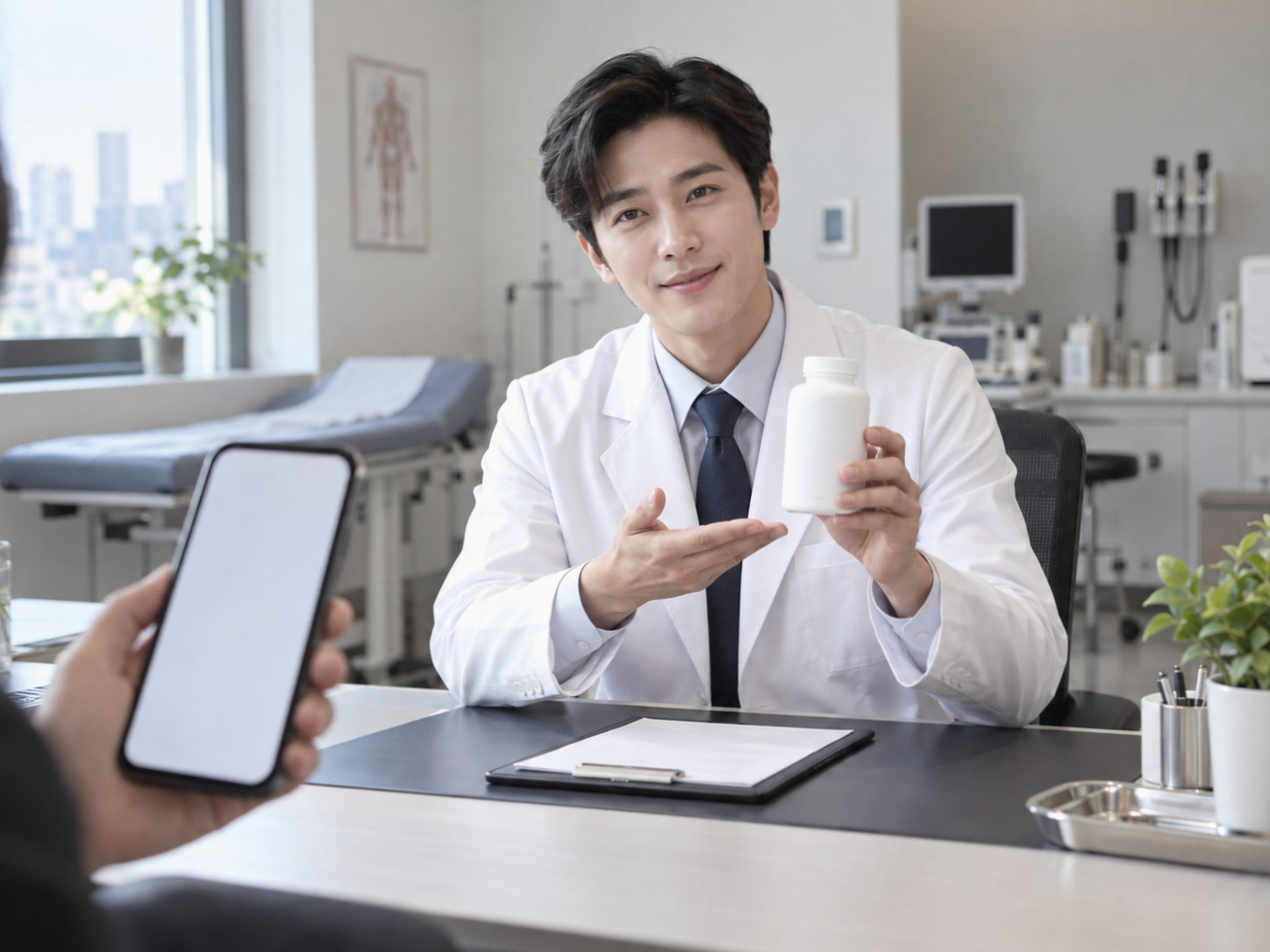
Fake doctor advertisements are a promotional method that uses AI-generated faces or voices, manipulated photos, and interview formats to make them appear like actual medical professionals. They differ from general health information in that they introduce health supplements or medical-related products while exaggerating treatment effects and presenting the expertise of the person in the advertisement as the basis for purchase.
This case started with an Instagram card news format and evolved into a screen styled like a news article. The layout simultaneously stimulated trust and purchasing desire by juxtaposing a figure in a white lab coat, specific career credentials, patient treatment experiences, user reviews, and discount purchase links.
We verify the authenticity of the doctor in the advertisement in four steps.

To determine if the doctor in an advertisement is a real person, you should check their name, specialty, and affiliated medical institution in order, rather than relying on their impression in the photo. It is safer to compare whether different pieces of information match, rather than drawing a conclusion based on a single clue.
First, search for the doctor's name and medical specialty separately.
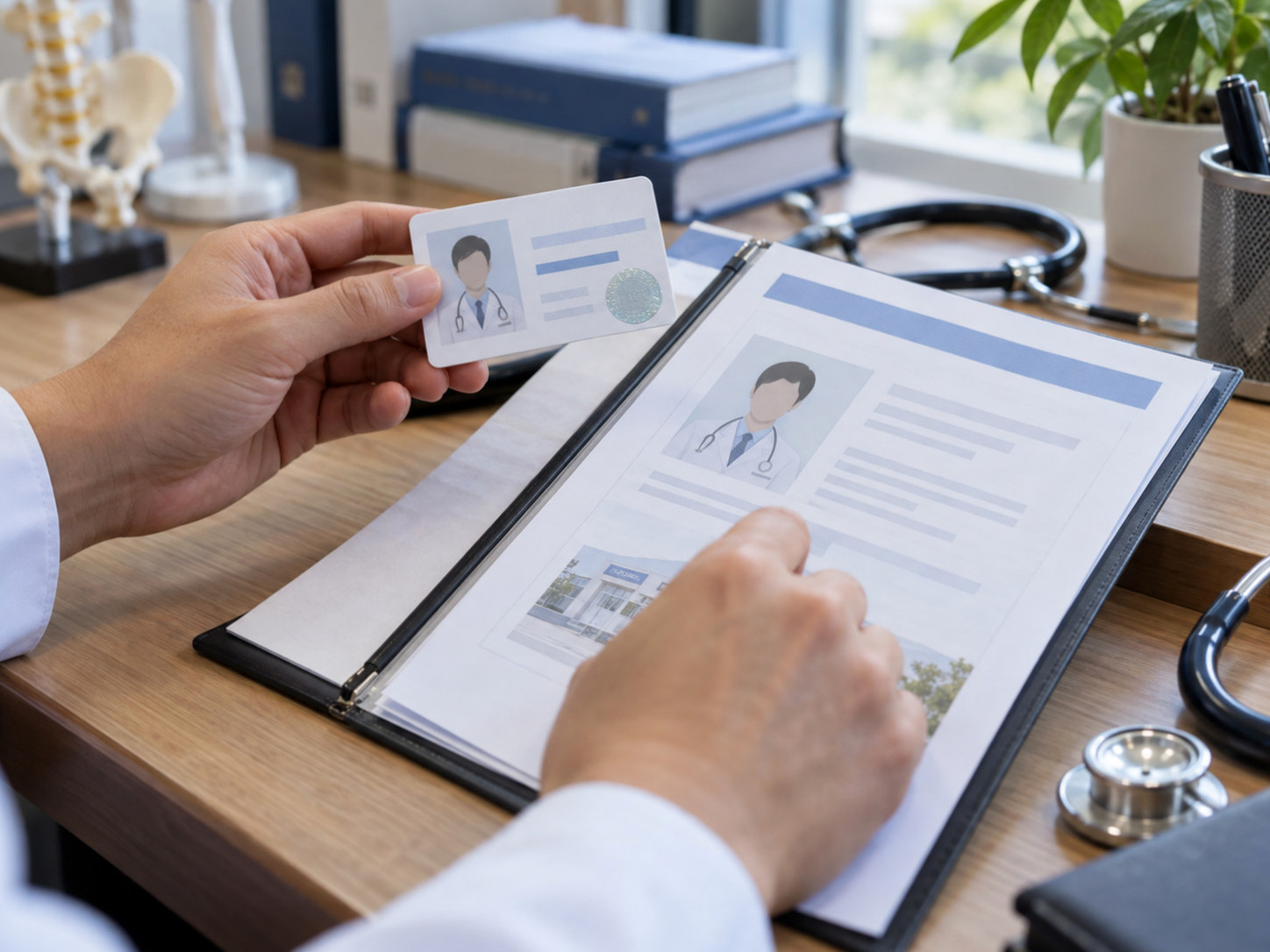
Search for the name mentioned in the advertisement along with the medical specialty to check for records of actual medical activity. You must compare this with verifiable sources, such as hospital introductions, medical institution guides, and public information from relevant professional organizations, to verify their consistency.
If an advertisement contains only a name without specifying the affiliated hospital or treatment location, one may suspect that an unverified individual has been featured. In this case as well, the name of the medical institution associated with the individual in the advertisement was not displayed, and verification by the relevant doctors' association confirmed that the individual did not exist on their membership list.
Second, we examine the actual connection status of the affiliated medical institution.
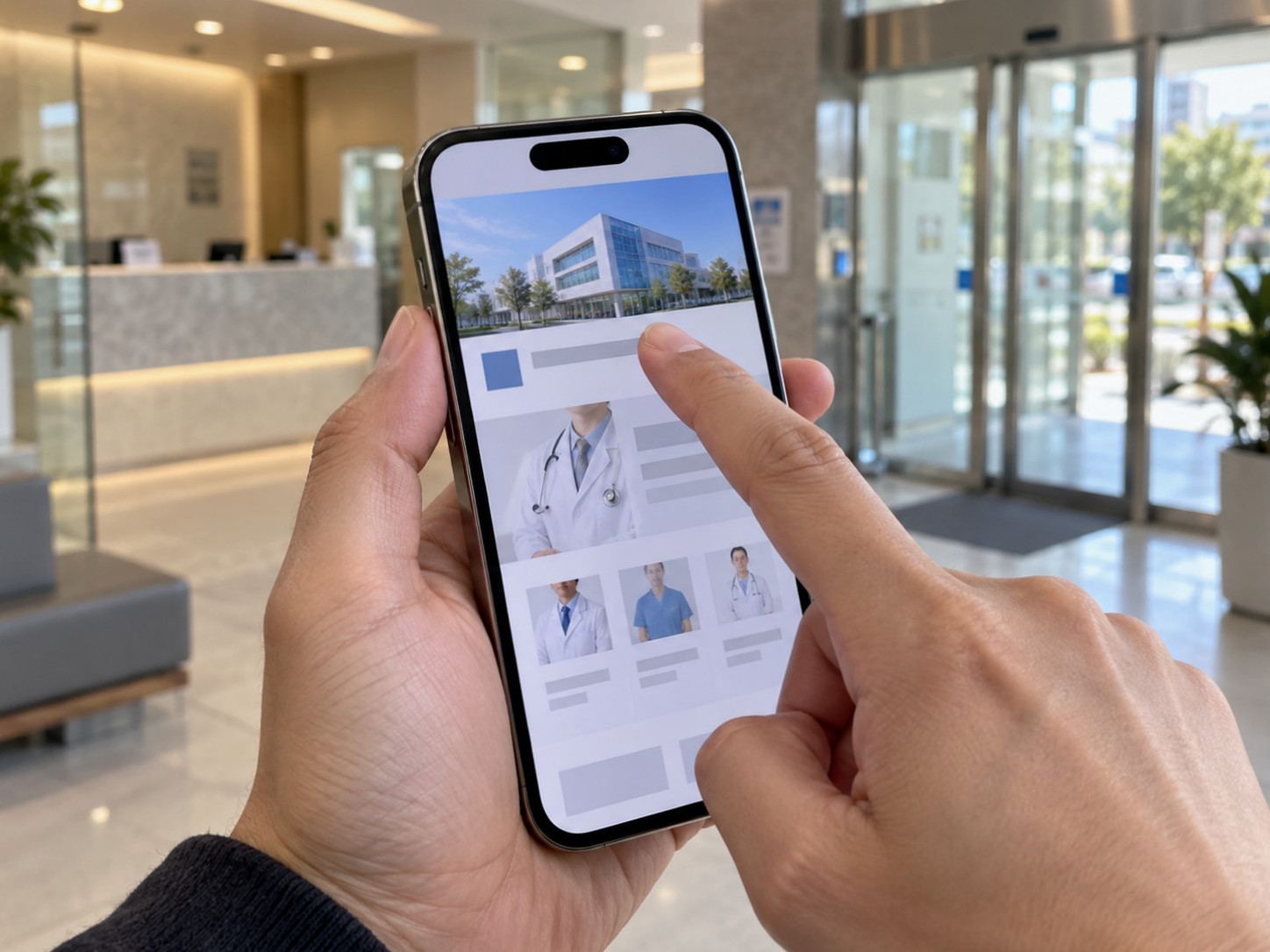
If a hospital name is listed in an advertisement, check if it links to the institution's official information. If clicking on the hospital name does not lead to the official website or treatment guide, or if the person cannot be found in the medical staff introduction, the credibility of the advertisement decreases.
Screens that look like news articles should be examined in the same way. Checking whether the media outlet logo on the screen links to the actual main page and verifying the article list and author information helps distinguish fake advertorials.
Third, verify the medical advertisement review indication and the advertiser.
If an advertisement features a medical professional or claims medical efficacy, you must check for the medical advertising review approval number or related markings. However, since the mere presence of a number does not guarantee the product's effectiveness or the existence of the person in the advertisement, you should also examine the advertiser and the seller in addition to checking for the presence of such markings.
Caution is advised if the business information, customer service, and return guidelines at the bottom of the advertisement are excessively unclear, or if only the purchase button is emphasized. Even if expert interviews and reviews are included, they cannot be regarded as evidence proving the product's efficacy if objective supporting data is not presented.
Fourth, even if the photos and audio look natural, we do not believe them at face value.
Using artificial intelligence technology, facial expressions, mouth movements, voice, and examination room backgrounds can be realistically reconstructed. Do not assume someone is a real doctor simply because the video is smooth; it is necessary to separately verify their affiliation and official records outside of the video.
I look at the evidence and claims regarding product efficacy before a doctor's recommendation.
“Particular caution should be exercised in health product advertisements regarding expressions that make definitive statements about results, such as ”restores eyesight,“ ”regenerates joints,“ or ”normalizes with a single pill.” Phrases that appear to guarantee the treatment or prevention of diseases must be distinguished from descriptions of the product’s limited functions, and effectiveness is not verified solely by the authority of the doctor featured in the advertisement.
This advertisement features a story in which a doctor with extensive experience in tonsil surgery recommends a specific propolis spray after realizing the limitations of the procedure. However, according to relevant experts, there is no evidence that propolis eliminates tonsil stones or prevents their formation, and one should not expect the level of effectiveness claimed in the advertisement.
Tonsil stones are a condition that requires an ENT specialist to first assess the condition and consider treatment. If the stones recur or require active treatment, medical staff may review tonsil surgery; therefore, you should not choose to purchase advertised products instead of receiving medical treatment.
Verify the purchase link and the seller separately before payment.
It is difficult to verify whether the advertiser and the seller are the same entity on purchase pages linked directly from social media videos or card news. You must check in order whether you have been redirected to an official website or a verifiable online retailer, whether the business information matches the product description, and whether refund and shipping information is provided.
Phrases such as "limited-time discount," "expert recommendation," and the repetition of various customer reviews can be mechanisms designed to entice you to rush into a purchase. It is safer to verify the product's official information and the basis of the advertisement before focusing on the discount amount, and to postpone payment if you have not finished checking.
AI Detection and Response to Fake Medical Professional Advertisements
According to the provided data, the Ministry of Food and Drug Safety reported 66 cases of false and exaggerated advertising related to illegal AI-based health functional foods and general foods detected online up to the tenth month of last year. Reports received from members by the Korean Medical Association and the Korean Pharmaceutical Association totaled 26 cases, bringing the combined total to 92 cases.
Since these figures represent examples derived from the aggregation of different data, they should not be assumed to refer to the same type or company. Relevant authorities have announced a response strategy to strengthen the monitoring and blocking of false and exaggerated advertisements, as well as to reinforce financial sanctions against violators.
If damages occur, you must retain ad screens, videos, purchase pages, payment records, and conversations with the seller. The liability of advertisers, creators, and platforms may vary depending on the facts and applicable laws; while the materials mention a system for compensating up to five times the amount of damages, this does not automatically apply to all cases of damage.
Key criteria for filtering out fake doctor advertisements
- Verify that the doctor's name and medical specialty match the actual records.
- We check whether the information regarding the affiliated medical institution and medical staff actually exists.
- Check if the media logo and article screen link to the official page.
- We check the medical advertisement review labeling and advertiser information together.
- Beware of expressions that assert treatment and recovery, excessive discounts, and instant purchase links.
- We determine whether medical consultation and objective evidence are required before assessing product efficacy.
A plausible face and an expert tone may appear to be clues to trust, but they cannot replace genuine verification. The most realistic way to avoid fake medical advertisements is to develop the habit of separating and examining the existence of the person in the ad, the basis of the product claims, and the seller's liability information in turn.
Frequently Asked Questions
What are fake doctor advertisements?
These are advertisements that induce the purchase of specific health products by using figures that look like actual medical professionals or AI-generated faces and voices. They are characterized by exaggerating efficacy by leveraging the authority of experts.
How can I verify if the doctor in the advertisement is a real person?
You should search for the doctor's name and specialty and verify that their affiliated medical institution matches the official medical staff information. It is also recommended to check the connection status between the public information provided by relevant professional organizations and the advertisement screen.
If a doctor recommends a product, is its effectiveness proven?
That is not the case. Product efficacy is not proven solely by a doctor's name or the format of an interview, and expressions asserting the treatment or recovery of diseases require separate objective evidence.
Can I use propolis spray on tonsil stones?
The provided expert explanation stated that there is no evidence that propolis helps remove or inhibit tonsil stones. If you have tonsil stones, the priority is to have your condition checked by an ENT specialist rather than relying on advertised products.
- Blue House staff members put their homes on the market one after another... Fact check on Kang Yoo-jung and Kim Sang-ho's housing sales (2026 Breaking News)
- How to Check US Exchange Rates in Real Time & 5 Tips to Save on Exchange Fees
- Foods for Enteritis: Eat This, Not Convenience Store Porridge! (Super Easy White Porridge/Egg Porridge Recipes & Diet Management)
What should I keep if I suffer damage from advertising?
You must retain advertising videos, purchase screens, payment history, seller information, and conversation logs. Liability and compensation may vary depending on the content of the advertisement, the facts of the damage, and applicable laws.